Product Description
Product Description
1. Material: Gray Iron or Ductile Iron;
Gray iron HT200-350 (GG20-35, FC200-350);Ductile Iron QT400-QT600(GGG40-GGG60,FCD400-FCD600)
2. Surface treatment: Shot blast, painting; Heat treatment is optional;
3. Custom according to your drawing, specification or samples;
|
Material |
Gray Iron Casting/Ductile Iron Casting |
|
Process |
Resin sand casting/shell mold casting/investment + CNC machining |
| Casting Tolerance | CT9-10 for Machine Molding Process, CT8-9 for Shell Molding and Lost Foam Molding Casting Process CT10-11 for Manual Molding Sand casting Process |
|
Casting surface roughness |
Ra 12.5-25 um |
|
Casting weight range |
3kg to 2.5tons per piece |
|
Casting Size |
As Requirement/As drawing |
|
Machining surface roughness |
As Requirement |
|
Material standard |
GB, ASTM, AISI, DIN, BS, JIS, NF, AS, AAR |
|
Surface treatment |
KTL (E-coating), Zinc plating, Mirror Polishing, Sand Blasting, Acid pickling, black oxide, Painting, Hot galvanizing, Powder coating, and Nickel plating. |
|
Service available |
OEM & ODM |
|
Quality control/Testing facility |
Sectrometer, tensile test machine, hardness test machine,metallographic microscope. 100% inspection |
|
Application |
Train & railway, automobile& truck, construction machinery, forklift, agricultural machinery, shipbuilding, petroleum machinery,construction, valves and pumps, electric machine, hardware, power equipment, and so on. |
Product Parameters
Mechanical character
| Grey Iron Grade in GB 9439 Gray iron Castings | |||
| Gray Iron Grade | Single Specimen Tensile Strength σb≥/Mpa |
Wall Thickness /mm |
Tensile Strength σb≥/Mpa |
| HT100 | 100 | >2.5~10 | 130 |
| >10~20 | 100 | ||
| >20~30 | 90 | ||
| >30~40 | 80 | ||
| HT150 | 150 | >2.5~10 | 175 |
| >10~20 | 145 | ||
| >20~30 | 130 | ||
| >30~40 | 120 | ||
| HT200 | 200 | >2.5~10 | 220 |
| >10~20 | 195 | ||
| >20~30 | 170 | ||
| >30~40 | 160 | ||
| HT250 | 250 | >2.5~10 | 270 |
| >10~20 | 240 | ||
| >20~30 | 220 | ||
| >30~40 | 200 | ||
| HT300 | 300 | >10~20 | 290 |
| >20~30 | 250 | ||
| >30~40 | 230 | ||
| HT350 | 350 | >10~20 | 340 |
| >20~30 | 290 | ||
| >30~40 | 260 | ||
| Ductile Iron Grade in GB1348 Ductile Iron Castings | ||||
| Iron Grade | Wall Thickness /mm |
Tensile Strength(Min Mpa) | Yield Strength(Min Mpa) | elongation % Min |
| QT400-18A | >30~60 | 390 | 250 | 18 |
| >60~200 | 370 | 240 | 12 | |
| QT400-15A | >30~60 | 390 | 250 | 15 |
| >60~200 | 370 | 240 | 12 | |
| QT500-7A | >30~60 | 450 | 300 | 7 |
| >60~200 | 420 | 290 | 5 | |
| QT600-3A | >30~60 | 600 | 360 | 3 |
| >60~200 | 550 | 430 | 1 | |
| QT700-2A | >30~60 | 700 | 400 | 2 |
| >60~200 | 650 | 380 | 1 | |
| Gray Iron Material Grades | ||||||||
| Country | Standard | Equivalent Grades of Grey Iron (Gray Cast Iron) | ||||||
| ISO | ISO 185 | 100 | 150 | 200 | 250 | 300 | 350 | – |
| China | GB 9439 | HT100 | HT150 | HT200 | HT250 | HT300 | HT350 | – |
| USA | ASTM A48 | – | NO.20 | NO.30 | NO.35 | NO.40 | NO.50 | NO.55 |
| NO.25 | NO.45 | NO.60 | ||||||
| Germany | DIN 1691 | GG10 | GG15 | GG20 | GG25 | GG30 | GG35 | GG40 |
| Austria | ||||||||
| European | EN 1561 | EN-GJL-100 | EN-GJL-150 | EN-GJL-200 | EN-GJL-250 | EN-GJL-300 | EN-GJL-350 | |
| Japan | JIS G5501 | FC100 | FC150 | FC200 | FC250 | FC300 | FC350 | – |
| Italy | UNI 5007 | G10 | G15 | G20 | G25 | G30 | G35 | – |
| France | NF A32-101 | – | FGL150 | FGL200 | FGL250 | FGL300 | FGL350 | FGL400 |
| UK | BS 1452 | 100 | 150 | 200 | 250 | 300 | 350 | – |
| India | IS 210 | – | FG150 | FG200 | FG260 | FG300 | FG350 | FG400 |
| Spain | UNF | – | FG15 | FG20 | FG25 | FG30 | FG35 | – |
| Belgium | NBN 830-01 | FGG10 | FGG15 | FGG20 | FGG25 | FGG30 | FGG35 | FGG40 |
| Australia | AS 1830 | – | T150 | T220 | T260 | T300 | T350 | T400 |
| Sweden | SS 14 01 | O110 | O115 | O120 | O125 | O130 | O135 | O140 |
| Norway | NS11 100 | SJG100 | SJG150 | SJG200 | SJG250 | SJG300 | SJG350 | – |
| Ductile /Nodular Cast Iron Material Grades | ||||||||
| Country | Standard | Equivalent Grades of Ductile iron (SG Iron, Nodular Graphite Iron) | ||||||
| ISO | ISO 1083 | 400-15 | 450-10 | 500-7 | 600-3 | 700-2 | 800-2 | 900-2 |
| 400-18 | ||||||||
| China | GB 1348 | QT400-18 | QT450-10 | QT500-7 | QT600-3 | QT700-2 | QT800-2 | QT900-2 |
| USA | ASTM A536 | 60-40-18 | 60-42-10 | 70-50-05 | 80-55-06 | 100-70-03 | 120-90-02 | – |
| 65-45-12 | 80-60-03 | |||||||
| Germany | DIN 1693 | GGG40 | – | GGG50 | GGG60 | GGG70 | GGG80 | – |
| Austria | ||||||||
| European | EN 1563 | EN-GJS-400-15 | EN-GJS-450-10 | EN-GJS-500-7 | EN-GJS-600-3 | EN-GJS-700-2 | EN-GJS-800-2 | EN-GJS-900-2 |
| EN-GJS-400-18 | ||||||||
| Japan | JIS G5502 | FCD400 | FCD450 | FCD500 | FCD600 | FCD700 | FCD800 | – |
| Italy | UNI 4544 | GS370-17 | GS400-12 | GS500-7 | GS600-2 | GS700-2 | GS800-2 | – |
| France | NF A32-201 | FGS370-17 | FGS400-12 | FGS500-7 | FGS600-2 | FGS700-2 | FGS800-2 | – |
| UK | BS 2789 | 400/17 | 420/12 | 500/7 | 600/7 | 700/2 | 800/2 | 900/2 |
| India | IS 1865 | SG370/17 | SG400/12 | SG500/7 | SG600/3 | SG700/2 | SG800/2 | – |
| Spain | UNF | FGE38-17 | FGE42-12 | FGE50-7 | FGE60-2 | FGE70-2 | FGE80-2 | – |
| Belgium | NBN 830-02 | FNG38-17 | FNG42-12 | FNG50-7 | FNG60-2 | FNG70-2 | FNG80-2 | – |
| Australia | AS 1831 | 300-17 | – | 500-7 | 600-3 | 700-2 | 800-2 | – |
| 400-12 | ||||||||
| Sweden | SS 14 07 | 0571 -02 | – | 0727-02 | 571-03 | 571-01 | 0864-03 | – |
| Norway | NS11 301 | SJK-400.3 | – | SJK-500 | SJK-600 | SJK-700 | SJK-800 | |
| SJK-400 | ||||||||
Company Profile
About Us
ZheJiang Shengrong High-end Equipment Manufacturing Industry Co., Ltd . is a professional Gray cast iron/Ductile iron foundry in ZheJiang province in China,We produce iron casting parts:Machinery Bases,Construction machinery parts, Industrial pump parts,Gearbox parts,Automotive parts,Agriculture machine parts and OEM part. We have passed quality management system ISO 9001 and IATF16949. Our factory is located in Maba Town, Xihu (West Lake) Dis. County, HangZhou City, ZheJiang province, covering an area of about 245 acres with new standardized factory building more than 200,000 square meters, office building of 6,000 square meters, more than 500 employees, including more than 100 technological engineer.
Our company produces ductile iron and gray cast iron series products, with an annual output of 80,000 tons,products are exported to the United States, Germany, Italy, Russia, Brazil, Vietnam, the Middle East and other regions.
Our company has a modern workshop, complete casting production equipment, advanced physical and chemical analysis, testing equipment, constantly importing the world’s advanced technology and a large number of professional technical personnel, expanding advanced production and testing equipment, so that make our products can meet the different requirements of customers
ZheJiang Shengrong does our best to provide high-quality foundry machinery parts for the market, Serves domestic and foreign customers with the most cost-effective products, and make our contributing to China’s foundry industry.
Technology
Gray/Ductile/Nodular Iron Casting Parts-Our Process
Investment Casting Resin Sand/Coated Sand Casting Shell Moulding
Detailed Photos
Our Equipment and Testing
Certifications
FAQ
How to order?
1:Before quotation, please send me requirement details:
Casting Iron grade and number; Testing rod specification;
Casting parts order quantity;
The detailed drawing to indicate the tollerance(size, weight), technology standard,roughness;
Offering mold-yes or no;
Machining requirement details;
Heat treament;
Shipping details if special;
Testing requirement -If need and details;
Other information if required
2: Small order and samples order is acceptable by our factory
Contact us for price and details now
/* March 10, 2571 17:59:20 */!function(){function s(e,r){var a,o={};try{e&&e.split(“,”).forEach(function(e,t){e&&(a=e.match(/(.*?):(.*)$/))&&1
| Type: | Clay Wet Sand |
|---|---|
| Casting Method: | Directional Crystallization, Thermal Gravity Casting |
| Sand Core Type: | Resin Sand Core |
| Application: | Machinery Parts, Machinery Parts |
| Machining: | CNC Machining |
| Material: | Iron, Ductile Iron/Grey Iron |
| Samples: |
US$ 20/Piece
1 Piece(Min.Order) | |
|---|
| Customization: |
Available
| Customized Request |
|---|
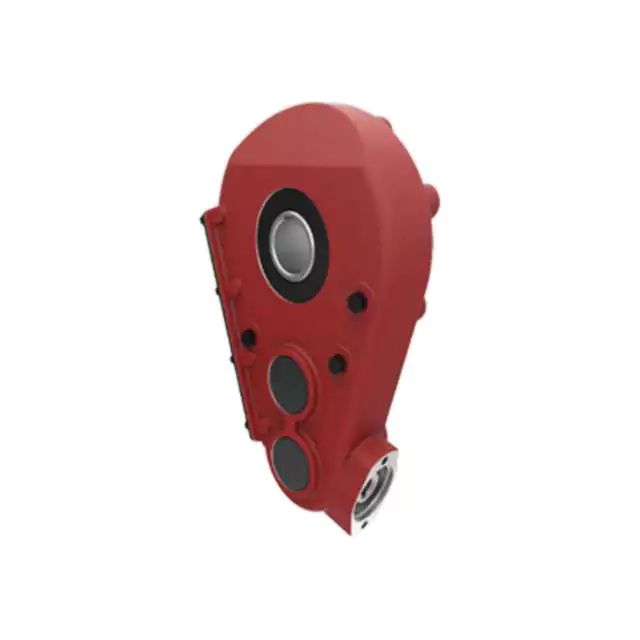
Technological Advancements in Agricultural Gearbox Design
Advancements in agricultural gearbox design have significantly improved the efficiency, durability, and performance of farming equipment. Here are some notable technological advancements:
- Materials and Manufacturing: The use of advanced materials, such as high-strength alloys and composite materials, has enhanced the durability and longevity of gearbox components. Precision manufacturing techniques, including computer-aided design (CAD) and computer numerical control (CNC) machining, ensure tight tolerances and reliable performance.
- Gear Tooth Design: Modern gear tooth profiles, such as optimized helical and spiral bevel gears, reduce noise, vibration, and wear. Advanced tooth design also improves power transmission efficiency and load distribution.
- Sealing and Lubrication: Improved sealing technologies, such as double-lip seals and labyrinth seals, help prevent contaminants from entering gearboxes while retaining lubricants. Advanced lubrication systems, including automatic lubrication and improved oil formulations, extend maintenance intervals and enhance efficiency.
- Electronic Controls: Agricultural gearboxes increasingly integrate with electronic control systems. Sensors and actuators provide real-time data on gearbox performance, allowing for condition monitoring, predictive maintenance, and adjustments to optimize machinery operation.
- Smart Gearboxes: Some agricultural gearboxes are equipped with smart features, such as load sensors, temperature monitors, and feedback systems. These features enhance precision, safety, and overall equipment performance.
- Hybrid Power Transmission: Integration of hybrid power transmission systems, combining internal combustion engines with electric motors, allows for more efficient power delivery and reduced fuel consumption. Gearboxes play a crucial role in managing power distribution in these systems.
- Reduced Environmental Impact: Advancements in gear design contribute to reducing environmental impact. Quieter and more efficient gearboxes minimize noise pollution and energy consumption while meeting emissions regulations.
- Customization and Modularity: Some modern agricultural gearboxes offer modular designs that allow farmers to customize gear ratios, output speeds, and other specifications to match specific tasks and conditions.
- Simulation and Testing: Computer simulations and advanced testing methods, such as finite element analysis (FEA) and computational fluid dynamics (CFD), help optimize gearbox design, reduce prototyping costs, and ensure reliability before production.
These advancements collectively contribute to the evolution of agricultural gearboxes, making farming machinery more efficient, environmentally friendly, and adaptable to the changing needs of modern agriculture.
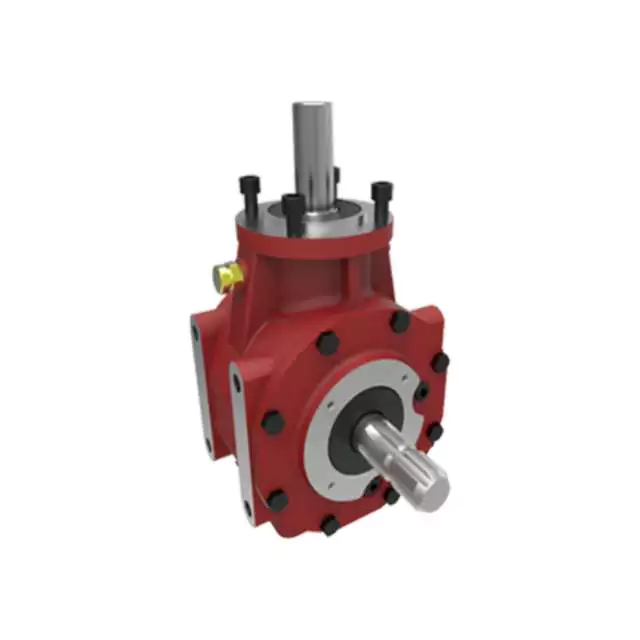
Handling Varying Torque Demands with Agricultural Gearboxes
Agricultural gearboxes are designed to handle the varying torque demands associated with different tasks in farming operations. The torque requirements can vary based on factors such as the type of task, the soil conditions, the terrain, and the machinery’s speed. Agricultural gearboxes are equipped with features that allow them to adapt to these varying torque demands:
- Gear Ratio Selection: Agricultural gearboxes often come with multiple gear ratios, allowing operators to select the appropriate ratio for the task at hand. Lower gear ratios provide higher torque for tasks that require more force, such as plowing or tilling, while higher gear ratios offer higher speeds for tasks like mowing or transporting.
- Torque Multiplier: Some agricultural gearboxes are designed with torque multipliers that enhance the torque output from the engine to the wheels or implement. These multipliers are engaged when higher torque is needed, helping the machinery handle heavy loads or challenging terrain.
- Adjustable Speeds: Many agricultural gearboxes allow operators to adjust the speed of the machinery to match the torque requirements of the task. This flexibility is essential for tasks that involve both high-torque, low-speed operations and high-speed operations with lower torque needs.
- Power Take-Off (PTO) Options: Agricultural gearboxes often feature power take-off mechanisms that enable the transfer of power from the engine to attached implements. These mechanisms can be designed to provide varying torque outputs to suit different implements, such as rotary tillers, balers, or pumps.
The ability of agricultural gearboxes to handle varying torque demands is crucial for ensuring efficient and effective farming operations. By offering adjustable gear ratios, torque multipliers, and adaptable speeds, these gearboxes empower farmers to optimize their machinery’s performance based on the specific requirements of each task.
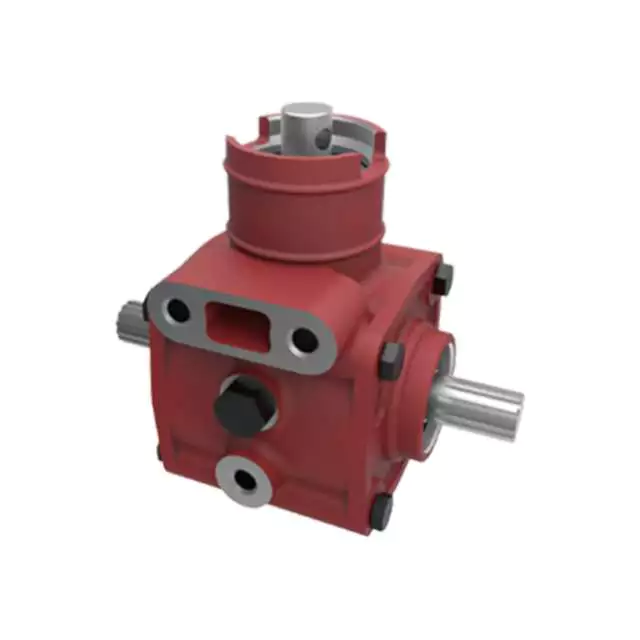
Role of Agricultural Gearboxes in Agricultural Machinery
An agricultural gearbox is a specialized type of gearbox used in various agricultural machinery and equipment. It plays a crucial role in the proper functioning of agricultural equipment by transmitting power and torque from the engine to the different components that perform specific tasks in the field.
Agricultural gearboxes are designed to withstand the demanding conditions of agricultural operations, including exposure to dust, dirt, moisture, and heavy loads. They are commonly used in a wide range of agricultural machinery, including tractors, combines, tillers, sprayers, and more.
The primary functions of agricultural gearboxes include:
- Power Transmission: Agricultural gearboxes transmit power from the engine to various components, such as wheels, blades, and belts, enabling them to perform their respective tasks.
- Speed Control: Gearboxes allow operators to control the speed and output torque of agricultural machinery. Different tasks require different speeds and levels of torque, and gearboxes provide the necessary adjustments.
- Direction Change: Many agricultural operations require changing the direction of rotational motion. Gearboxes enable smooth and efficient direction changes without the need for complex mechanical arrangements.
- Adaptation to Tasks: Agricultural gearboxes are equipped with various gears and shafts that can be configured to match the requirements of specific tasks, such as plowing, planting, harvesting, and more.
These gearboxes come in different configurations, such as straight-cut gears, helical gears, and planetary gears, depending on the specific application and requirements. The choice of gearbox type, gear ratio, and design factors contribute to the overall performance, efficiency, and durability of agricultural machinery.
Regular maintenance and lubrication are essential to ensure the longevity and reliable operation of agricultural gearboxes. Proper care and upkeep help prevent premature wear and damage, ensuring that the machinery performs optimally throughout the farming seasons.


editor by CX 2024-01-03