سلاسل زراعية لمصاعد الحبوب التجارية ومناولة المواد السائبة
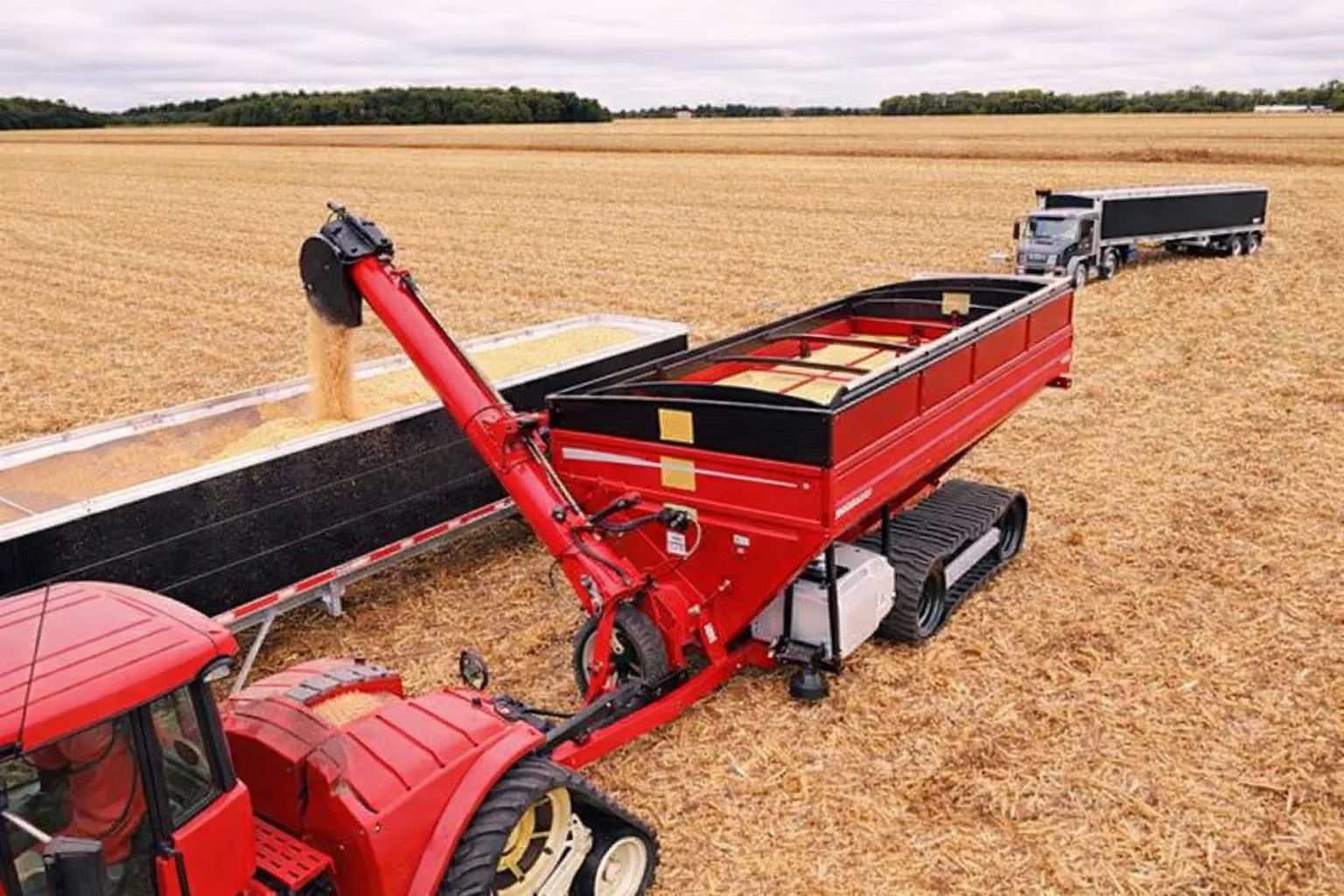
Commercial grain elevators — the high-throughput receiving, storage, and dispatch facilities at Australian port terminals, country receival sites, and large on-farm storage complexes — handle millions of tonnes of grain per season through bucket elevators, drag chain conveyors, and belt conveyors that run continuously 24/7 during peak harvest intake. The chain drives in these systems must deliver extraordinary reliability because the entire throughput system depends on each chain completing its duty without failure.
From the intake pit elevator that receives grain from trucks to the headhouse conveyor that distributes to storage cells, every chain in a commercial grain handler carries grain that is the economic output of thousands of square kilometres of Australian agricultural land. A chain failure that halts a receiving facility during peak harvest intake has consequences far beyond the mechanical repair cost.
The Australian Operating Challenge
Fine grain dust is an explosion risk in commercial grain storage environments. Australian grain handling facilities operating under AS/NZS 4718 and other applicable grain storage standards must use anti-static (conductive) chain in positions where grain dust concentrations may reach explosive levels. Standard carbon steel chain is adequately conductive; however, plastic or polymer-bushed chain must be confirmed as anti-static by the supplier before use in dust-explosion-risk zones.
Country receival sites during peak intake may run elevators 20 hours per day for 6–8 weeks. The cumulative hours per season exceed what most agricultural machinery experiences in several years. Bucket elevator chains under these conditions require measurement-based replacement scheduling aligned with the facility’s maintenance window — typically the off-season interval between harvest campaigns.
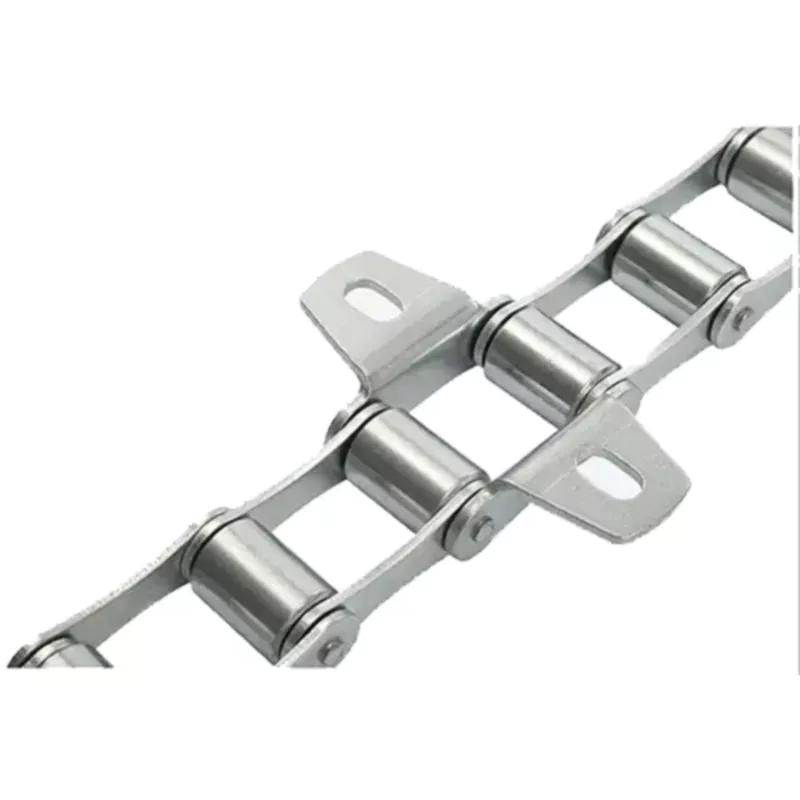
Cereal grain, canola, and pulse crops all generate fine dust during handling that settles into bucket elevator chain joints. In a country elevator running canola through a CA550 elevator chain, the fine oil-seed dust can reduce chain service life to 3–4 seasons. Sealed rollers and correct pin hardness significantly extend service life in high-abrasion grain dust environments.
Chain Specification Reference
| Position | Chain Standard | Special Property | Anti-Static | Service Life Target |
|---|---|---|---|---|
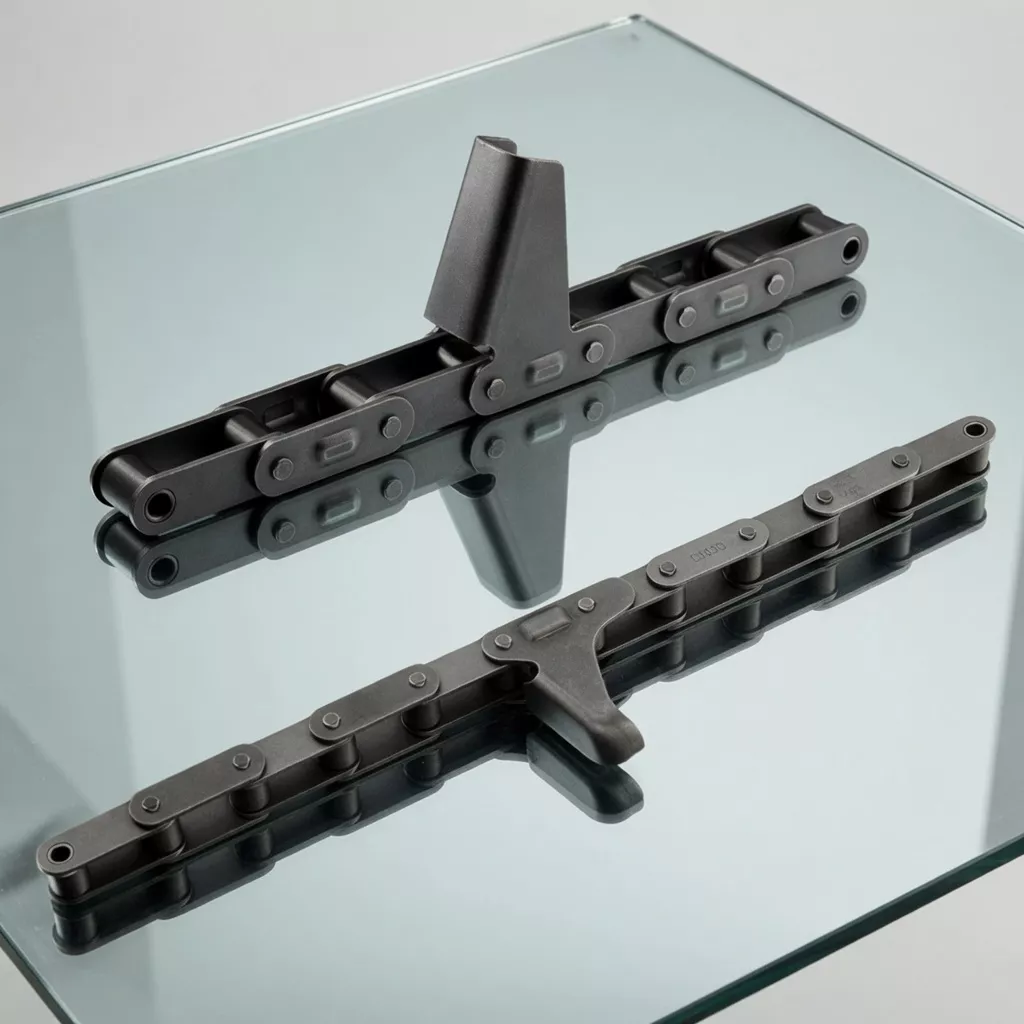
| Bucket elevator (intakes) | CA550, CA555, or CA620 with K2 buckets | Sealed rollers, hardened pins | Conductive carbon steel — confirmed | 3–5 seasons with correct maintenance |
| Drag chain conveyor | Heavy flat-top or paddle chain | Through-hardened pins, sealed rollers | Carbon steel — conductive | 3–5 seasons |
| Headhouse belt drive chain | ANSI 80 or ANSI 100 double-strand | Standard heavy-duty | Carbon steel — conductive | 4–6 seasons |
| Receiving pit conveyor | CA-type or flat-top attachment chain | Impact resistant, sealed rollers | Carbon steel — conductive | 3–5 seasons |
❓ Frequently Asked Questions
Explore Related Drive Components
Slasher, mower, tiller and custom-ratio gearboxes that drive the chain systems inside PTO-powered implements.
Explore Gearboxes →
⚡ PTO Shafts & Drivelines
Matched drivelines from T1 to T8 rating that feed the chain input sprocket on every PTO-driven machine we serve.
Explore Drivelines →
Specify the right chain for your machine
Tell us your application, operating environment, and machine model. We will recommend the exact chain and supply it with full material certification.