سلاسل زراعية لمعدات تقشير اللوز ومعالجة المكسرات
Almond de-hulling and nut processing equipment subjects chain drives to some of the highest instantaneous impact loads found in agricultural machinery per unit of transmitted power. Almond hulls — the outer husk of the almond — are extremely tough before mechanical processing, and the de-hulling drum that separates hull from shell requires chain drives rated not just for the continuous power transmission requirement but for the repetitive impact load as the rotating drum engages each batch of almonds and their tough attached hulls.
Australia’s almond industry — centred on the Riverland region of South Australia and Victoria’s Sunraysia — is one of the world’s largest almond-producing regions. The short, intensive harvest and de-hulling window means machinery availability is critical.
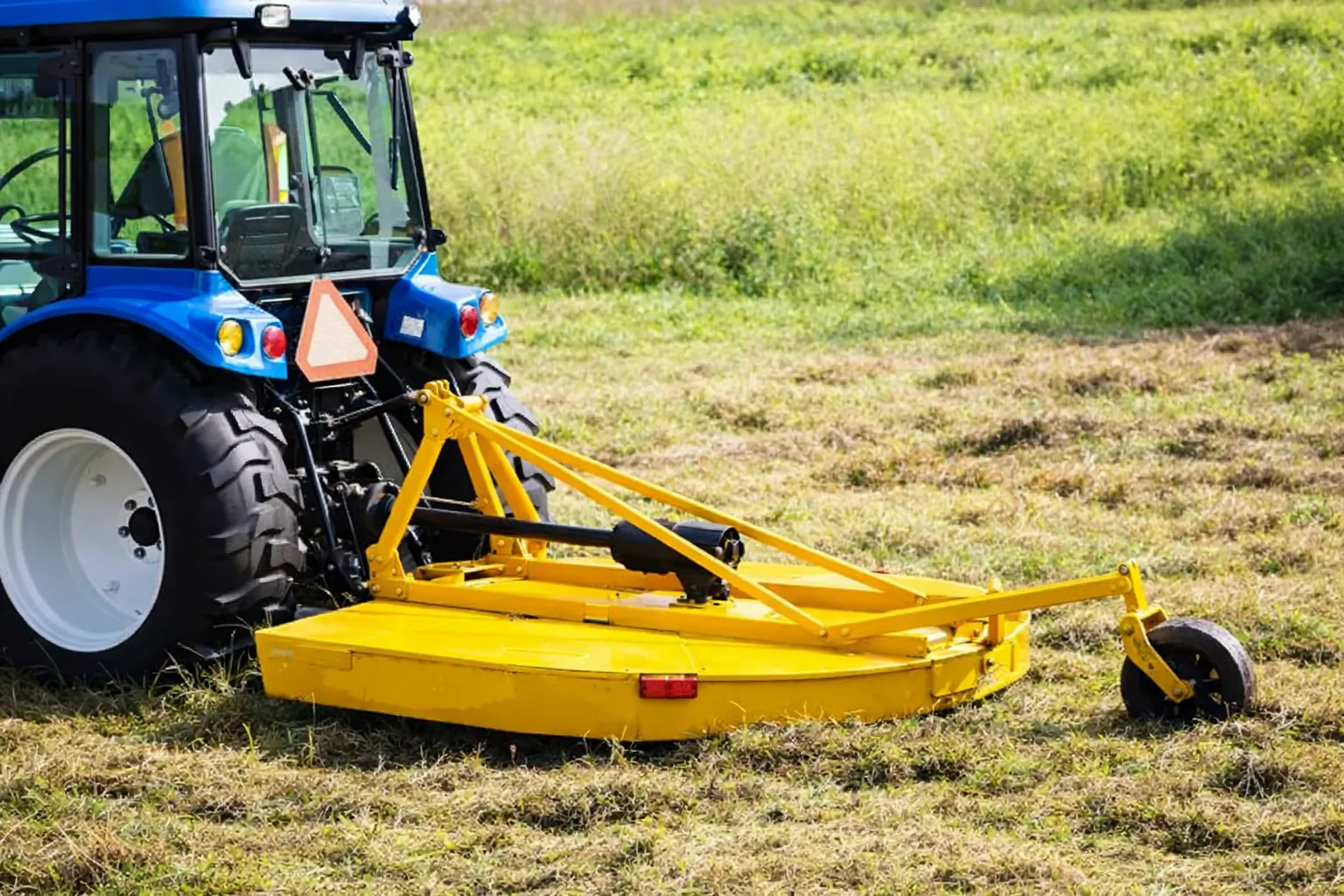
The Australian Operating Challenge
The almond hull is a tough fibrous outer husk that requires significant mechanical force to separate from the shell. De-hulling drums processing the full almond-with-hull introduce impact loads each time the drum engages a new batch — particularly when high-moisture or over-mature almonds with tough hulls are processed. Chain drives must be rated for the peak impact torque, not just the continuous running torque.
The de-hulling process generates fine almond skin and hull dust that permeates the processing building and settles into chain drives. This dust is mildly abrasive and hygroscopic — it absorbs moisture from the atmosphere and creates a damp abrasive paste inside chain joints. Sealed rollers and regular blowdown maintain chain joints clear of this contamination.
Australian almond harvest occurs over 4–6 weeks in March–April. Processing facilities run 16–20 hours per day during this window. The seasonal intensity means chains accumulate the equivalent of 6–8 months of light-duty industrial operation in a single short season. Replacement planning must account for this intensity rather than standard annual intervals.
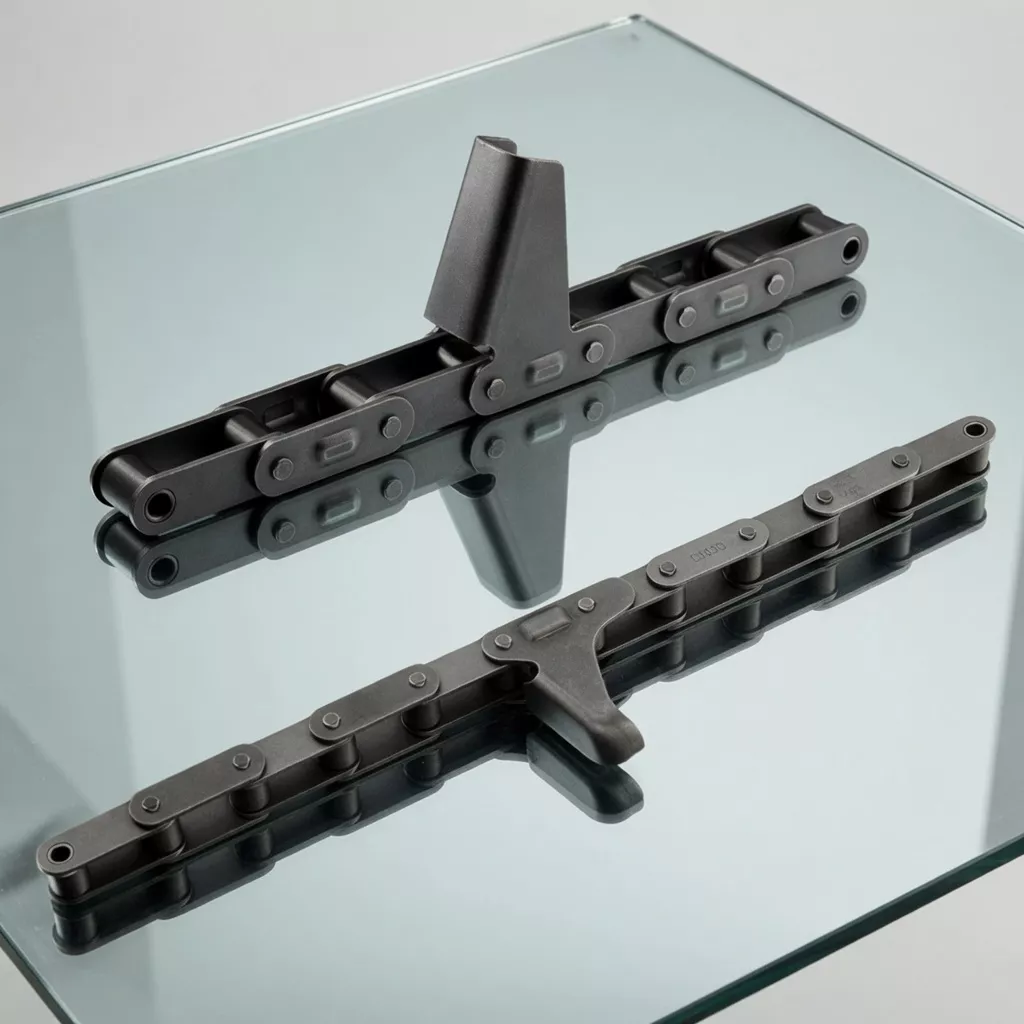
Chain Specification Reference
| Position | Chain Standard | درجة | Key Requirement | Replacement Trigger |
|---|---|---|---|---|
| De-huller drum main drive | ANSI 100 SP double-strand | SP reinforced side plates | Shock load rated, through-hardened pins | 1.5% elongation or audible knocking |
| Sorting conveyor chain | CA550 or ANSI 60 with attachments | Standard with sealed rollers | Hull dust resistance | 2.0% elongation |
| Blower and separator drive | ANSI 60 double-strand | Standard heavy | Almond skin dust sealed rollers | 2.0% elongation |
| Pre-cleaner conveyor | ANSI 60 single or double | Standard | Sealed rollers preferred | 2.0% elongation |
❓ Frequently Asked Questions
Explore Related Drive Components
Slasher, mower, tiller and custom-ratio gearboxes that drive the chain systems inside PTO-powered implements.
Explore Gearboxes →
⚡ PTO Shafts & Drivelines
Matched drivelines from T1 to T8 rating that feed the chain input sprocket on every PTO-driven machine we serve.
Explore Drivelines →
Send us your application specifications
Our drive engineers confirm the correct chain type, pitch, and duty class for your machine and operating region.