Agricultural Chains for Mobile and Lateral Move Irrigation Systems
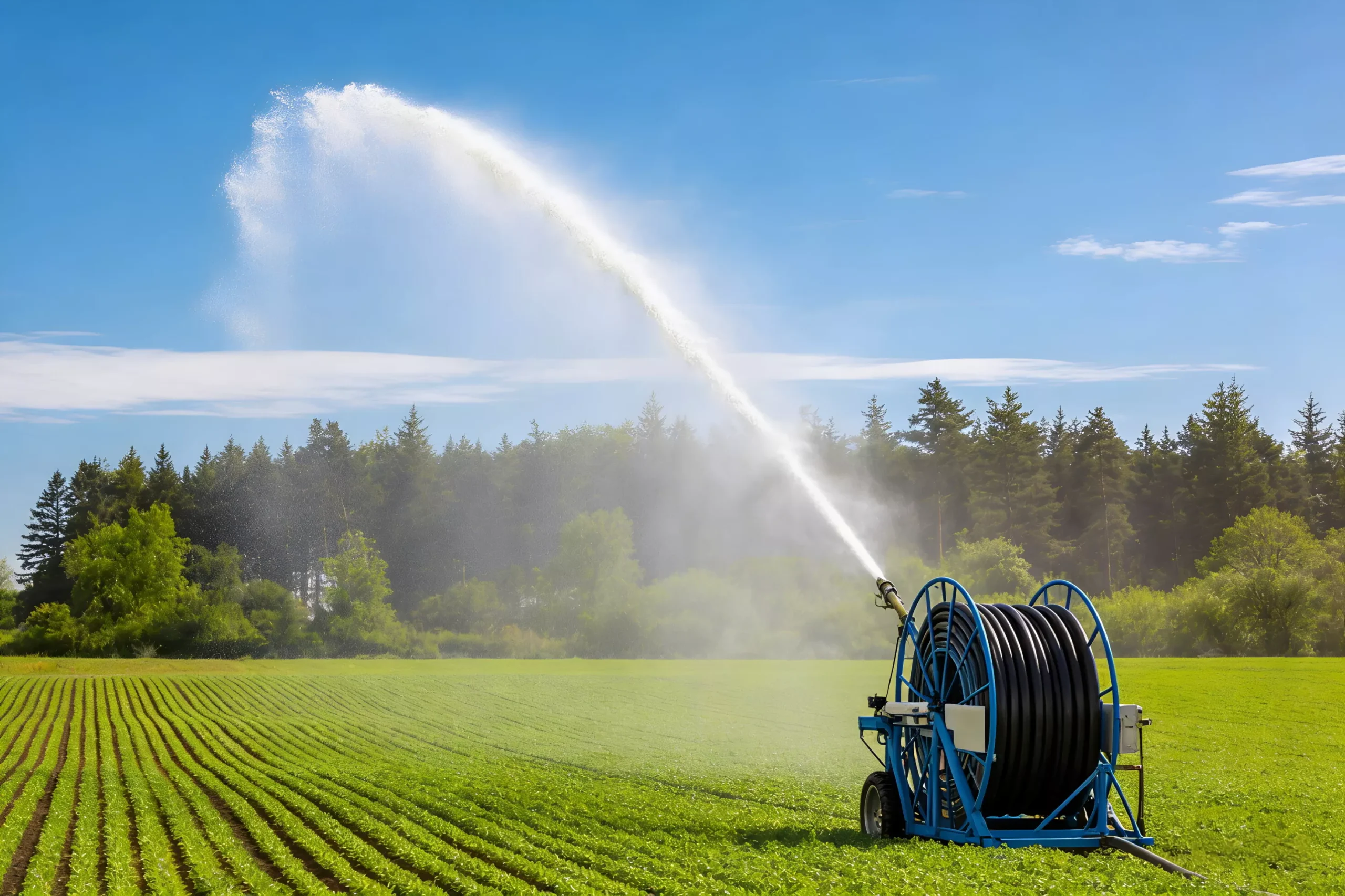
Mobile irrigation systems — centre pivots, lateral move irrigators, and travelling irrigators — use chain drives in their tower drive assemblies to move the irrigation machine across the paddock. These chain drives have one of the most demanding environmental exposure profiles in agriculture: they are outdoors 365 days per year, alternating between direct water spray during irrigation cycles and direct sun exposure during dry periods.
The repeated wet-dry cycling is particularly damaging to standard chain. Each irrigation cycle deposits water in chain joints; each dry period concentrates dissolved minerals and initiates corrosion. Over months and years, this cycling deposits scale in joints, locks rollers, and causes the classic rust-seizure failure mode of inadequately specified irrigation tower chains.
The Australian Operating Challenge
Australian irrigation water — particularly bore water and surface water with high mineral content in the Murray-Darling Basin and WA irrigation districts — deposits calcium carbonate and other mineral scale in chain joints during wet-dry cycling. This scale acts as a wedge that locks rollers and eventually seizes chain joints completely. Hot-dipped galvanised chain with sealed rollers significantly reduces scale adhesion compared to bare steel chain.
Irrigation tower chains are exposed to full UV irradiance for their entire service life. Lubricant oxidation under direct UV exposure is accelerated relative to shaded applications, and standard mineral oil loses viscosity faster in outdoor sun-exposed conditions. UV-stable synthetic lubricants or hot-dip galvanising with grease packing inside joints are the appropriate specifications for outdoor continuous-exposure chain.
As the irrigation machine drives across the paddock on its rubber-tyred towers, the tower drive chains pass through mud, crop debris, and field soil in wet conditions. This debris packs into chain joints and sprocket teeth, increasing wear and eventually causing chain stiffness that increases drive motor current draw and accelerates sprocket wear.
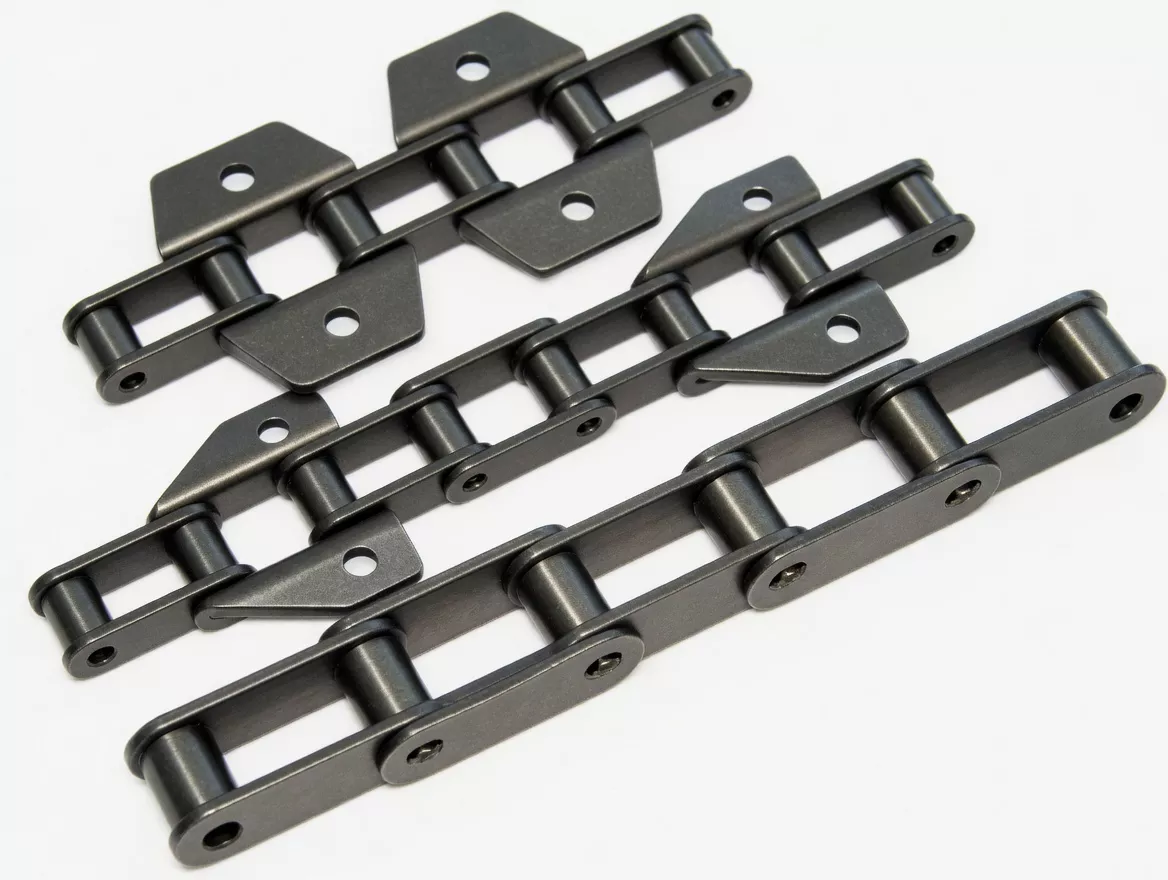
Chain Specification Reference
| Position | Chain Standard | Surface Treatment | Lubrication | Service Life Target |
|---|---|---|---|---|
| Tower drive chain (centre pivot) | ANSI 60 or ANSI 80 single-strand | Hot-dip galvanised preferred | Grease-packed joints, re-greased annually | 3–5 seasons with correct maintenance |
| Tower drive chain (lateral move) | ANSI 80 double-strand | Hot-dip galvanised or SS | Grease-packed or sealed joints | 3–5 seasons |
| Drive gearbox input chain | ANSI 60 double-strand | Standard or galvanised | EP gear oil or grease | 3–5 seasons |
| Mainline drive tensioner | ANSI 60 single-strand | Standard or galvanised | EP grease | 5 seasons |
❓ Frequently Asked Questions
Explore Related Drive Components
Factory-matched sprockets engineered to run with our chain range — simplex, duplex, plate wheel and taper-bore in all standard pitches.
Explore Sprockets →
⚪ Bearings
Sealed pillow-block and flange-unit bearings for every shaft that carries a chain sprocket in your machine.
Explore Bearings →
Specify the right chain for your machine
Tell us your application, operating environment, and machine model. We will recommend the exact chain and supply it with full material certification.