Agricultural Chains for Root Crop Harvesters: Abrasion-Resistant Drive for Potato, Carrot and Beet Operations
Root crop harvesting subjects chain drives to a combination of abrasive wet soil, continuous lateral loading, and direct physical contact with the crop and debris stream that few agricultural applications match. The digger web — the primary soil-separation conveyor on a potato or carrot harvester — is in continuous contact with moist sandy or loam soils containing embedded stones, root systems, and clods. Every articulation of the web chain occurs against this abrasive background.
This guide covers the chain specification requirements for potato harvesters, carrot harvesters, and sugar beet harvesters operating in Australian production systems — with specific attention to the digger web design, separation conveyor chains, and the sandy soil abrasion profile of Australian root crop growing regions.
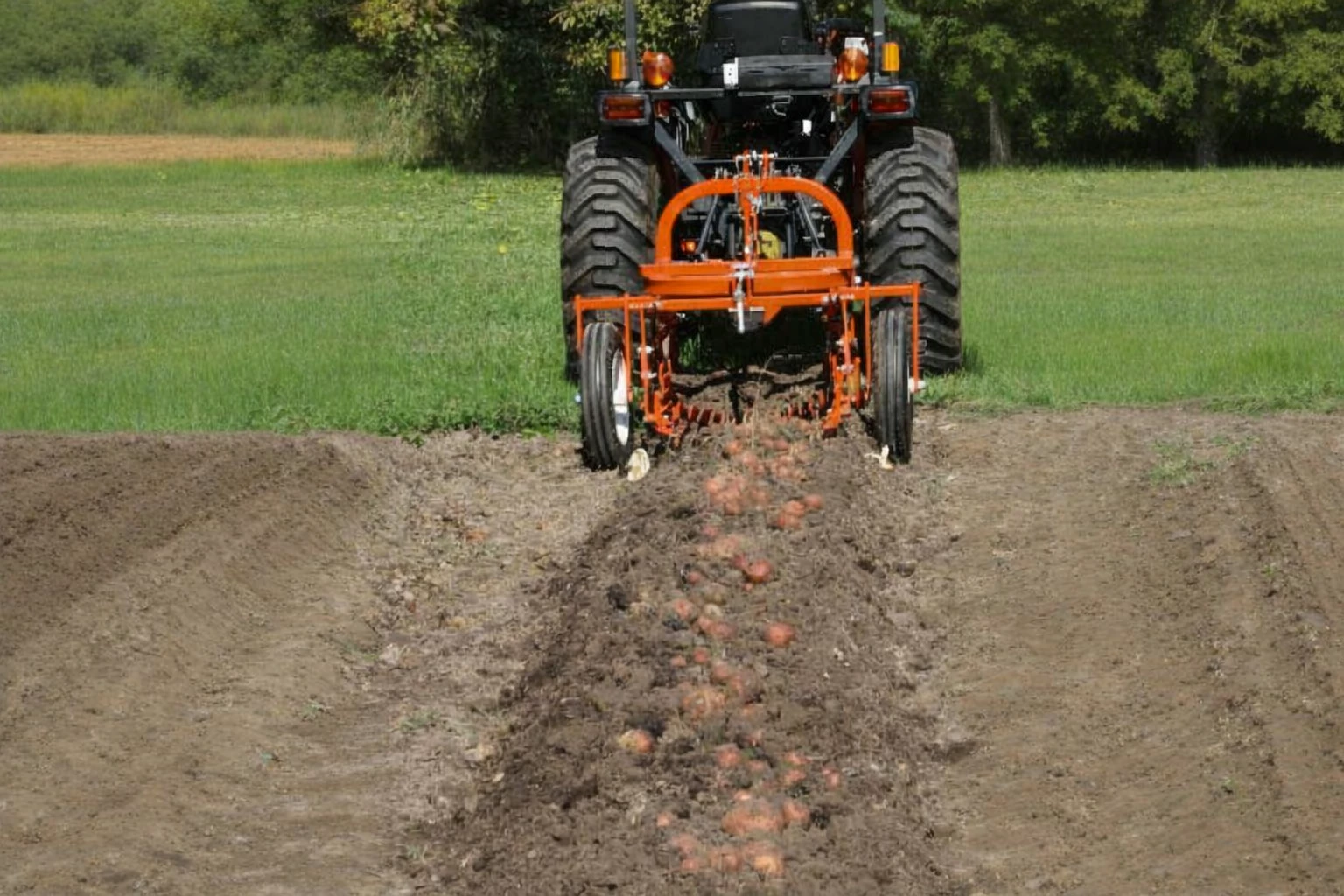
⚙️ Where Agricultural Chains Are Used on This Machine
The main power transmission chain driving the working components. Requires heavy-duty specification matched to the peak torque of the application.
Moves material through the machine. Must resist abrasion from crop material and environmental contamination while maintaining dimensional accuracy.
Sub-drives for auxiliary systems. Light to medium duty but must be dimensionally compatible with the primary drive timing where applicable.
Australian Root Crop Soil Conditions and Chain Wear
Root crops in Australia are grown predominantly in light sandy soils — coastal dunes, river flats, and sandy loam profiles — that are high in silica particles. These particles are harder than chain steel and act as a continuous abrasive on pin surfaces, bushing bores, and roller contact zones. Digger web chains in sandy soil conditions typically wear 3–4 times faster than the same chain in heavy clay soils with lower silica content.
Potato and carrot harvest in irrigation-dependent growing regions such as the Riverina, Manjimup, and Atherton Tablelands occurs at soil moisture levels that sustain crop quality but are high enough to form a paste of soil and silica around chain joints. This paste accelerates abrasion by maintaining particle contact with pin and bushing surfaces through the full work cycle.
The digger web carries the full load of lifted soil — typically 20–35 tonnes per hour of soil-crop-stone mix — in continuous rotation throughout the harvest day. Any stone that passes through the web and enters the sprocket zone creates impact loads that damage rollers and cause connected link failure if chain specification does not account for this event.
Chain Specifications for root crop harvesters
| Position | Chain Type | Pitch | Key Requirement | Special Specification |
|---|---|---|---|---|
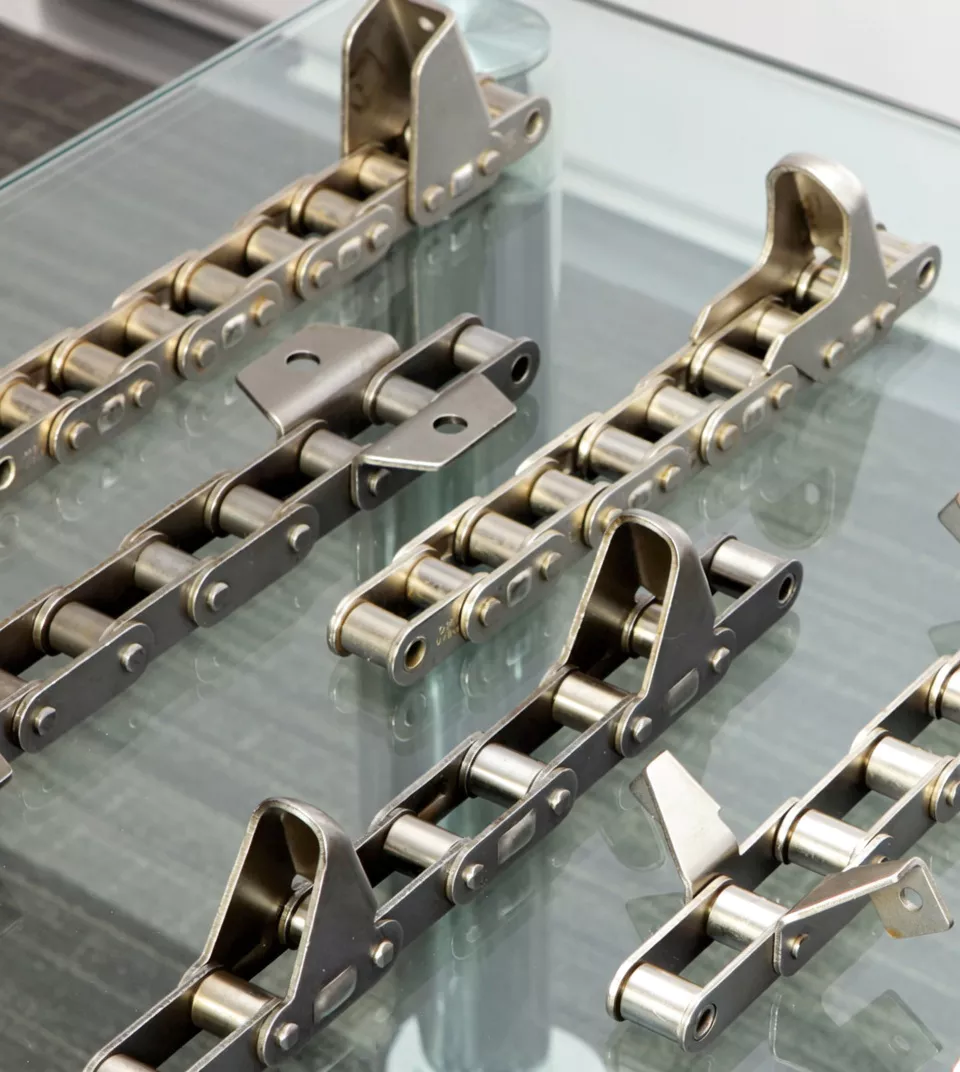
| Digger web (primary conveyor) | Heavy-duty welded steel or forged attachment chain | 78.1–101.6 mm | Max abrasion resistance | Forged side plates, induction-hardened pins |
| Secondary elevator web | CA-type or S-series with rod attachments | 41.4–50.8 mm | Soil and stone resistance | Through-hardened pin, case-hardened bushing |
| Top topper / haulm removal drive | ANSI 80 double-strand | 25.4 mm | Moderate duty, dusty environment | Sealed rollers |
| Stone separator elevator | Heavy attachment chain with sealed rollers | 50.8–78.1 mm | Stone impact resistance | Reinforced side plates |
Selecting the Right Chain
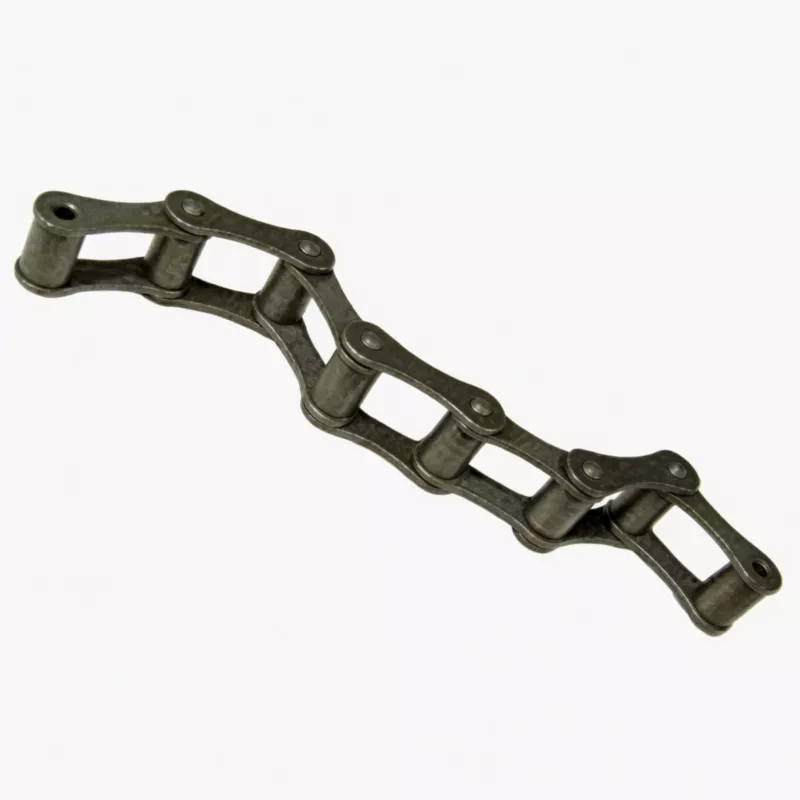
In root crop growing regions with high-silica soils, the primary wear mechanism is abrasion of pin outer surface and bushing bore. Specify chains with induction-hardened pins (HRC 55–60 surface) and case-hardened bushings (HRC 45–55). These resist the three-body abrasion of soil-crop-silica paste 2–3 times better than standard hardness chains in this soil type.
Sealed rollers prevent soil paste ingress into the roller-tooth contact zone during continuous operation in wet, silica-laden soil. The sealed bearing retains lubricant against the washing action of wet soil and maintains a lubricant film at the contact surface through the full harvest day.
On harvesters operating in fields with known stone risk — paddocks with rock-on-rock profiles or harvested land with embedded gravel — specify SP-series reinforced side plates on the secondary elevator chain. Stones that reach the chain zone create impact loads that crack standard chain side plates at connecting link holes.
Sandy-soil abrasion produces measurable chain elongation faster than most agricultural applications. In high-silica soils, digger web chains may reach the replacement threshold in 100–150 hours of operation. Measurement every 50 hours prevents the chain reaching over-elongation and beginning to damage sprocket teeth.
Maintenance Practices
Root crop harvester chain maintenance must account for the continuous wet-soil contact and the accelerated wear rates produced by Australian sandy crop soils.
Wash down web chains and sprockets with fresh water to remove soil paste from roller and pin surfaces. Apply lubricant to all chain joints while the chain is still warm from operation — warm chains accept lubricant penetration more effectively than cold chains. Inspect for stiff or seized rollers.
Measure web chain elongation across a 12-link span. Replace at 2.0% elongation for primary web, 1.5% for elevator chains. Inspect all sprocket tooth surfaces for abrasive grooving — replace any sprocket with visible groove wear extending more than 1 mm into the tooth face.
Full chain removal and inspection. Measure roller diameter for evidence of abrasive thinning. Chains showing measurable roller diameter reduction (more than 5% of original) should be replaced regardless of elongation measurement, as thin rollers concentrate load on sprocket tooth tips.
❓ Frequently Asked Questions
Explore Related Drive Components
Matched sprockets for every chain type we supply — plate wheel, taper-bore and hardened-tooth profiles manufactured to the same ISO standards.
Explore Sprockets →
️ Agricultural Gearboxes
Right-angle bevel and parallel-shaft gearboxes for PTO-driven implements — the upstream drive partner to every chain transmission.
Explore Gearboxes →
Enquire about matched chain-and-sprocket kits
We supply chain and sprockets together as matched sets — same standard, same quality grade, ready for immediate installation.