زنجیرهای کشاورزی برای ماشینهای اصلاح چمن
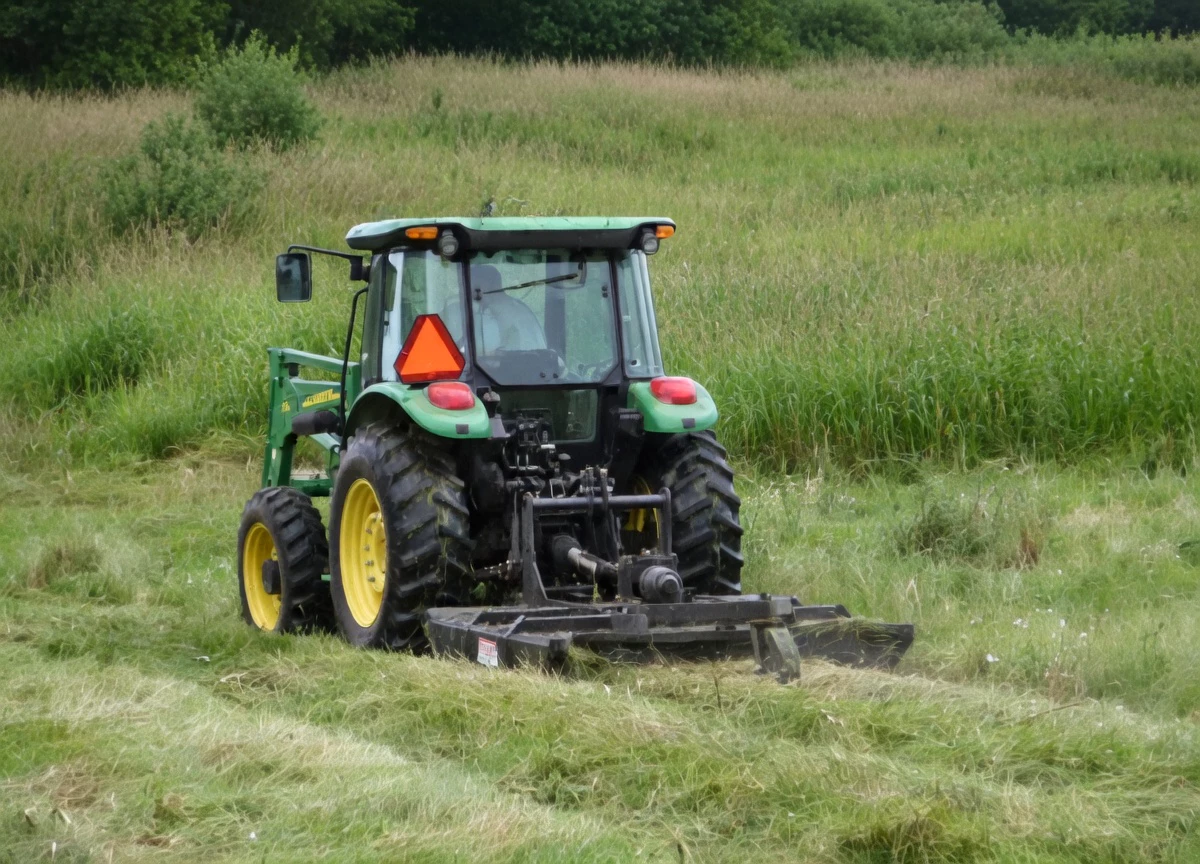
Disc mowers and mower conditioners represent one of the highest chain drive speeds in agricultural machinery. The disc cutting units on a modern disc mower rotate at 2,500–3,000 RPM and are driven from a central gearbox through disc interconnection shafts. The chain drives involved in the mower system — input gearbox drive chains, and where used, disc-to-disc driveline chains — operate at linear speeds that approach the engineering limits of standard roller chain.
High chain speed creates a specific failure mechanism profile that differs entirely from the slow-speed, high-load machinery discussed in most agricultural chain guides. At high speed, roller impact frequency increases, centrifugal load on the chain becomes significant, and lubricant fling-off is rapid. Heat generation in joints is high, and the consequences of a chain failure — the chain whipping through an enclosed mower housing at high energy — are severe.
The Australian Operating Challenge
A chain drive running at 540 RPM PTO input stepped up through a 1:2 gearbox to a 3,000 RPM disc drive has a chain with significant centrifugal load component in the free strands. At these speeds, the dynamic load on the chain includes not just the power transmission component but also the centrifugal tension in the free spans — a load that increases with chain mass and speed squared. Using the lightest-possible chain construction that meets the power requirement is critical for high-speed mower drives.
At high chain speeds, joint temperature rises significantly due to increased articulation frequency and lubricant fling-off from centrifugal force. Dry or under-lubricated mower drive chains reach operating temperatures of 80–120°C within minutes. At these temperatures, standard mineral oil lubricant film breaks down, and chain wear accelerates dramatically. Heavy-duty gear oil or grease with high-temperature additives, applied to enclosed chain positions before each season, is the appropriate lubrication approach.
Mower housings are designed to exclude cut material, but fine grass particles and crop dust inevitably enter chain positions. At high speed, this debris becomes an abrasive entrained in the chain contact zone. Regular cleaning of chain housings — removing accumulated debris before it compacts into an abrasive paste — is the primary maintenance defence.
Chain Specification Reference
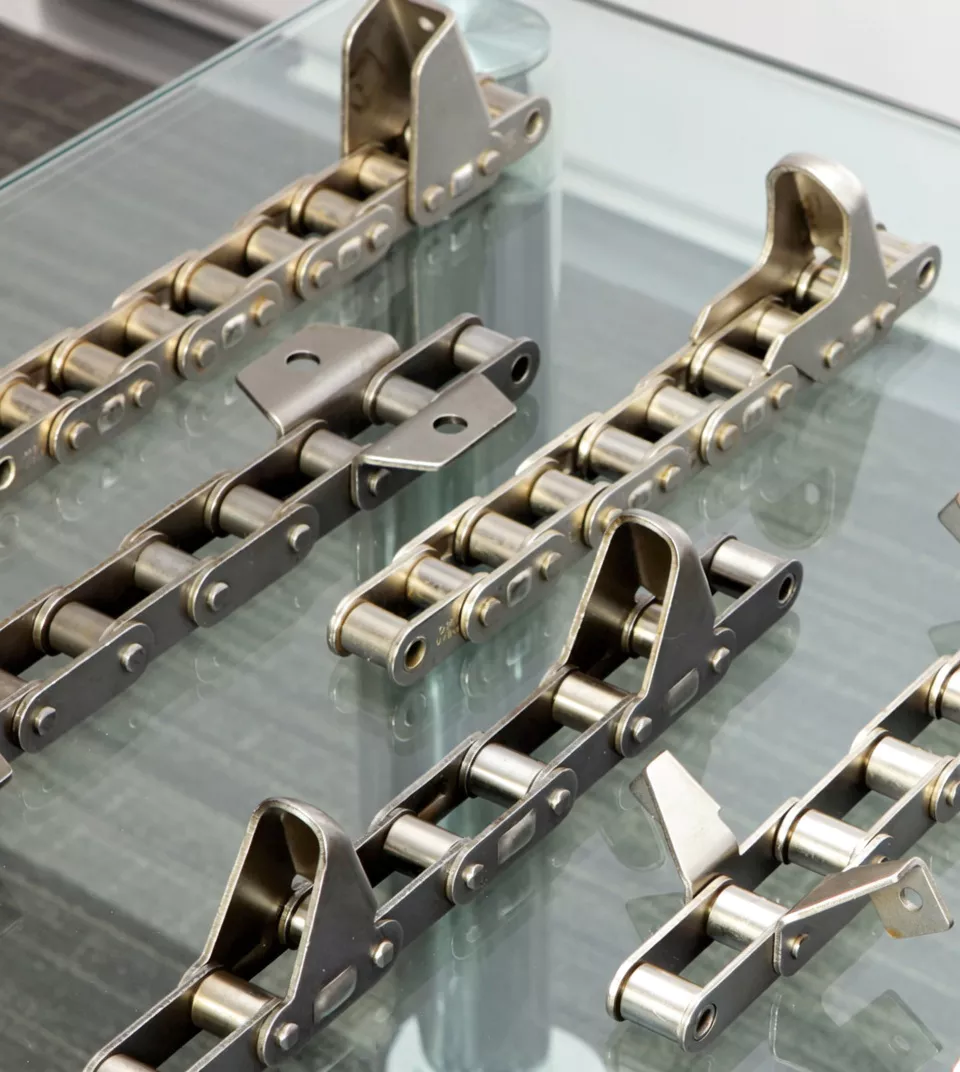
| Mower Drive Position | Chain Standard | Speed Class | Key Specification | Lubricant |
|---|---|---|---|---|
| PTO input to gearbox chain | ANSI 80 double-strand | Medium speed — 540 RPM input | Standard heavy-duty | Heavy EP gear oil |
| Gearbox output to disc drive (if chain) | ANSI 60 or ANSI 80 single-strand | High speed — 1,000–3,000 RPM | Precision roller, close tolerance | Grease-packed enclosed housing |
| Conditioner roll drive chain | ANSI 60 single-strand | Medium-high speed | Sealed rollers for debris resistance | EP gear oil or grease |
| Header drive secondary chain | ANSI 50 or ANSI 60 double-strand | Medium speed | Standard heavy-duty | Heavy mineral or synthetic EP |
❓ Frequently Asked Questions
Explore Related Drive Components
Matched sprockets for every chain type we supply — plate wheel, taper-bore and hardened-tooth profiles manufactured to the same ISO standards.
Explore Sprockets →
️ Agricultural Gearboxes
Right-angle bevel and parallel-shaft gearboxes for PTO-driven implements — the upstream drive partner to every chain transmission.
Explore Gearboxes →
Enquire about matched chain-and-sprocket kits
We supply chain and sprockets together as matched sets — same standard, same quality grade, ready for immediate installation.