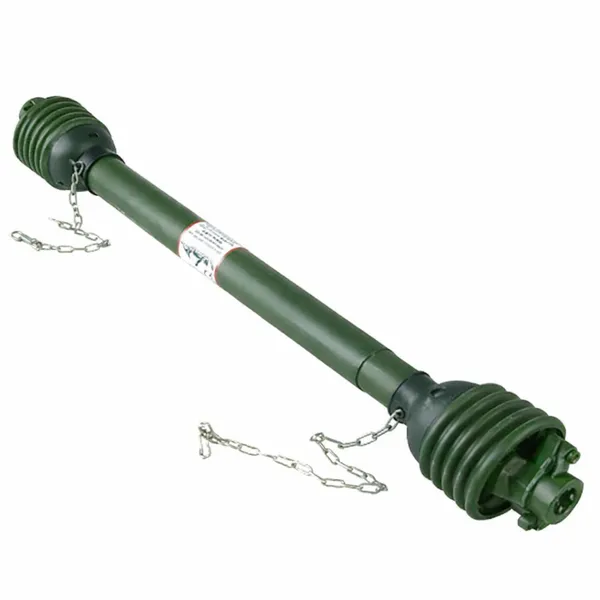
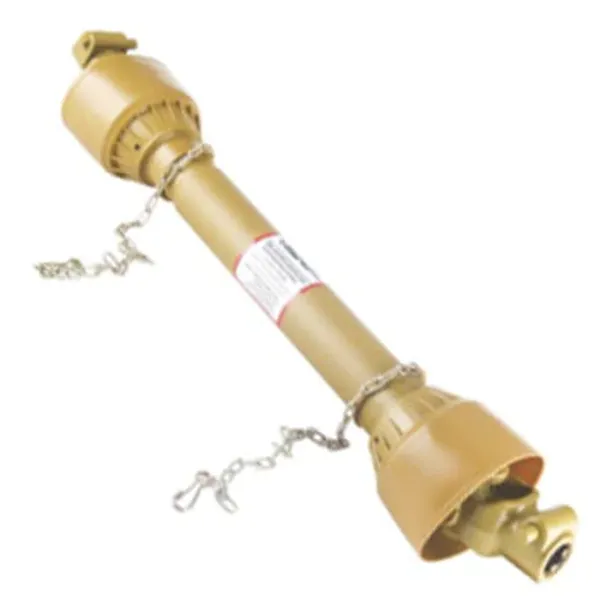
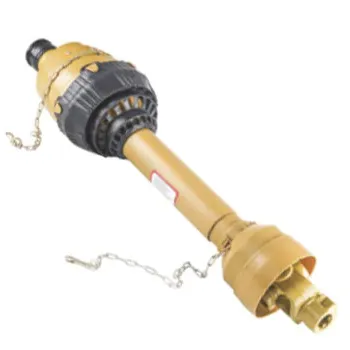
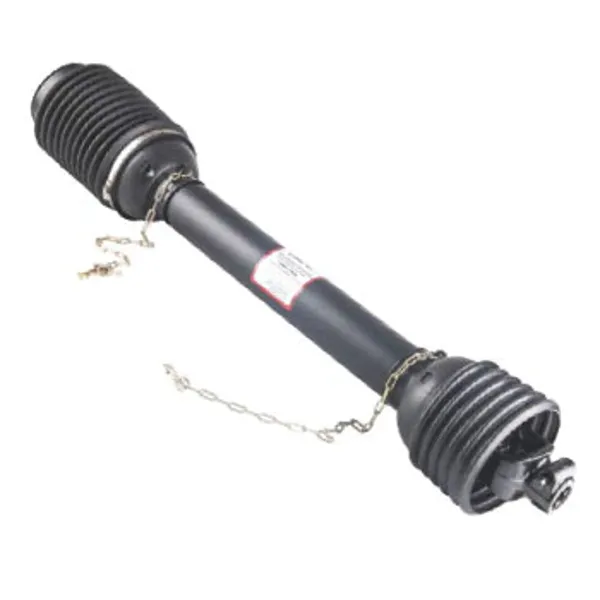
How do I know what T-series shaft my implement needs?
Match implement input power to the T-series rating at your tractor PTO speed. For example, a 60 kW slasher running at 540 RPM falls into the T6 power band. Implement manufacturers usually specify the original T-series in the operator manual. If the implement nameplate is missing, work backwards from the tractor — a 100 horsepower (74 kW) tractor running 540 RPM PTO needs at least a T6 shaft. When in doubt, oversize one step rather than under-sizing.
Are your drivelines compatible with Walterscheid, Bondioli or Comer patterns?
Yes — we manufacture to the major European OEM patterns including Walterscheid (W series), Bondioli & Pavesi (Global 1, Global 4, S series), and Comer (T-series, Multi-V). Our yoke profiles, spline configurations and tube cross-sections are dimensionally interchangeable. Provide the OEM part number stamped on the shaft tube or yoke and we can confirm the cross-reference. Where exact pattern matching is critical (heritage equipment, OEM warranty repairs), specify this in your enquiry.
Can I cut the shaft to length myself?
In principle yes — both inner and outer tubes can be field-shortened with a hacksaw or grinder, after which you must re-deburr the tubes carefully and measure the new compressed and extended lengths. Many farmers do this. We strongly recommend using our pre-cut option however — we measure, cut, deburr and re-test the assembly under controlled conditions, the safety shield is correctly trimmed to match, and the shaft ships ready to fit. Field-cut shafts where the safety shield is not correctly resized are a frequent source of dangerous tube exposure.
What is the difference between a friction clutch and a shear bolt?
Both are overload protection devices. A friction slip clutch absorbs the overload, slipping repeatedly until the implement stops driving and resets — ideal for implements that jam frequently and unpredictably (rotary cutters, balers, augers). A shear bolt is a single-use protection — a hardened bolt sized to fail at a calculated torque, after which the bolt must be replaced before drive resumes. Shear bolts cost virtually nothing per replacement but require operator intervention; slip clutches are more expensive upfront but minimise downtime on chronically jammable implements.
When do I need an overrun (free-wheel) clutch?
Whenever the implement has rotational inertia significantly greater than the tractor PTO inertia. Disc mowers, plunger balers, forage harvesters and rotary mulchers all keep spinning when the operator declutches — without an overrun clutch, that inertia back-drives the tractor PTO gearbox and over time damages the gearbox internals. The overrun clutch is a one-way ratchet that decouples the implement from the tractor when the implement is spinning faster than the input — letting it freewheel safely down. For severe-duty implements we recommend a combined slip-plus-overrun yoke that handles both forward overload and reverse inertia in one unit.
How often should I grease the universal joints?
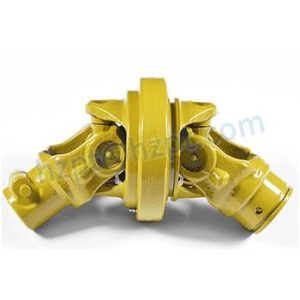
Standard cross-and-bearing kits should be greased every 8 hours of running time under normal conditions, more frequently in high-dust harvest conditions. Sealed cross kits with extended-life seals can run 50 hours between greases. Our wide-angle CV joints typically run 250 hours between regreasing. Always grease through the cross zerk in short pulses — a few pumps per pulse, several pulses per service — rather than a single long grease gun blast that can blow the seals out. Check shaft yoke ears for hairline cracks every season.
Can you supply matched driveline-and-gearbox kits?
Yes — many customers find it simpler to order driveline and implement gearbox as a matched set. Specify your tractor power class, PTO speed, working angle and implement type, and we ship a kit with driveline, gearbox and any sprockets or chains all matched to consistent power ratings. Particularly popular with Australian implement OEMs and contractors building or rebuilding fleet equipment.
Do your safety shields meet Australian standards?
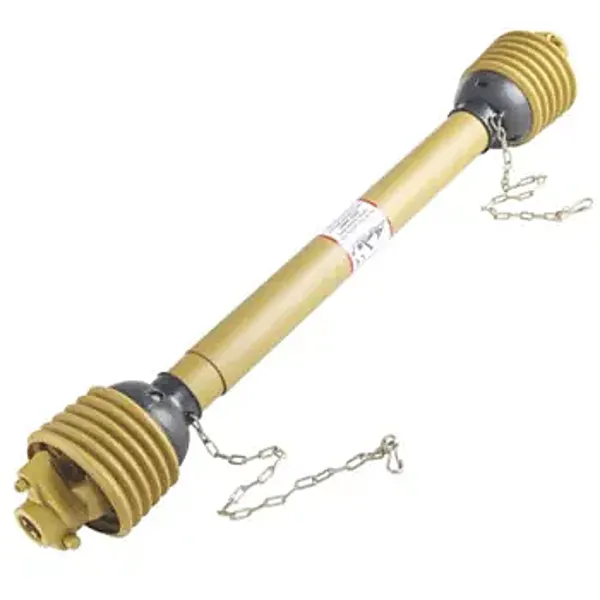
All our drivelines ship with EU 89/392/EEC pattern safety shields — the same standard adopted by the Australian agricultural machinery industry. Shields are anti-rotation tethered, fully cover the working tube length, and incorporate end caps over both yokes. We strongly advise against operating any PTO driveline with shields removed, damaged or partially missing. Replacement shield kits are available for any of our standard T-series shafts as a stand-alone supply.
What warranty applies to your PTO drivelines?
All drivelines carry a 12-month manufacturing defect warranty from date of dispatch, covering material flaws, dimensional non-conformance, premature joint failure under rated load and heat-treatment defects. Wear from normal field use is not covered, nor is damage caused by under-sized shaft selection, missing protection, or operation outside rated angle and speed. Where a warranty claim is approved, replacement parts ship at our cost; the worn shaft is requested for return inspection.