PTO Shaft for Crop Sprayer — Clean, Consistent Pump Drive for Maximum Chemical Efficacy
The crop sprayer PTO shaft — also referred to as a field sprayer pump driveshaft, agricultural sprayer cardan shaft, or chemical pump PTO driveline — is the mechanical link that converts tractor rotational power into the hydraulic pressure needed to atomise and deliver crop protection chemicals across the spray boom. Whether you operate a 600-litre mounted sprayer on a market garden in Queensland or a 6,000-litre self-fill trailed sprayer covering thousands of hectares of cereal in the Western Australian Wheatbelt, the PTO shaft’s ability to deliver steady, uninterrupted power to the diaphragm or centrifugal pump determines nozzle pressure consistency — and therefore the uniformity and efficacy of every chemical application you make.
Crop sprayer PTO shafts operate in a uniquely challenging chemical environment: airborne spray drift deposits pesticide residues on all exposed components, while tank washings and pressure-testing water routinely contact the shaft. Our crop sprayer PTO shaft (Series 3/4) is engineered with chemical-resistant PE guards, sealed cross-joint bearing options, and corrosion-resistant surface treatments that withstand the acidity range of modern agrochemical formulations — protecting shaft integrity across the full spray season and beyond.

Browse our full crop protection equipment PTO shaft range or contact us for sprayer pump driveline specifications.
Technical Specifications — PTO Shaft for Crop Sprayer
| Parameter | Standard Value / Configuration | Customisable Range |
|---|---|---|
| Series | Series 3 / Series 4 | Series 2–5 |
| PTO Speed | 540 RPM | 540 / 1000 RPM |
| Power Rating | Up to 38 kW | 5–75 kW |
| Continuous Torque | 440 N·m | 80–900 N·m |
| Compressed Length | 560–800 mm | 400–1,600 mm |
| Extended Length | 880–1,320 mm | 600–2,100 mm |
| Tube Profile | Lemon (S3) / Triangular (S4) | Lemon / Tri / Star |
| Universal Joint Type | Cross-joint standard / CV optional | Cross-joint / CV ±35° |
| Working Angle | ±20° | ±20° to ±35° |
| Input Spline (Tractor) | 1-3/8″ × 6 spline | 1-3/8″×6 / 1-3/8″×21 / 1-3/4″×20 |
| Output Spline (Pump) | 1-3/8″ × 6 / SAE-B flange optional | Spline / SAE A/B flange / metric bore |
| Overload Protection | Friction clutch (chemical-resistant) | Friction / Shear bolt |
| Slip Torque | 320–520 N·m | 80–900 N·m |
| Clutch Material | Chemical-resistant composite friction disc | Standard / CR composite |
| Guard Type | Chemical-resistant PE half-cone | Half / Full cone PE |
| Guard Surface | Smooth bore (no granule traps) | Standard / Smooth-bore |
| Sealed Bearing Option | IP55 sealed cross-kits available | Open / IP55 / IP67 |
| Surface Finish | Zinc phosphate + chemical-resistant enamel | Various |
| Grease Specification | NLGI #2 EP, chemically inert base | Standard / Synthetic inert |
| Grease Interval | Every 8 hours (sealed: 25 hrs) | 8–50 hrs |
Working Principle & Structure of the Crop Sprayer PTO Shaft
In a tractor-mounted or trailed crop sprayer, the PTO shaft delivers 540 RPM to the sprayer pump — most commonly a diaphragm pump (for herbicide and fungicide applications requiring low-to-moderate flow at moderate pressure) or a centrifugal pump (for high-volume, lower-pressure applications). The pump converts this rotational energy into hydraulic flow, which is filtered, regulated by a pressure-control valve, and distributed to the spray boom section valves and ultimately to the individual nozzle bodies.
The shaft itself sees a steady, consistent load under normal operation — diaphragm pumps are positive displacement devices with relatively uniform torque demand across their pressure range, while centrifugal pumps have a load curve that peaks at high flow rate (low pressure). The primary engineering concern for the shaft is not peak torque but chemical resistance and bearing longevity in an environment of continuous spray residue exposure. Our chemical-resistant composite friction disc clutch material resists the plasticising effect of herbicide solvents that cause standard friction disc degradation within a single spray season.
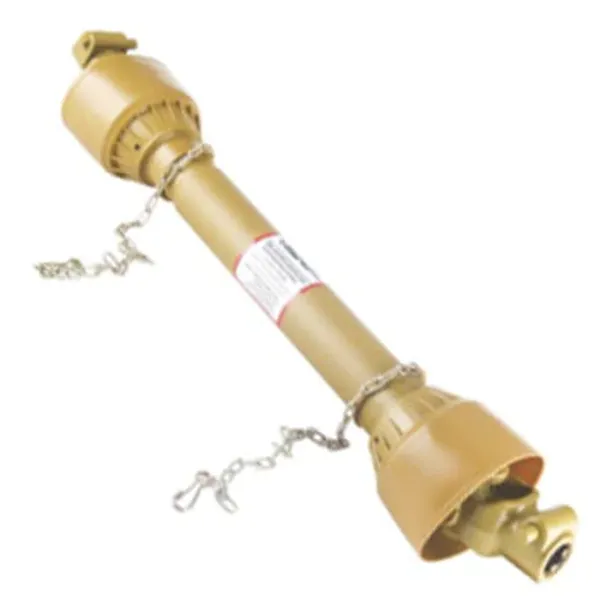
Core Advantages of Our PTO Shaft for Crop Sprayer
Chemical-Resistant Friction Disc Composite
Standard friction disc materials swell and lose torque calibration when exposed to herbicide/fungicide solvents. Our CR composite discs maintain their set slip torque across the full spray season — critical for consistent pump protection.
Smooth-Bore Guard Interior
Standard guards have internal ribs that trap spray residue and create concentrated chemical attack points. Our smooth-bore guard design allows complete internal drainage and cleaning — preventing the residue accumulation that degrades PE guards from the inside.
IP55 Sealed Cross-Kit Option
Sealed bearing cups prevent spray drift from entering cross-joint bearing surfaces — eliminating the corrosion failure mode that causes cross-kits to seize in the acidic spray environment.
⚖️ Lightweight for Boom Balance
At 2.8 kg assembled, minimal hitch offset load — critical on trailed sprayers with long booms where rear-hitch load distribution directly affects boom section height stability.
SAE Flange Output for Sprayer Pumps
SAE-A and SAE-B 2-bolt flange output yokes available for direct coupling to Hypro, Bertolini, and Comet pump flanges — eliminating the spline adaptor that is often the first corrosion failure point on sprayer drivelines.
♻️ Wash-Down Safe Design
All external materials and finishes rated for routine pressure-washer cleaning with standard alkaline tank cleaners — no delamination, no seal damage from annual chemical clean-outs.
Brand Compatibility, Spare Parts & Cross-References
Our pto shaft for crop sprayer is engineered as a direct drop-in replacement for OEM shafts on: Hardi, Agrifac, Amazone, Horsch, John Deere, CNH (Case/NH), Lemken, Croplands. Our cross-reference database (12,000+ records) confirms exact fitment before every dispatch.
⚠️ Disclaimer: Brand names are used solely for parts-compatibility cross-referencing. No commercial affiliation with any listed sprayer manufacturer is claimed.
Spare parts stocked: Cross-kits (open / IP55 / IP67 / Viton-seal / Moly-packed) · Cam spring kits · Friction disc sets · Guard cones · Retaining chains & straps · Yoke collars · Shear bolt sets · Grease nipples
→ Browse all PTO shaft accessories and spare parts
Compliance, Standards & Australian Regional Demand
Standards & Regulations: Standards: ISO 5673-1:2014, EN 907 (sprayer safety). APVMA Code of Practice for Use of Pesticides in Agriculture — operator duty of care extends to equipment maintenance; a leaking or failed PTO shaft that contaminates spray chemical around the tractor operator is a chemical exposure risk. AS 4024.3601 guarding. State agricultural chemical officer requirements: SA (PIRSA), QLD (DAF), WA (DPIRD). Chemical resistant PPE required when working near sprayer drivetrain components.
Key Australian Demand Regions: Major demand zones: WA Wheatbelt (broadacre herbicide applications), Riverina NSW (irrigation/dryland), Darling Downs QLD (cotton/grain), Eyre Peninsula SA, Gippsland VIC (pasture), Carnarvon WA (horticulture).
All products are supplied with CE Declaration of Conformity (where applicable), ISO material certs, dimensional inspection reports, and surface treatment test data. GST-inclusive AUD invoicing for all Australian orders.
Quick Selection Guide — PTO Shaft for Crop Sprayer
| Parameter | How to Determine | Selection Guidance |
|---|---|---|
| Pump type | Diaphragm / Centrifugal / Piston | Diaphragm: most common; use friction clutch with chemical-resistant disc |
| Pump rated power (kW) | From pump spec plate | Series 3 (≤18 kW); Series 4 (18–38 kW) |
| PTO speed required | 540 RPM for most sprayer pumps | Confirm on pump spec plate — some centrifugal pumps specify 1000 RPM |
| Output connection type | Spline / SAE-A flange / SAE-B flange | Check pump input coupling — flange connection preferred for chemical environment |
| Sprayer type | Mounted / Trailed / Self-propelled | Self-propelled: no PTO shaft; trailed: measure long toolbar distance carefully |
| Tractor PTO spline | Count splines on tractor stub | 1-3/8″×6 standard on most spray tractors 40–100 HP |
Step-by-Step Installation Guide — PTO Shaft for Crop Sprayer
- [Safety and PPE] Full PPE for chemical environment: chemical-resistant gloves, eye protection. PTO off, engine off, handbrake set.
- [Setup and measure] Attach sprayer (mount or hitch); set sprayer at field travel configuration; measure PTO-to-pump input distance.
- [Stub preparation] Clean tractor PTO stub with water; dry; apply thin coat of corrosion-inhibiting anti-seize paste to splines.
- [Tractor yoke] Install tractor-end yoke; push until locking pin engages. Avoid touching chemical-contaminated sprayer surfaces without gloves.
- [Pump connection] Install machine-end yoke onto pump input shaft or SAE flange; tighten coupling fasteners to pump manufacturer spec.
- [Travel check] Check shaft telescopes freely through full boom lift/fold travel range without binding.
- [Guard fitting] Fit half-cone guard; attach retaining strap to tractor lower link bracket; confirm guard cannot rotate.
- [Pressure verification] Engage PTO at idle; verify pump pressure gauge reaches specification; check all boom section pressures.
- [Post-spray cleaning] Flush shaft exterior with clean water after each spray session; regrease at 8-hour intervals.

️ Troubleshooting — Common Issues & Solutions
⚠️ Pump pressure fluctuating in sync with shaft rotation
Root Cause: Worn cross-joint causing speed ripple; shaft imbalance
Fix: Replace cross-joint cross-kit; check shaft balance; inspect tube profile for wear
⚠️ Friction clutch glazing mid-season
Root Cause: Herbicide solvent infiltrating standard friction discs; chemical plasticising
Fix: Replace with CR composite friction disc set; confirm guard is sealing — prevent spray contamination of clutch
⚠️ Cross-joint seizing after spray season
Root Cause: Spray drift entering open bearing cups; acid corrosion of bearing steel
Fix: Upgrade to IP55 sealed cross-kits; clean and regrease after every spray day
⚠️ SAE flange coupling leaking grease at pump interface
Root Cause: O-ring at flange face degraded by chemical contact
Fix: Replace O-ring with Viton material; clean flange faces thoroughly before reassembly
⚠️ Shaft difficult to telescope after alkaline tank cleaner
Root Cause: Alkaline cleaner stripping grease from tube profile
Fix: Re-apply EP2 grease to tube profile immediately after tank cleaning; do not use caustic cleaners near profile bore
Engineer’s Field Notes — Australian Case Studies
Merredin, WA
Wheat/canola broadacre — Hardi Commander 6000L trailed sprayer
“”Spray season is 3 months of continuous use. Your IP55 sealed cross-kits mean I grease every 25 hours instead of every day. The chemical-resistant disc clutch hasn’t glazed once in two seasons.””
Narrabri, NSW
Cotton pest management — Croplands trailed boom, 800 ha cotton
“”Cotton spray programs require precise nozzle pressure — any shaft vibration shows up in droplet size distribution. Your balanced Series 4 shaft eliminated the pressure fluctuation we had with the worn OEM shaft.””
Mildura, VIC
Citrus fungicide application — mounted 1200L Bertolini pump
“”SAE-B flange output to our Bertolini pump — clean connection, no adaptor fitting. Has survived 4 years of annual citrus spray programmes including copper hydroxide which is particularly corrosive.””
Dalby, QLD
Grain sorghum herbicide — John Deere R4038 trailed sprayer
“”JD dealer wanted 3 weeks and 3× the price. Your cross-reference confirmed the fit, dispatched same day, arrived in 2 days. Spray season saved.””
Bordertown, SA
Canola/lentil — trailed sprayer, variable-rate fungicide application
“”ISOBUS variable-rate controller requires consistent pump speed. The balanced shaft eliminated the rate controller errors we were seeing — pressure was fluctuating ±5% with the worn old shaft.””
❓ Frequently Asked Questions
Why does a crop sprayer PTO shaft need chemical-resistant materials?
Does my crop sprayer PTO shaft need a CV joint?
What is the correct pump drive speed for a crop sprayer?
How do I clean the PTO shaft after spraying without damaging it?
Can I use the same PTO shaft for my sprayer and my fertiliser broadcaster?
Related Products — Agricultural Gearboxes & PTO Accessories
We manufacture the complete drivetrain ecosystem around PTO shafts. Our agricultural gearboxes are precision-matched to our shaft series for minimised vibration and maximum system reliability.
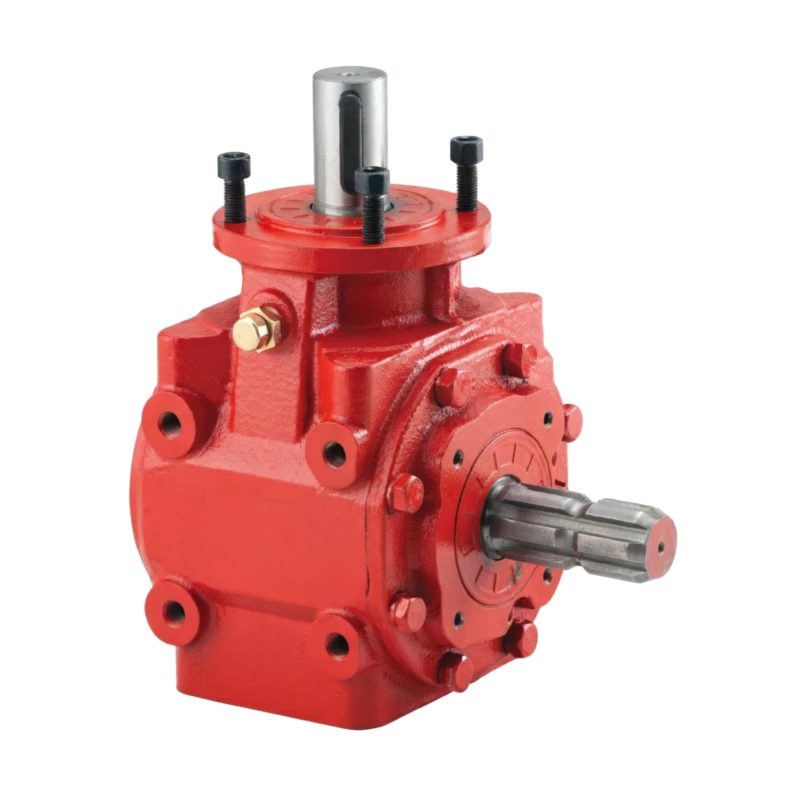
Agricultural PTO Gearbox
Bevel, inline, and custom gearboxes matched to PTO shaft series for minimal vibration.
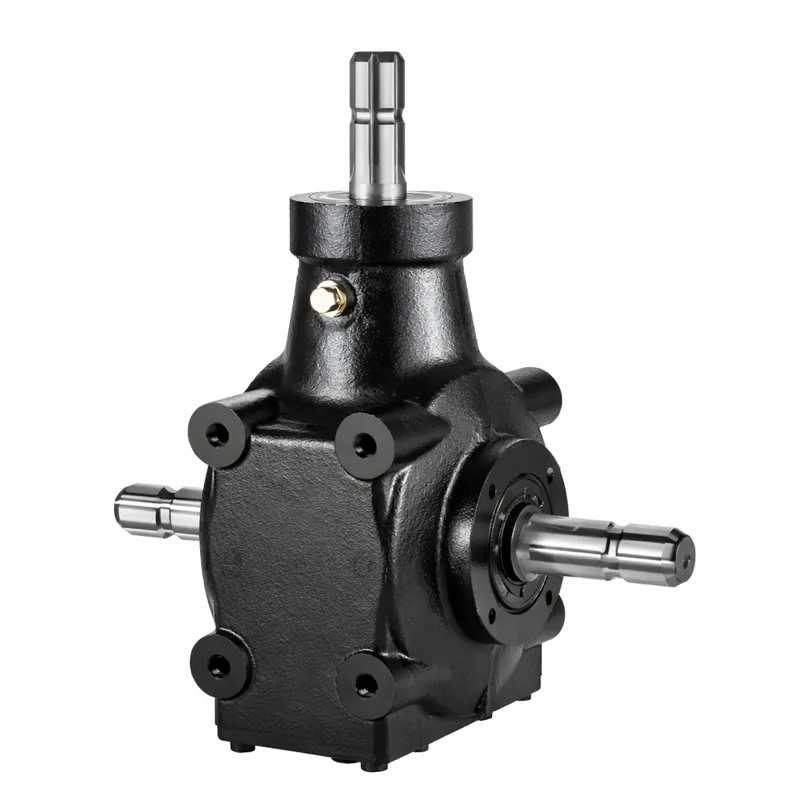
Cross-Kits & Clutch Components
IP55 sealed, Moly-packed, Viton-seal, and standard cross-kits; friction disc sets; cam spring kits.
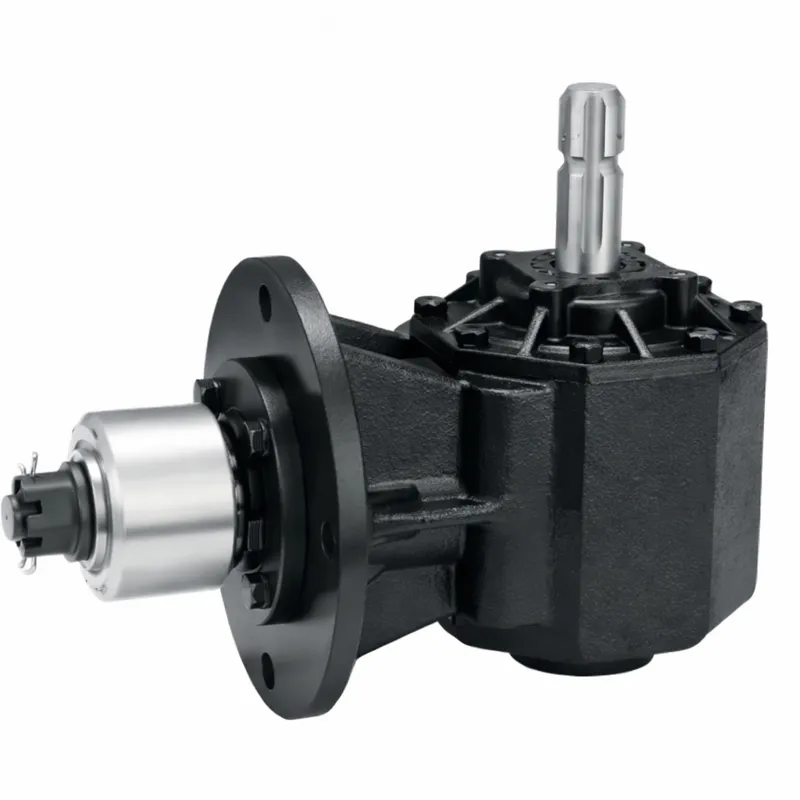
Guards & Safety Components
Chemical-resistant, sulphur-resistant, UV-stabilised, and heavy-wall PE guard cones.
Partner with Us — OEM, Wholesale & Direct Supply
Source a Reliable PTO Shaft for Crop Sprayer — Today
From a single breakdown replacement to an ongoing supply agreement for your dealership or OEM line — we’re ready to deliver:
- ✅ Cross-reference confirmed before dispatch — guaranteed fit
- ✅ Custom specifications: length, spline, clutch setting, seal material, guard type
- ✅ Volume and dealer pricing programmes available
- ✅ Same-day dispatch on stocked items — express Australia-wide freight
- ✅ Full compliance documentation: CE, ISO material certs, inspection reports