Chaînes agricoles pour les systèmes de stockage de conteneurs et de champs
Mother bins — the large central field storage units that receive grain from chaser bins and hold it for truck transfer during Australian broadacre harvest — contain chain-driven floor and elevator systems that are permanently parked outdoors in extreme Australian conditions. Unlike machinery that moves to a shed between seasons, the mother bin sits in the paddock exposed to the full range of Australian climate: summer temperatures above 45°C, UV irradiance that degrades lubricants and seals, and the wide daily temperature cycling of inland regions.
The floor chain in a mother bin must start reliably from a fully-loaded cold stop — often at the most critical point in the harvest day when truck delivery windows are closing — and must do so without failure across multiple harvest seasons.
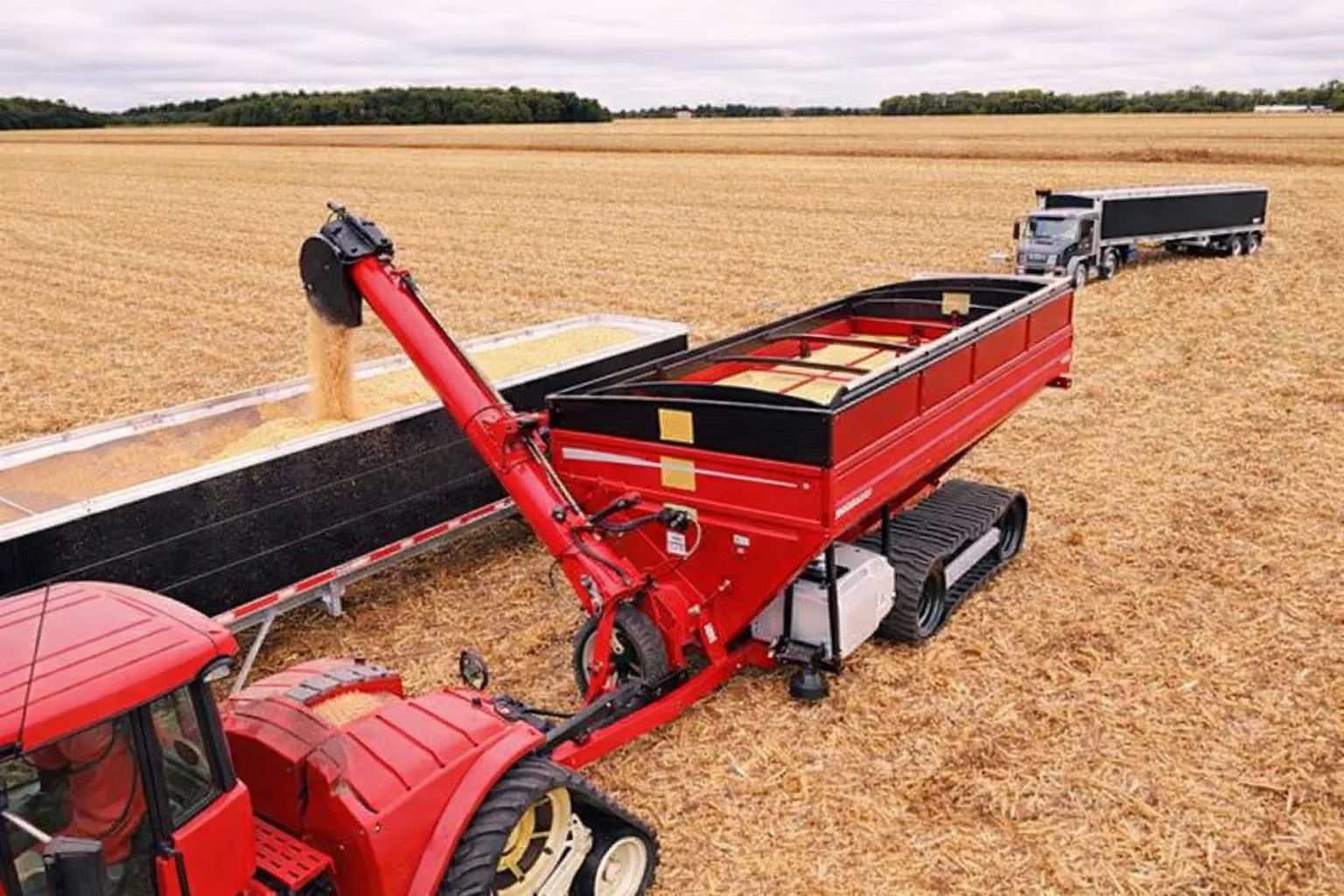
Le défi opérationnel australien
Australian inland harvest regions experience temperatures from -3°C winter nights to 46°C+ summer days. Mother bins parked in paddocks experience this full range with no climate control. The daily thermal cycling of steel chain joints from cold to hot creates fatigue stress concentrations at connecting links and side plate holes that accumulate across seasons. Chains must be specified for the thermal fatigue profile, not just the load profile.
Lubricants on exposed chains oxidise significantly faster under direct UV exposure than in shed environments. A mother bin chain lubricated at the end of one harvest season may have no effective lubricant film remaining when it is needed at the start of the next — 8–10 months of direct UV and temperature cycling can fully oxidise standard mineral oil lubricant. Heavy grease with UV-stable thickeners or synthetic lubricant are required for outdoor stationary chain storage.
Starting a loaded mother bin floor chain after months of stationary storage is the most demanding moment in its service life. The chain is cold, any remaining lubricant has aged, and the full load of grain is pressing down on the chain from above. This combination of cold joints, aged lubricant, and full static load creates a startup condition where under-specified chain frequently fails.
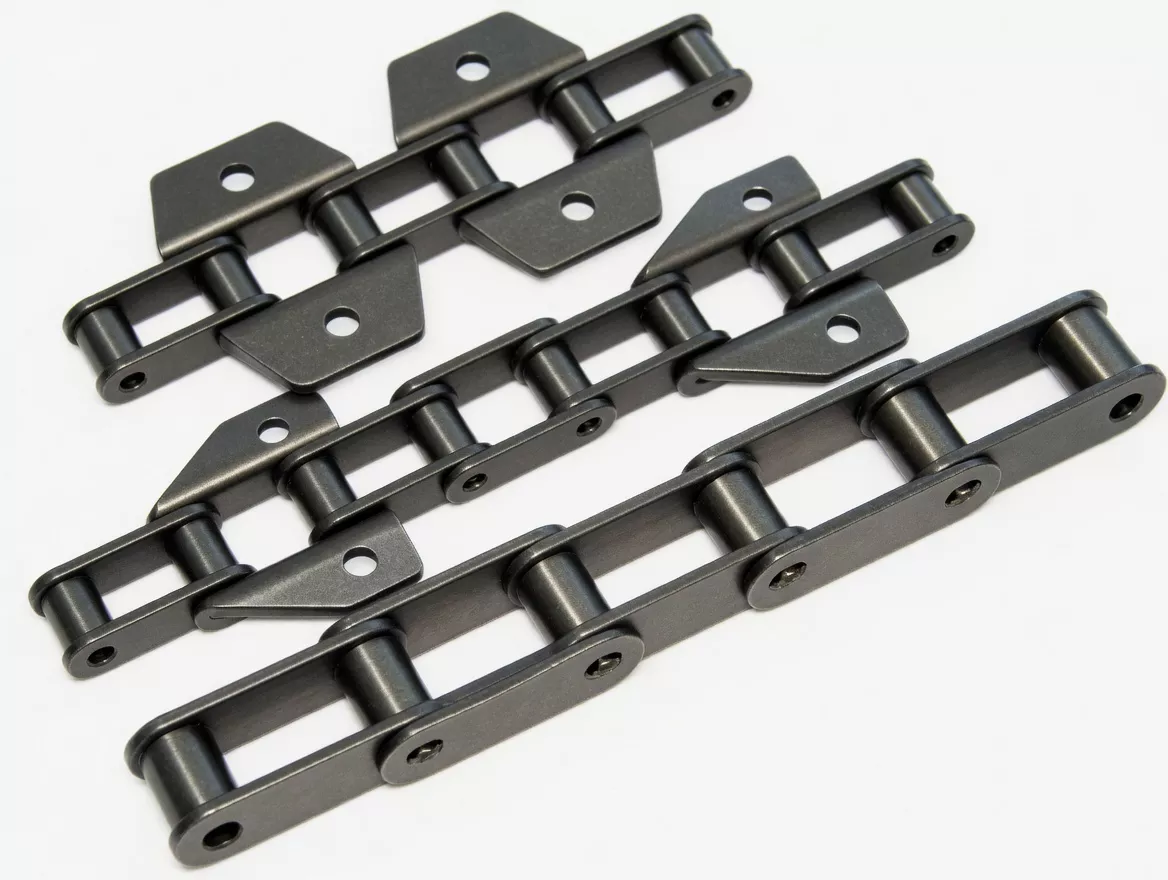
Référence de spécification de chaîne
| Position | Chaîne standard | Grade | Lubricant Type | Inspection Interval |
|---|---|---|---|---|
| Floor discharge chain (large, 60–100t) | ANSI 140 SP or ANSI 160 SP | Double-strand, SP reinforced | Synthetic EP grease re-applied pre-season | Before each harvest season |
| Floor discharge chain (medium, 20–50t) | ANSI 120 SP double-strand | SP reinforced | Synthetic EP grease | Before each season |
| Cross auger drive chain | ANSI 80 double-strand | Standard heavy | Synthetic or heavy EP mineral | Before each season and mid-harvest |
| Elevator chain (if fitted) | CA550 or CA620 with K2 attachments | Standard heavy | Heavy EP mineral | Before each season |
❓ Foire aux questions
Explorez les composants de disque dur associés
Transmissions protégées par un joint homocinétique à grand angle, de type série T et un embrayage à roue libre, qui transmettent la puissance du tracteur aux transmissions par chaîne de chaque outil.
Explorer les transmissions →
⚙️ Pignons agricoles
Gamme complète de pignons comprenant des pignons de type S, CA et ANSI pour chaînes à rouleaux, compatibles avec toutes les chaînes de ce catalogue.
Explorer les pignons →
Send us your application specifications
Our drive engineers confirm the correct chain type, pitch, and duty class for your machine and operating region.