Drive Sprockets Built for Combine Harvester Duty in Australian Grain Paddocks
The combine harvester is the single most valuable piece of machinery on any broadacre grain farm in Australia, and the chain-and-sprocket drive systems that run inside it are what keep the machine turning through harvest. From the feeder house conveyor dragging cut crop into the threshing cylinder, to the clean grain elevator lifting threshed grain into the header tank, to the returns elevator recycling incompletely threshed material — every conveying position relies on sprockets that mesh accurately, resist wear under continuous loading, and survive the brutal dust, heat, and abrasive conditions of an Australian grain harvest.
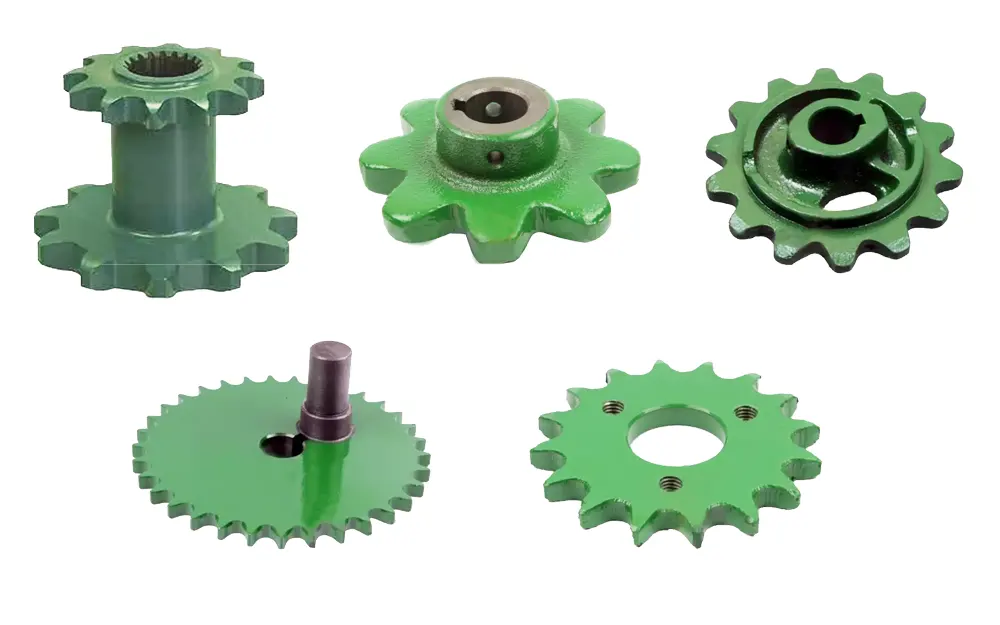
We manufacture and supply a complete range of agricultural sprockets for combine harvester applications — S-type chain sprockets, CA-type elevator sprockets, ANSI roller chain sprockets, and plate wheel configurations — all produced to exact OEM pitch and tooth profile standards. Our sprockets are interchangeable replacements for the OEM units fitted to John Deere, Case IH, New Holland, Claas, and Fendt combines, at a fraction of the OEM price point and with equivalent or superior material specification.
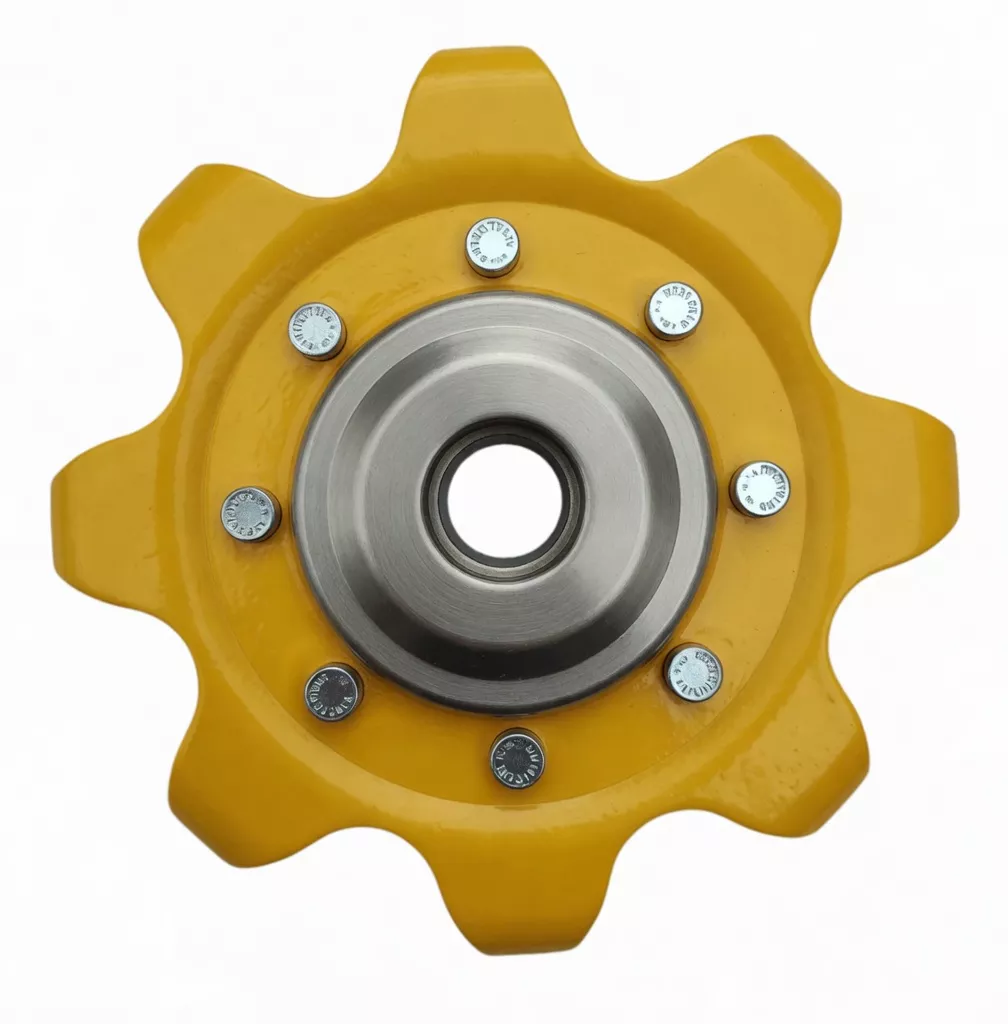
⚙️ Where Sprockets Are Critical on a Combine Harvester
A modern combine harvester runs between six and ten separate chain-and-sprocket drives simultaneously at peak operation. Each position has a different load profile, speed, and exposure to abrasive material. Understanding the function of each drive position is the foundation of correct sprocket specification.
- Feeder House Conveyor Drive: The highest-load sprocket position on the machine. The feeder house chain drags the full crop mat from the header into the threshing cylinder at sustained rated load, through the highest dust concentration on the machine. S-type chain sprockets (S42, S52, S55, S62) are the engineering standard for this position. Tooth flanks must be induction hardened to resist the abrasive action of soil-contaminated crop material.
- Clean Grain Elevator Sprockets: CA-type double-pitch conveyor sprockets that drive the grain elevator bucket chain from the returns pan to the grain tank. These positions run at moderate speed with continuous grain mass load. The sprocket bore and keyway must match the elevator shaft exactly — dimensional accuracy here determines bucket alignment and prevents bucket-to-housing contact.
- Returns Elevator Sprockets: Operates in the most abrasive material stream on the machine — unseparated chaff, broken straw, and grain tails. CA-type sprockets with the same tooth geometry as the main elevator but specified for the heavier-dust environment of the returns stream.
- Header Auger Drive Sprockets: Moves cut material laterally across the header width. ANSI 60 or ANSI 80 sprockets in single or double-strand configurations depending on header width. These positions see moderate sustained load and moderate dust.
- Straw Walker and Sieve Drive Sprockets: Drive the straw separation and cleaning systems. Multiple smaller sprockets in standard ANSI or metric roller chain standards. Dimensionally critical — incorrect tooth count or pitch creates vibration that reduces separation efficiency.
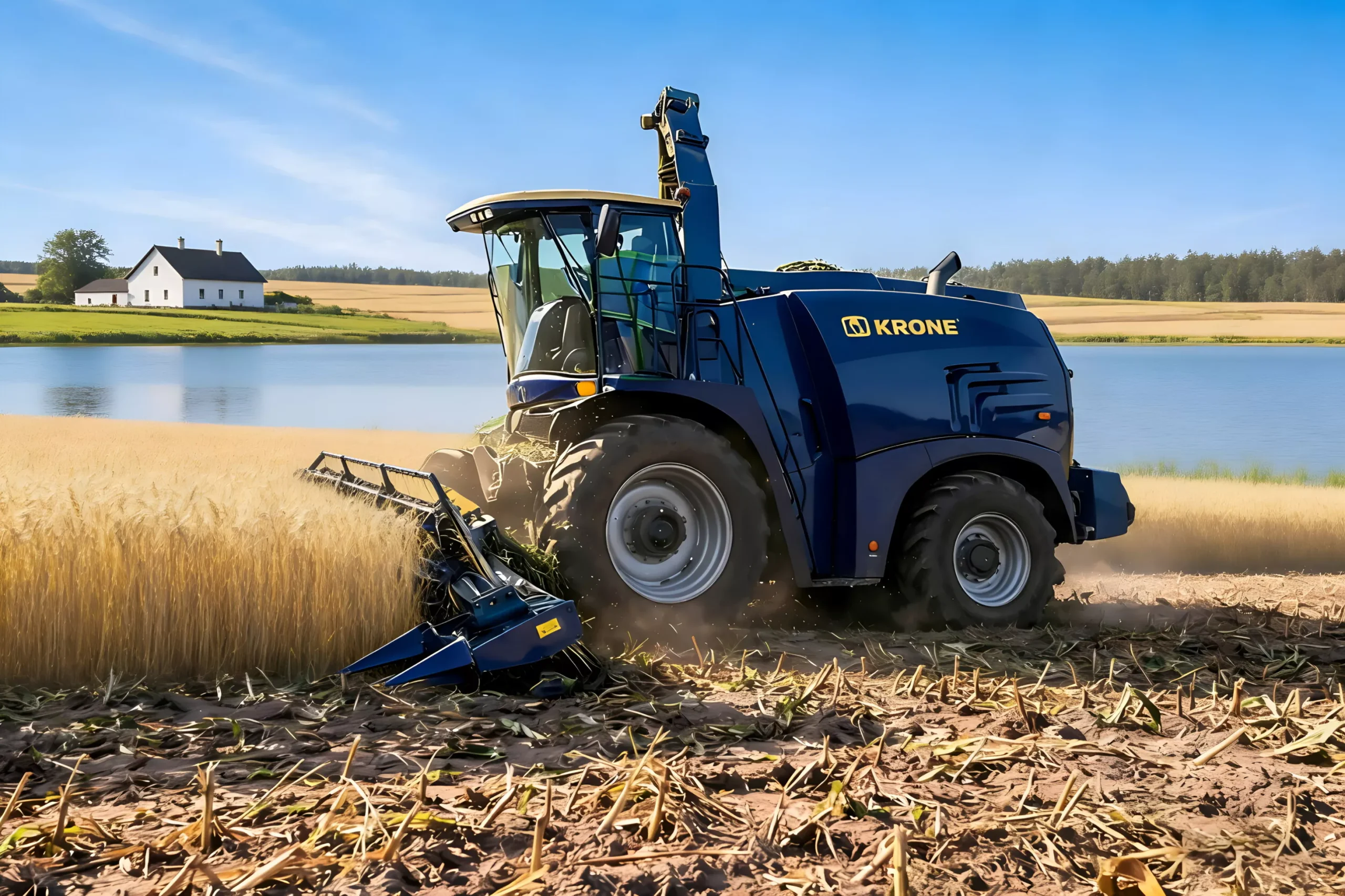
The Australian Combine Harvester Sprocket Challenge
Australian grain harvest imposes conditions on combine drive sprockets that are more severe than virtually any other combine-operating environment globally. Three factors make Australian combine sprockets wear faster than OEM service intervals predict:
- Fine Silica Dust from Western Australian and NSW Inland Soils: The sandy soils of the WA Wheatbelt and the red sandy loams of the NSW Riverina carry fine silica particles into the feeder house on every slug of cut crop. These particles — typically 50–150 microns — lodge between the chain roller and the sprocket tooth flank and act as an abrasive every time the roller seats against the tooth. This three-body abrasive wear mechanism removes tooth material at a rate proportional to the silica content of the soil. Sprockets with case-hardened or induction-hardened tooth flanks (HRC 50–55 surface) resist this mode 3–5× better than standard annealed steel teeth.
- Sustained High Ambient Temperatures: Harvest across the WA Wheatbelt and South Australian grain belt regularly operates at 38–43°C ambient. At these temperatures, chain lubricant viscosity drops and the effective contact load between roller and tooth increases as the lubricant film thins. Sprockets operating at elevated temperature accumulate surface fatigue damage faster than the same sprocket at European ambient conditions.
- Extended Daily Operating Hours: Australian combines routinely run 14–18 hours per day during the main harvest window of 8–10 weeks. A machine completing a full broadacre season accumulates 700–900 operating hours — equivalent to two to three typical European harvest seasons. Standard OEM service intervals, based on European operating assumptions, may lead to under-specified replacement scheduling in Australian conditions.
We have engineered our combine harvester sprocket range specifically to address these three Australian-specific failure mechanisms. Our induction-hardened tooth flanks and precision pitch dimensions make our sprockets the technically correct replacement choice — not just the economical one.
Combine Harvester Sprocket Specifications & Selection Guide
Selecting the correct sprocket for a combine harvester drive requires matching three parameters precisely: the chain standard (S-type, CA-type, ANSI), the number of teeth (which determines drive ratio), and the bore configuration (plain bore, keyway, or taper-lock). The table below covers the most common combine harvester sprocket specifications we supply.
| Chain Standard | Chain Pitch | Tooth Range | Bore Options | Typical Combine Position | Hardness Treatment |
|---|---|---|---|---|---|
| S42 | 34.93 mm | 8–32T | Pilot bore, finished bore, taper-lock | Feeder house (mid-size combine) | Induction hardened tooth flank HRC 50–55 |
| S52 | 38.10 mm | 8–28T | Pilot bore, finished bore, taper-lock | Feeder house (standard — most common) | Induction hardened HRC 50–55 |
| S55 | 41.40 mm | 8–24T | Pilot bore, taper-lock | Wide-header feeder house | Induction hardened HRC 50–55 |
| CA550 | 41.40 mm | 9–15T | Finished bore, keyway | Clean grain elevator head and boot | Case hardened HRC 45–52 |
| CA555 / CA620 | 41.40 / 45.72 mm | 9–15T | Finished bore, keyway | Returns elevator and tailings system | Case hardened HRC 45–52 |
| ANSI 60 / ANSI 80 | 19.05 / 25.40 mm | 10–60T | Pilot bore, finished bore, taper-lock, plate wheel | Header auger and straw walker drives | Case hardened or through hardened |
How to Select the Correct Sprocket for Your Combine
- Step 1 — Identify the chain standard from the OEM parts book: The chain standard is stamped on the side plate of the existing chain, or listed in the combine’s parts manual. S-type, CA-type, and ANSI chains require matching sprocket tooth profiles — they are not interchangeable between standards even where pitch values appear similar.
- Step 2 — Count the teeth on the worn sprocket: Remove the worn sprocket and count the teeth while it is clean. Photograph the tooth profile from the side — the profile determines whether you need a standard ISO tooth form or a specific OEM profile variant.
- Step 3 — Measure the bore and keyway: Measure the shaft diameter and keyway dimensions. For taper-lock sprockets, identify the taper bush size from the embossed bush number on the hub face. We supply pilot-bore sprockets that can be machined to your exact shaft specification if non-standard bore sizes are needed.
- Step 4 — Confirm the hub style (flat hub, extended hub, or split hub): Combine harvester feeder house sprockets frequently use split hubs for in-situ installation without dismantling the full feeder house assembly. Confirm whether your position requires a split sprocket configuration.
Why Our Combine Harvester Sprockets Outperform OEM in Australian Conditions
We have been manufacturing agricultural drive sprockets for over 20 years, exporting to more than 40 countries including Australia, New Zealand, the United States, Canada, and throughout Europe. Our annual production capacity exceeds 2 million sprockets, supported by a dedicated R&D team of 18 engineers focused exclusively on agricultural transmission components. Here is why Australian combine operators and machinery dealers choose our sprockets over OEM replacements:
- Induction-Hardened Tooth Flanks as Standard: Every S-type and CA-type combine harvester sprocket we manufacture receives induction hardening treatment on the tooth flanks to a surface hardness of HRC 50–55. This is the same specification as top-tier OEM parts. Many budget aftermarket sprockets use only flame hardening or no hardening at all — our induction hardening produces a consistent, controlled hardness depth of 2–3 mm on every tooth, every time.
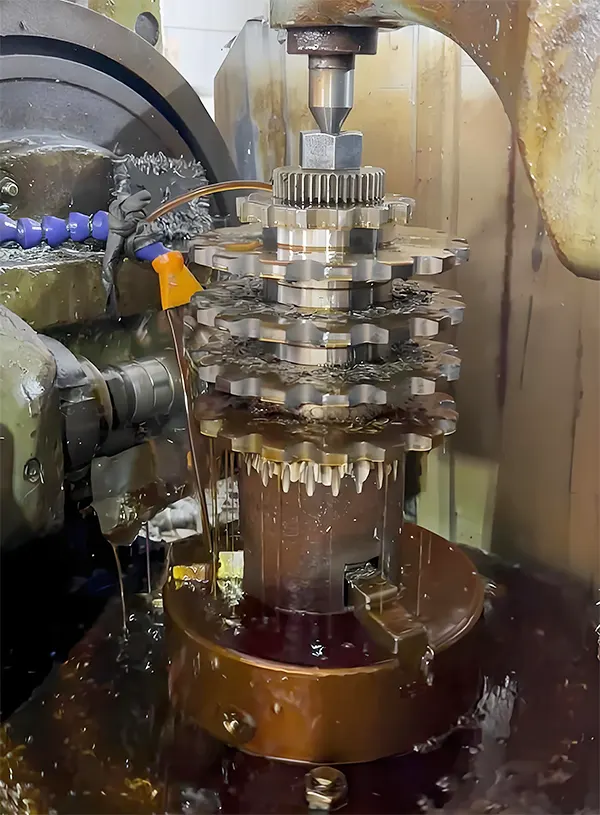
- Precision CNC-Profiled Tooth Forms: Our tooth profiles are CNC-milled on modern machining centres to DIN 8196 / ISO 606 tooth form standards. Precision tooth form ensures correct roller seating, eliminates the chordal impact noise of poorly-profiled teeth, and prevents the accelerated chain-flank wear caused by incorrect tooth geometry.
- 30–50% Below OEM Price Points: Our direct manufacturing model — no distributor margins, no OEM licensing fees, procurement and logistics direct from our facility — allows us to supply sprockets at 30–50% below the price of equivalent John Deere, Case IH, or New Holland OEM parts. For a combine operator replacing multiple sprockets at end of season, this saving is substantial.
- Non-Standard Custom Manufacturing: We manufacture to drawing, sample, or part number. If your combine has a sprocket position with a non-standard bore, unusual hub configuration, or OEM-proprietary tooth profile, we can reverse-engineer from a worn sample and produce an exact replacement. Our minimum order for custom sprockets is 5 pieces — accessible for single-machine operators as well as fleet managers.
- Full Quality Documentation: Every order is supplied with a material test certificate, dimensional inspection report, and hardness test certificate as standard. Our ISO 9001:2015 quality system provides full traceability from raw material heat to finished component for every production batch.
Customer Cases — Combine Harvester Operators Who Chose Our Sprockets
A 12,000-hectare operation running two Case IH Axial-Flow combines was replacing OEM feeder house S52 sprockets twice per season due to accelerated tooth wear in the fine silica soil conditions of the WA Wheatbelt. After switching to our induction-hardened S52 sprockets, service life extended to a full season-plus with no mid-harvest replacement. “The tooth hardness on your S52 sprockets is visibly better than the OEM parts we were using. We measured the tooth flank at end of season and there was less wear than we typically saw at mid-season with the original parts.” ⭐⭐⭐⭐⭐
A combine parts dealer in Kansas stocking replacement sprockets for John Deere and Case IH machines transitioned to our CA550 and CA555 grain elevator sprockets as their primary aftermarket supply. “Your dimensional accuracy is excellent — every sprocket we have received fits the shaft and chain without the fitment corrections we sometimes needed with our previous supplier. The hardness documentation you provide satisfies our quality-conscious customers.” ⭐⭐⭐⭐⭐
A German distributor supplying aftermarket harvester components to Eastern European grain operations sources our full range of S-type and ANSI harvester sprockets. “We have been working with your company for six years. The consistency between production batches is remarkable — we have never had a dimensional rejection from any of the 40,000+ sprockets we have ordered in this period.” ⭐⭐⭐⭐⭐
A 20,000-acre Saskatchewan farm operation running three New Holland CR combines sources all feeder house and elevator sprockets from us. “The taper-lock configuration on your feeder house sprockets makes in-field replacement dramatically faster than the OEM press-fit design. We saved four hours on a mid-harvest sprocket change last season — at peak harvest, that is worth far more than the sprocket itself.” ⭐⭐⭐⭐⭐
A custom harvesting contractor operating eight combines across the Córdoba and Santa Fe soybean and maize belt supplies all replacement sprockets from our range. “The price difference from OEM is 40% on most items. We run eight machines — the annual saving across all sprocket positions funds a significant portion of our total parts budget. Quality has been consistently excellent over three seasons of use.” ⭐⭐⭐⭐⭐
Complete Your Combine Harvester Drive System
A sprocket performs at its best when paired with the correct matching chain and supported by a properly-rated driveline. We supply the complete combine harvester drive system — chains, sprockets, and driveline components — all manufactured to the same engineering standards and fully compatible as matched sets.
Agricultural Chains
S-type, CA-type, and ANSI roller chains matched to every sprocket in our combine harvester range — same pitch standards, same quality grade.
Explore Chains →
⚡ PTO Shafts & Drivelines
T-series and wide-angle CV PTO shafts that deliver tractor power into the chain-and-sprocket drives of your combine header and processing systems.
Explore Drivelines →
⚙️ Agricultural Gearboxes
Right-angle bevel and parallel-shaft gearboxes for the upstream reduction stages that feed combine header and cleaning system chain drives.
Explore Gearboxes →
❓ Frequently Asked Questions
Get Your Combine Harvester Sprockets Before Harvest Season
⚙️ Send Us Your Sprocket Specification
Our engineering team is ready to confirm the correct sprocket type, tooth count, bore configuration, and hardness specification for every drive position on your combine. We match OEM part numbers, reverse-engineer from worn samples, and manufacture to drawing — all with a 30–50% price advantage over OEM parts and full quality documentation.
⏱ Typical response time: within 24 hours. ✈️ Express air freight to Australia available for urgent harvest season requirements.