Agricultural Chains for Aquaculture Processing
Australian aquaculture — oyster farms, abalone hatcheries, and prawn processors operating along the NSW, SA, and WA coastlines — subjects chain drives to the most corrosive environment in any Australian food production system. Continuous saltwater exposure, tidal submersion cycles, and the biological fouling that accumulates on steel surfaces in marine environments all attack standard carbon steel chain at a rate that renders it impractical for extended service in aquaculture facilities.
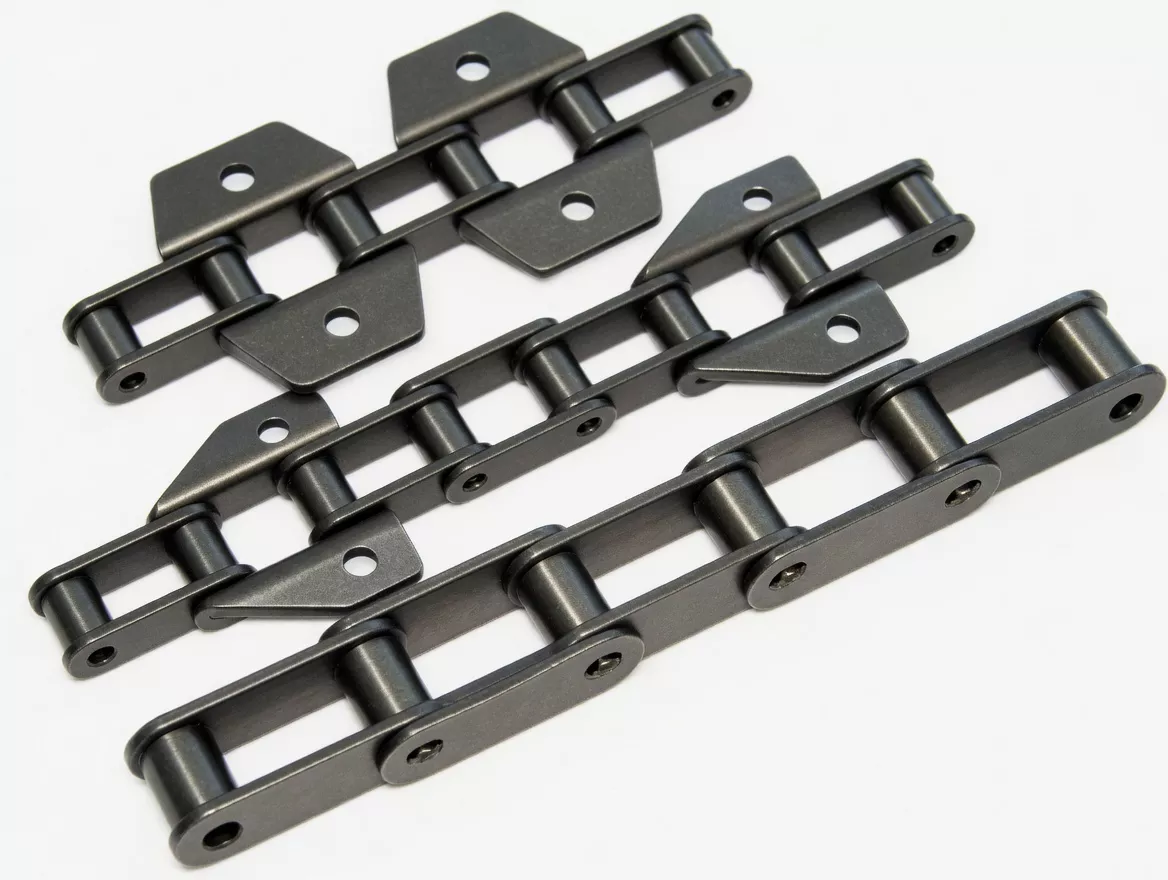
316 marine-grade stainless steel is the engineering minimum for chain positions in saltwater contact or spray exposure. 316 SS contains molybdenum alloying that significantly improves resistance to chloride-induced pitting corrosion — the primary corrosion mechanism in marine salt environments — compared to 304 SS or coated carbon steel.
The Australian Operating Challenge
Chloride ions from seawater penetrate the passive oxide layer on stainless steel and initiate pitting corrosion under the surface. 316 SS chain resists this mechanism significantly better than 304 SS due to its molybdenum content. For fully submerged or tidal-zone chain positions, 316 SS is not optional — 304 will pit in direct seawater contact within months.
Marine organisms including barnacles, mussels, and algae colonise stationary chain surfaces in aquaculture environments. Fouling builds internal stress in chain joints as organisms grow into roller-sprocket contact zones, and the accumulated mass increases dynamic load. Regular cleaning cycles and smooth surface finish on 316 SS chains reduce fouling attachment.
Commercial aquaculture facilities operate continuously — conveyor chains in grading and processing positions run 24 hours per day, 7 days per week. The cumulative hours in a year of continuous aquaculture operation exceed most agricultural applications. Chain specification must account for this duty cycle without requiring more frequent service than the facility schedule can accommodate.
Chain Specification Reference
| Position | Chain Material | Grade | Replacement Threshold | Notes |
|---|---|---|---|---|
| Submerged / tidal zone conveyors | 316 Stainless Steel | AISI 316 | 2.0% elongation | Mandatory for saltwater contact — 304 SS will pit |
| Above-water conveyors (spray zone) | 316 SS or 304 SS | AISI 316 preferred | 2.0% elongation | 316 SS if chloride spray is continuous |
| Dry grading line conveyors | 304 SS or food-grade carbon | AISI 304 or NSF H1 | 2.0% elongation | 316 if seawater wash cycles are used |
| Drive and tensioner chains | 316 SS | AISI 316 | 1.5% elongation | Prioritise SS for all positions in salt-air environment |
❓ Frequently Asked Questions
Explore Related Drive Components
Factory-matched sprockets engineered to run with our chain range — simplex, duplex, plate wheel and taper-bore in all standard pitches.
Explore Sprockets →
⚪ Bearings
Sealed pillow-block and flange-unit bearings for every shaft that carries a chain sprocket in your machine.
Explore Bearings →
Specify the right chain for your machine
Tell us your application, operating environment, and machine model. We will recommend the exact chain and supply it with full material certification.