Agricultural Chains for Manure Spreaders: Corrosion and Impact Resistance for Australian Livestock Farms
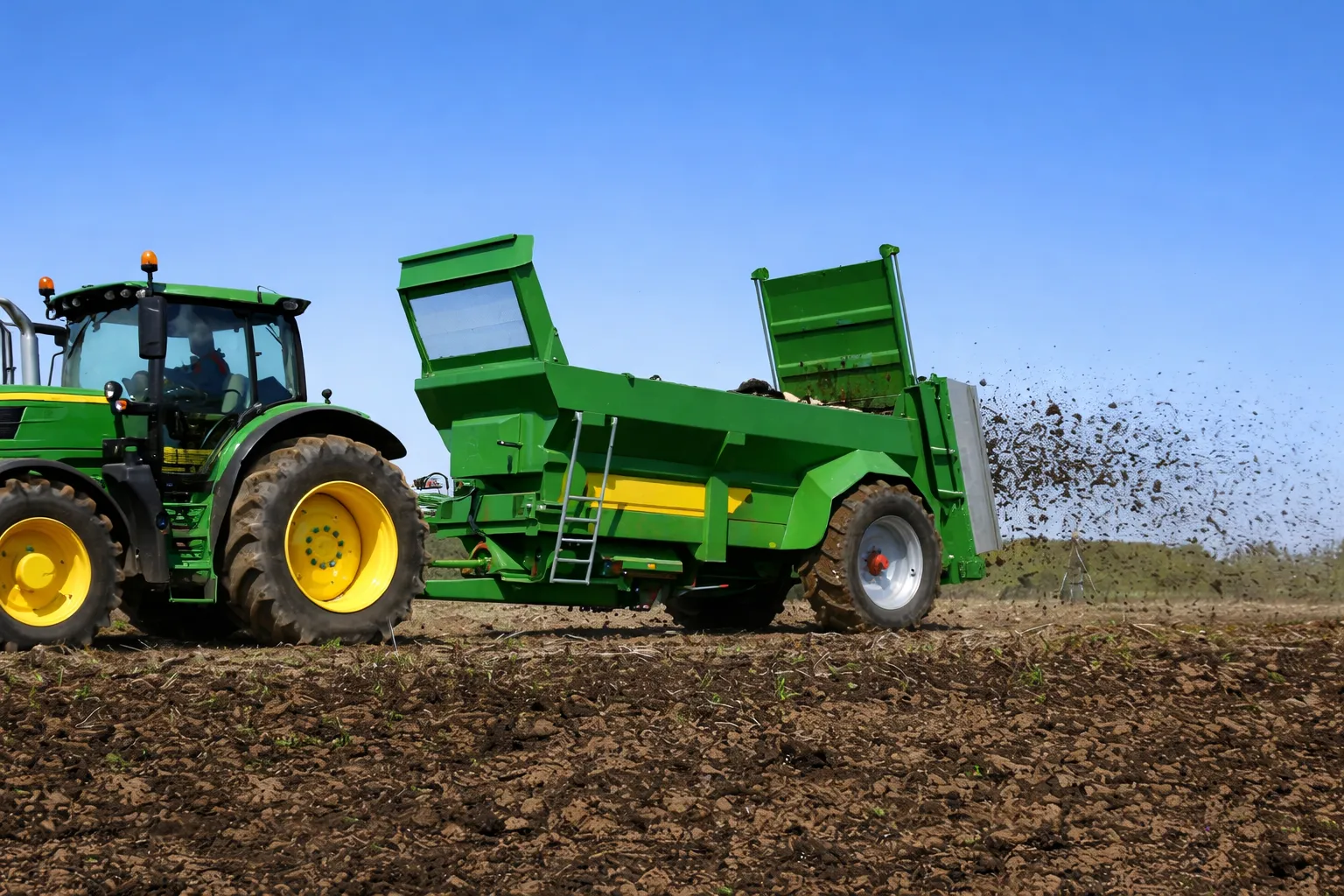
Manure spreaders operate in a chemical environment that is uniquely hostile to standard agricultural chain. The combination of animal manure — high in ammonia, volatile fatty acids, and free moisture — with the abrasive bedding material, feed residues, and bone fragments commonly found in livestock shed cleanings creates a corrosion-and-abrasion environment that destroys under-specified chain faster than almost any other agricultural application.
This guide covers apron chain selection, beater drive specifications, and chemical resistance requirements for manure spreaders operating in Australian cattle, sheep, and poultry production systems.
⚙️ Where Agricultural Chains Are Used on This Machine
The main power transmission chain driving the working components. Requires heavy-duty specification matched to the peak torque of the application.
Moves material through the machine. Must resist abrasion from crop material and environmental contamination while maintaining dimensional accuracy.
Sub-drives for auxiliary systems. Light to medium duty but must be dimensionally compatible with the primary drive timing where applicable.

Why Manure Spreader Chain Fails Faster in Australian Conditions
Fresh cattle and poultry manure contains ammonium compounds that create a strongly alkaline then acidic environment on steel surfaces as fermentation progresses. The apron chain is in continuous contact with this chemistry during every spreading operation. Phosphate-treated chains or zinc-nickel coated chains resist this attack; standard bare steel chains corrode at 2–4 times the rate of coated equivalents in this environment.
Australian livestock shed cleanings commonly contain stones, bone fragments, heavy bedding timber chips, and grit from feed yards. When these hard objects enter the beater and apron drive system, they create impact loads that can crack standard chain side plates or shear roller pins. Heavy-duty chain with thick side plates and through-hardened pins resists this damage far better than light-duty chains.
Manure spreaders are among the most exposed pieces of farm equipment to continuous moisture — the load is wet, the machine operates in wet paddock conditions, and cleaning typically involves high-pressure water washing. Corrosion between service intervals is a significant chain life factor. Chains must resist wash-out of lubricant and maintain protection during intervals between applications.
Chain Specifications for manure spreaders
| Position | Chain Type | Coating | Pitch Range | Replacement Threshold |
|---|---|---|---|---|
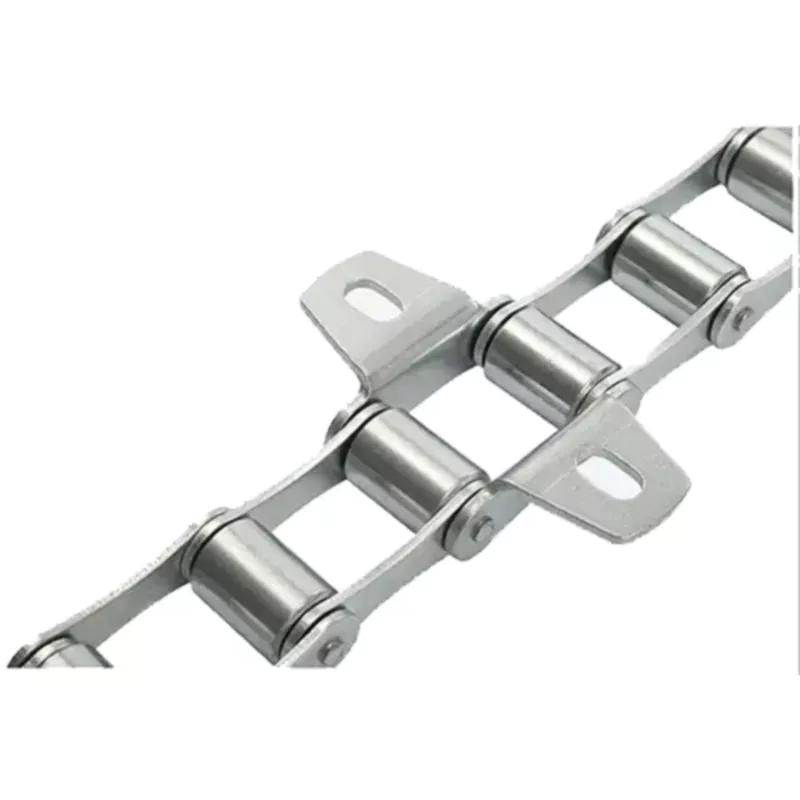
| Apron floor conveyor chain | Heavy welded-steel attachment chain or flat-top | Phosphate or Zn-Ni plated | 101.6 mm (4-inch) typical | 2.0% elongation or visible corrosion pitting |
| Beater drive chain | ANSI 100 SP or ANSI 120 SP double-strand | Phosphate treated | 31.75–38.1 mm | 1.5% elongation |
| Apron tensioner chain | ANSI 80 single-strand | Phosphate treated | 25.4 mm | 2.0% elongation |
Selecting the Right Chain
Standard bare steel chain in manure spreader environments typically shows visible corrosion within 3–6 months. Phosphate-coated chain extends this to 12–18 months in moderate manure environments; zinc-nickel plated chain performs better in high-ammonia poultry manure applications. Specify the coating appropriate to your manure type.
The beater drive encounters hard embedded objects in the spreader load throughout operation. Standard ANSI chain beater drives in Australian operations report side plate cracking as the primary failure mode when the beater encounters embedded stones or timber blocks. SP-series chain with reinforced side plates is the correct specification.
Even with correct specification, manure spreader apron chains typically need annual replacement in high-throughput Australian operations. Plan this as a scheduled budget maintenance item rather than a reactive breakdown repair.
High-pressure washing removes lubricant from chain joints in a single wash cycle. Always re-lubricate all chain positions immediately after washing the machine. Use an EP lubricant with water-displacement properties for the wash-down cycle if possible.
Maintenance Practices
Manure spreader chain maintenance must account for the aggressive corrosion environment and the wash-down cycle that follows every spreading operation.
Wash down chain and sprockets. Re-lubricate all chains immediately after drying. Inspect apron chain for stiff links, locked rollers, or visible surface corrosion.
Measure apron chain elongation. Check beater drive chain for side plate surface corrosion or impact damage. Replace any chain segment showing corrosion pitting penetrating deeper than 0.5 mm.
Full chain removal and inspection. Treat bare metal areas on apron chain with rust-inhibiting primer before storage. Replace any chain showing corrosion beyond surface level.
❓ Frequently Asked Questions
Explore Related Drive Components
Slasher, mower, tiller and custom-ratio gearboxes that drive the chain systems inside PTO-powered implements.
Explore Gearboxes →
⚡ PTO Shafts & Drivelines
Matched drivelines from T1 to T8 rating that feed the chain input sprocket on every PTO-driven machine we serve.
Explore Drivelines →
Specify the right chain for your machine
Tell us your application, operating environment, and machine model. We will recommend the exact chain and supply it with full material certification.