Agricultural Gearboxes Australia | Slasher, Mower, Tiller, Irrigation Drives | Ever-power
Gearbox Catalogue

Agricultural Gearboxes

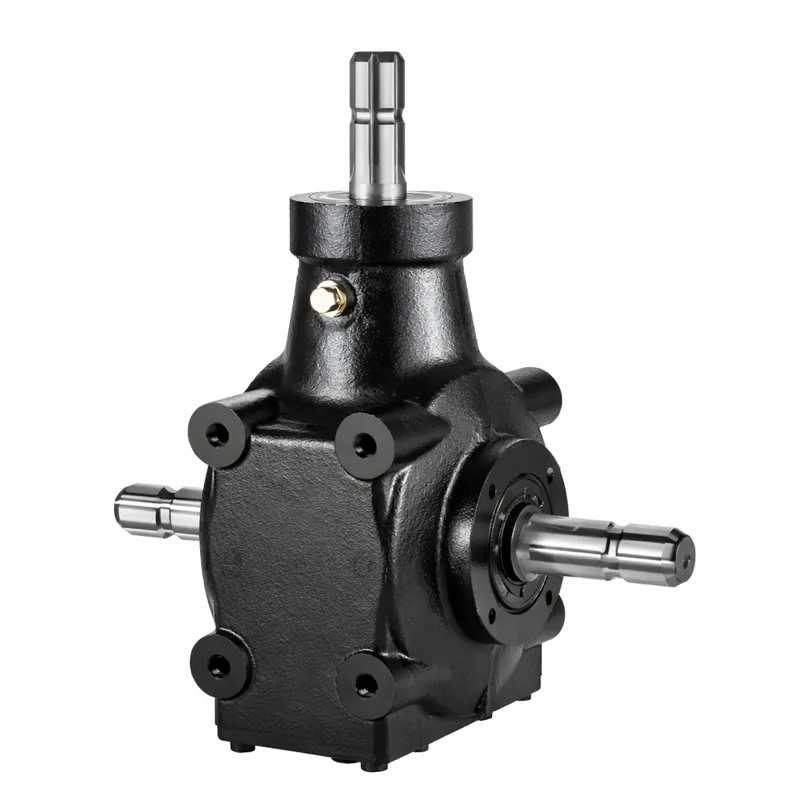
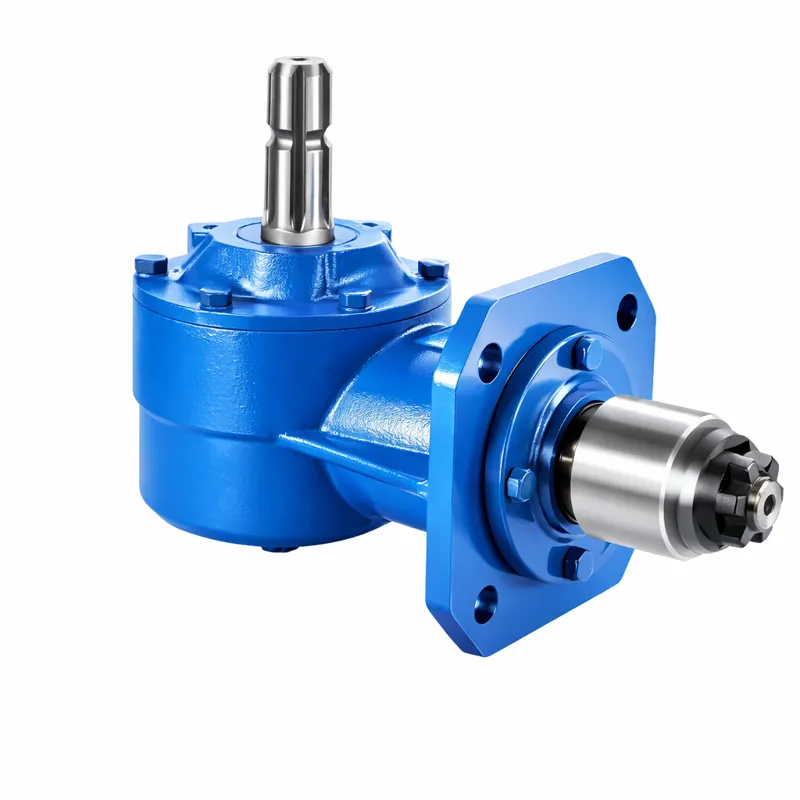
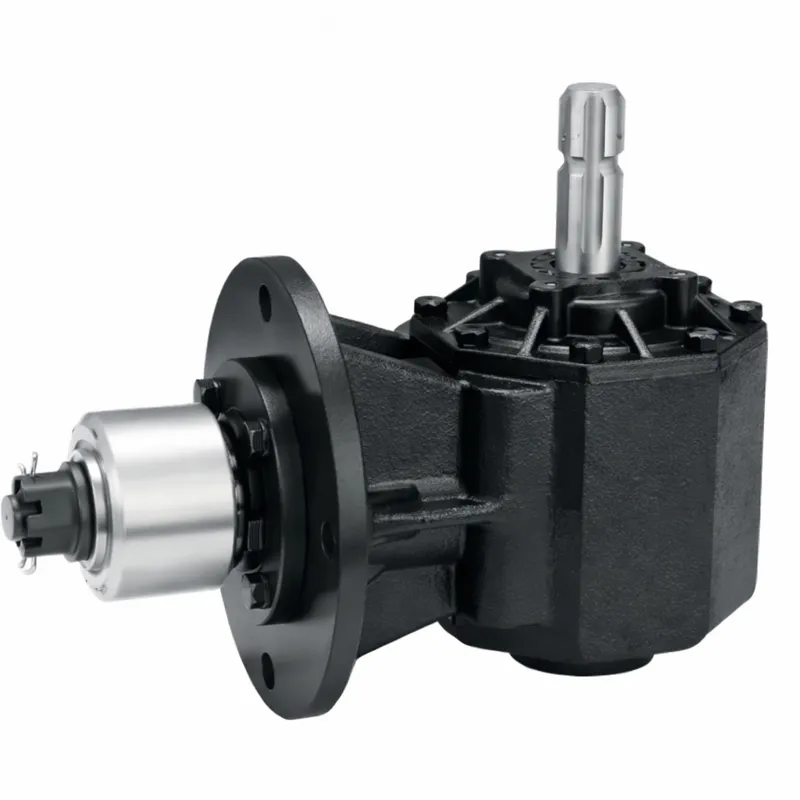
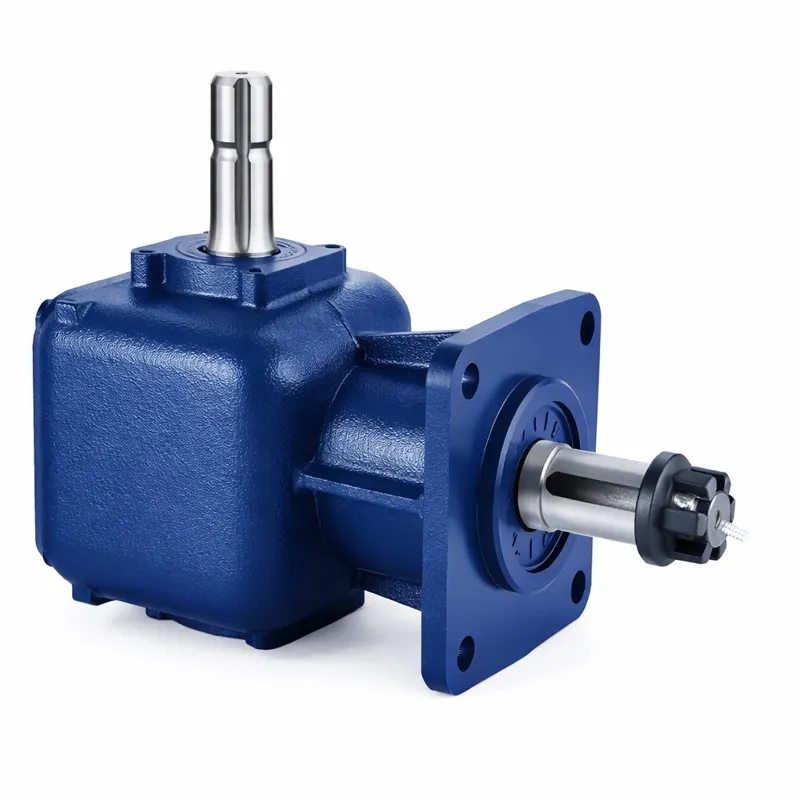
Slasher, rotary cutter, mower, tiller, irrigation pump and post-hole drives in bevel, parallel-shaft and worm configurations — engineered to take 540 RPM tractor power and turn it into the torque, speed and direction your implement actually needs.

Torque, Speed, Direction

The gearbox does three jobs the implement cannot do without

An agricultural gearbox sits at the implement input, between the PTO driveline and the working components. It does three things at once — it changes shaft direction (most often turning horizontal PTO input into vertical or transverse output), it multiplies or reduces speed through a calculated ratio, and it provides a sealed oil-bath environment for hardened gear teeth that would otherwise wear out in months under field dust and shock loading.

Our catalogue covers the full spectrum: slasher and rotary cutter gearboxes (the largest category, used on every paddock-mowing tractor in Australia), through mower, tiller, irrigation pump, post-hole and forage drives, all the way to OEM-pattern replacements for discontinued machinery. Every gearbox ships with traceable metallurgical certificates, dimensional inspection data, and oil-fill from the factory.

20+Years Gearbox Manufacturing
ISO 9001Quality System Certified
60+Export Markets Worldwide
40%Catalogue Made To OEM Drawings
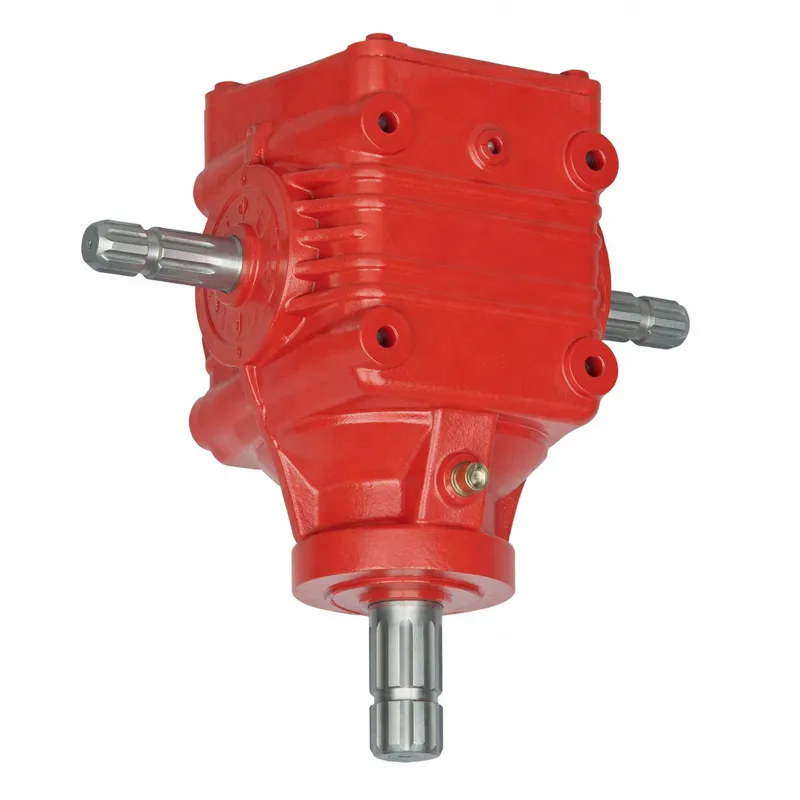
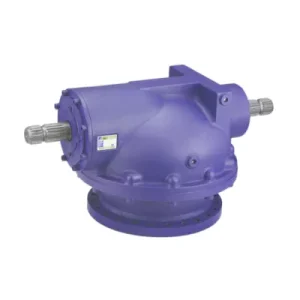
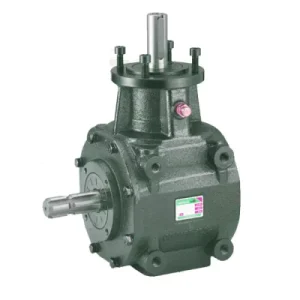
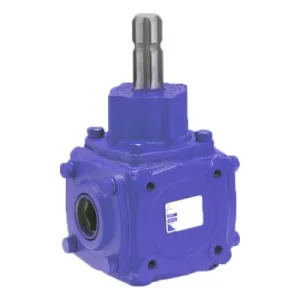
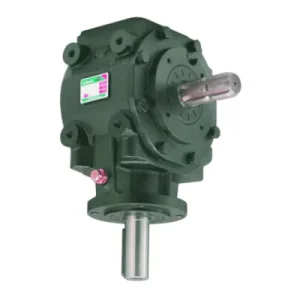
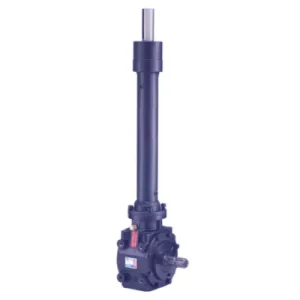
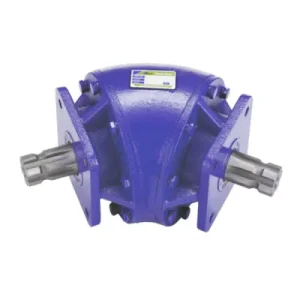
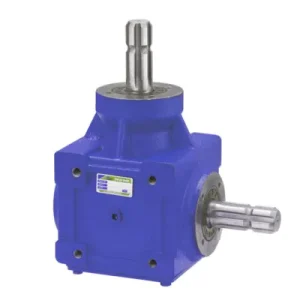
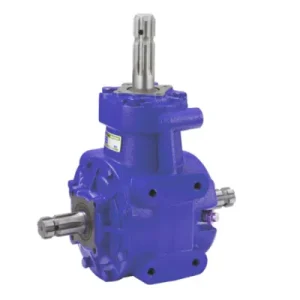
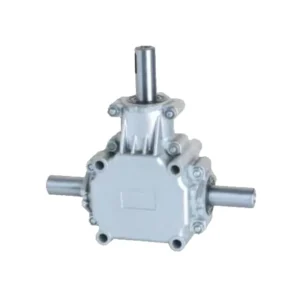
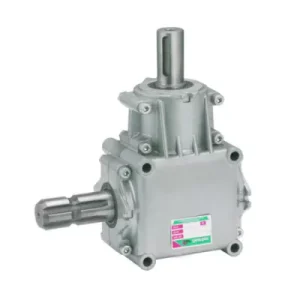
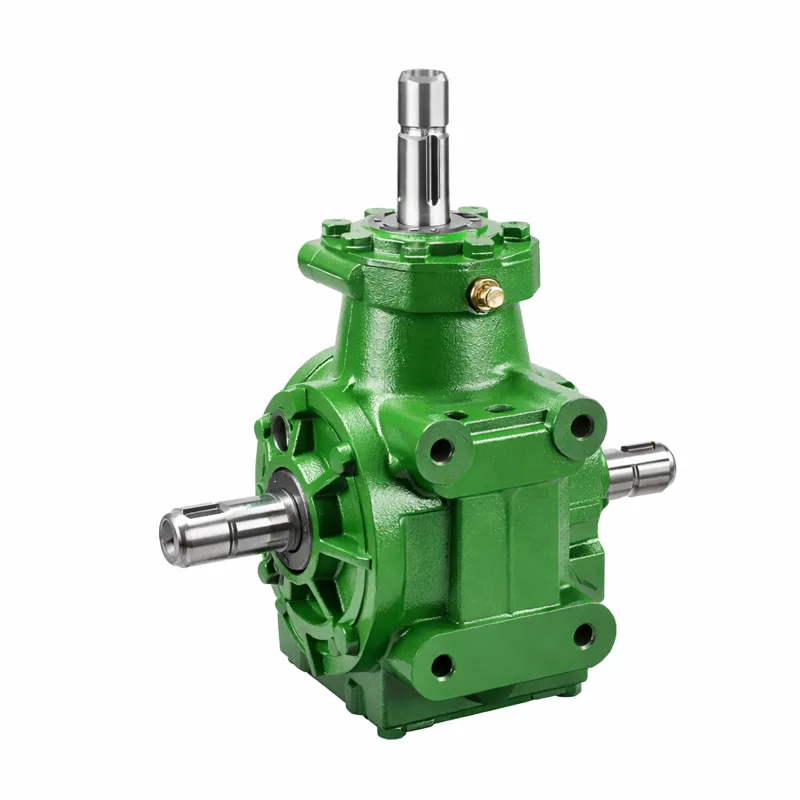
Agricultural PTO gearbox cast iron housing for slasher and rotary cutter Australian field service
Gearbox Families

Six application-specific gearbox families

Agricultural gearboxes are designed around the implement, not around abstract series numbers. We organise our catalogue the same way Australian dealers and farmers actually shop for them.

Largest Range Slasher rotary cutter gearbox 540 RPM bevel drive cast iron housing

Slasher & Rotary Cutter Gearboxes

The biggest single category in any Australian gearbox catalogue. Right-angle bevel drives that take 540 RPM input and deliver to a vertical or transverse blade carrier. Cast iron housings, hardened-and-ground bevel gears, large-volume oil baths.

  • Ratios 1:1, 1:1.46, 1:1.93 most common
  • Power 30 kW to 90 kW typical
  • 1-3/8 inch 6-spline tractor side, 1 inch keyed output
  • Tapered roller bearings on all shafts
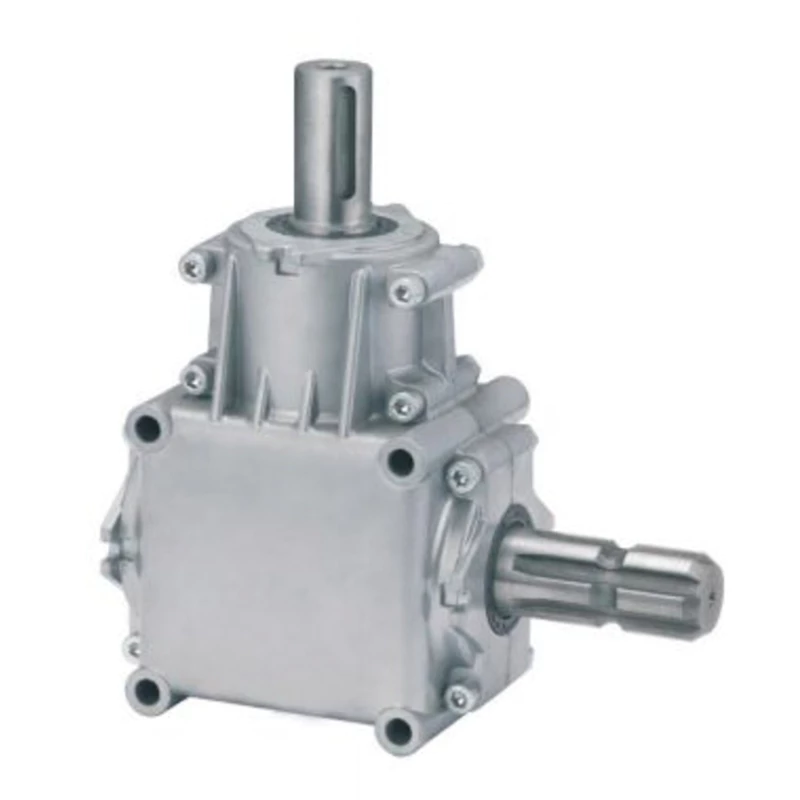
Disc & Drum Disc mower drum mower gearbox parallel shaft drive for hay cutting

Mower Gearboxes

Disc mower input gearboxes (right-angle bevel feeding the mower bed) and drum mower drives (parallel-shaft units between input and rotor stack). Engineered for the high speeds and dust loading typical of grass and lucerne mowing.

  • Ratios 1:1.78 / 1:2 step-up most common
  • Helical or spiral bevel gear cuts for low noise
  • Pressed-sheet aluminium and cast iron housings
  • Direct-fit OEM replacements for major mower brands
Heavy Reduction Rotary tiller rotavator gearbox 540 RPM input with multi speed reduction

Tiller & Rotavator Gearboxes

Two-stage reduction designs that take 540 RPM and reduce it dramatically for the slow, high-torque rotation of tilling tines. Multi-speed shifters available on heavy-duty units to match different soil conditions and tractor power outputs.

  • Two-stage with optional 2-speed or 3-speed shifter
  • Output torque 800 Nm to 2,500 Nm range
  • Heavy cast iron housing with cooling fins
  • Side-driven output to chain or belt second-stage
Step Up Vertical irrigation pump gearbox right angle drive 540 RPM input increase ratio

Irrigation Pump Gearboxes

Vertical right-angle drives that step up 540 RPM tractor input to the higher pump-shaft speeds typical of centrifugal irrigation pumps. Heavy-duty thrust bearings handle the axial load from belt-driven pump configurations and hose-reel main drives.

  • Step-up ratios 1:2, 1:2.5, 1:3 typical
  • Vertical output for direct-mount pump shafts
  • Tapered thrust bearings handle pump axial load
  • Sealed against water ingress on irrigation duty
High Torque Post hole digger auger gearbox high reduction worm drive for fence post installation

Auger & Post-Hole Gearboxes

High-reduction drives for post-hole augers, fencing tools and earth augers — turning fast PTO input into the slow, hammering torque that bores into hard ground. Worm and double-bevel reductions both available, with shear-bolt protection options.

  • Reduction ratios 2:1, 3:1, 4:1 typical
  • Worm or two-stage bevel configurations
  • Output square or hex for auger drive
  • Optional integral shear-pin or shear-bolt mount
OEM Pattern OEM pattern agricultural gearbox custom drawing replacement for discontinued machinery

OEM-Pattern & Custom Gearboxes

Built to original equipment manufacturer drawings — replacement gearboxes for discontinued machinery, new-build supply for Australian implement OEMs, and bespoke ratio packages for one-off engineering builds. Match by part number, sample, or photo.

  • Reverse-engineering from worn samples
  • Custom ratios outside standard catalogue
  • Mixed-material housings on request
  • Branded with your part numbers
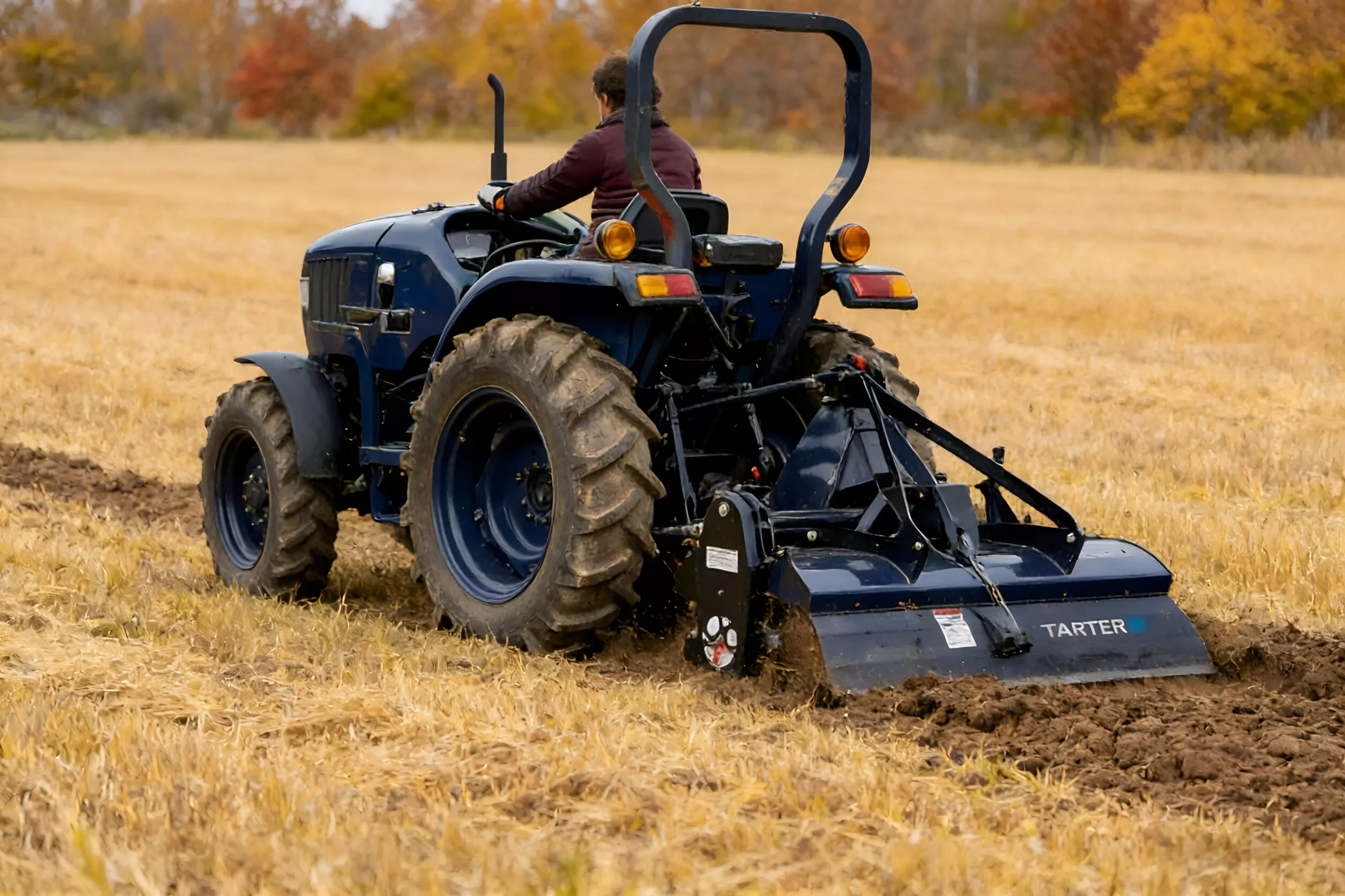
Rotary tiller application showing right angle gearbox transmission to tine rotor
Bevel vs Parallel-Shaft

Why most agricultural gearboxes are right-angle bevel

Walk any Australian dealership lot and 80 percent of the agricultural gearboxes you see will be right-angle bevel-gear units. There's a structural reason for that — the implement geometry forces the answer:

  • The PTO output on every tractor sits horizontally at the back, but the implement working components (mower blades, tiller tines, slasher carriers, pump shafts) sit vertically or transverse — a right-angle bevel gearbox is the shortest mechanical path between them
  • Bevel gears handle high shock loads better than worm drives because the gear teeth are in mesh continuously rather than sliding — relevant for any implement that hits stones, stumps or wet hay slugs
  • Cast iron housings provide the rigidity needed to maintain bevel gear meshing under deflection — aluminium housings flex too much under load and the gears wear out fast
  • Tapered roller bearings on both input and output shafts handle the axial thrust that bevel gears generate, which a parallel-shaft helical gearbox would never see
  • Service is simpler — bevel gearbox repair shops everywhere in rural Australia know exactly what to look for, parts are interchangeable across many implement types
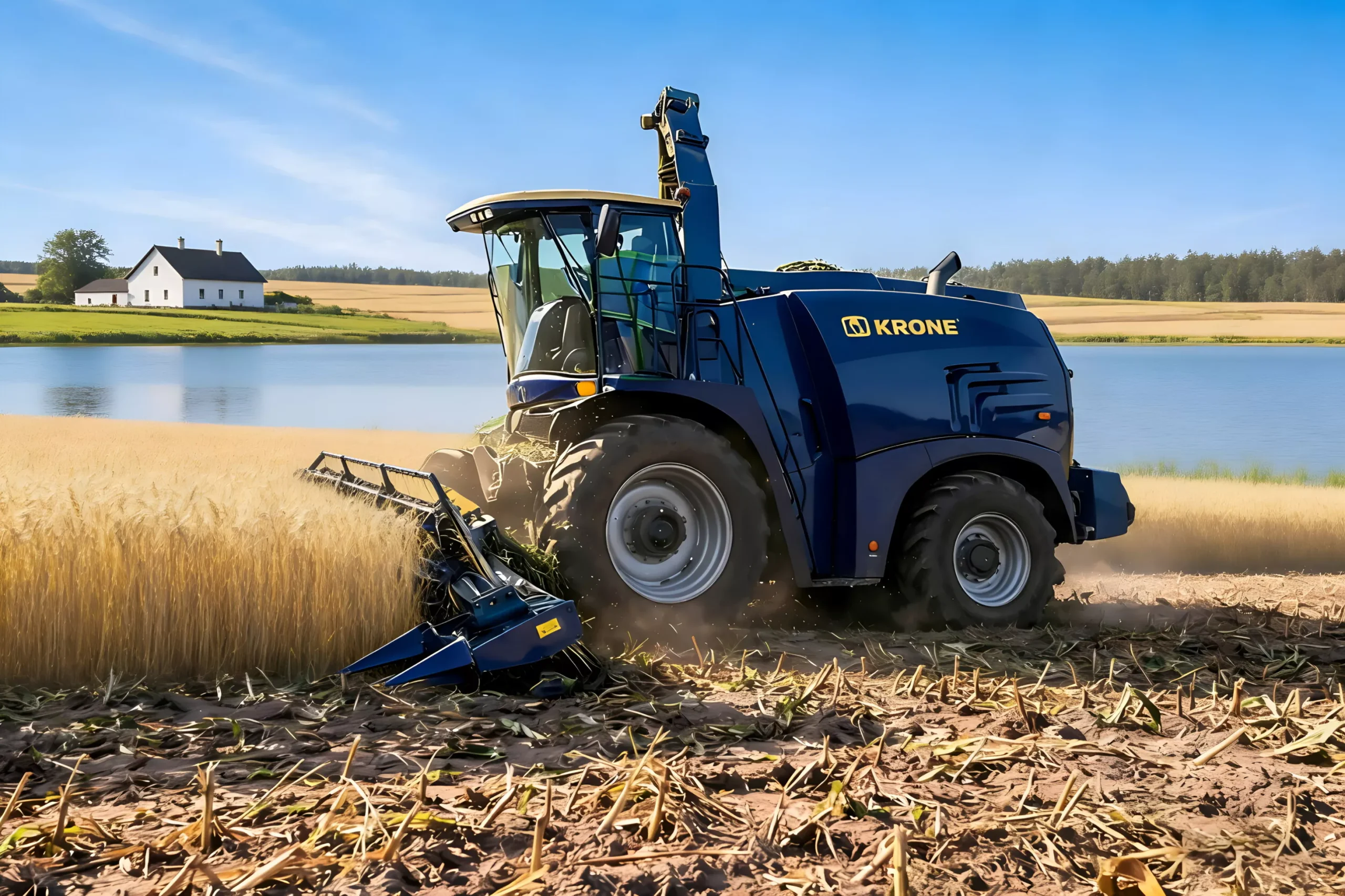
Harvester gearbox heavy duty service factor application in Australian harvest conditions
Service Factor

The single most important number you've probably never specified

Service factor is the multiplier applied to nominal input power to estimate the actual peak load a gearbox will see. Specifying it correctly is the difference between a gearbox that runs five seasons and one that fails in five hundred hours. The maths is simple — getting the answer right is not:

  • Steady-load applications (irrigation pumps, hose-reel drives, light slashers in well-maintained pasture) tolerate a service factor of 1.0 to 1.25 because peaks are predictable and rare
  • Moderate-shock applications (rotary cutters in mixed paddock, rotavators in sandy soils, mower drives in clean lucerne) need a service factor of 1.5 to 1.75 to absorb the typical surprise loads
  • Heavy-shock applications (slashers in stumpy bush regrowth, balers in wet hay, post-hole augers in stony ground) need a service factor of 2.0 to 2.5 — anything less is a guaranteed warranty claim
  • Severe-shock and impact (forage harvester input drives, sugar-cane chopper inputs, stalk shredders) demand 2.75 to 3.0 — these are the failure-prone applications where heavy-duty SP-grade gearbox upgrades pay back fast
  • When in doubt, oversize one step rather than under — the cost difference between a T6 and T7 equivalent gearbox is small, the cost of a failure during peak harvest is enormous
In-Stock & Made-To-Order

Browse our agricultural gearbox catalogue

Click any gearbox below for full specification, ratio options, mounting dimensions and an enquiry button. Need an OEM-pattern unit not listed? Send us the part number, the worn gearbox sample, or your implement model — virtually any pattern can be matched.

Looking for the matching tractor-side driveline? Browse our complete PTO shafts and drivelines range — gearbox-and-driveline kits supplied as matched assemblies on request.

Application Reference

Gearbox specifications by Australian application

Cross-reference your implement to the typical input speed, ratio, output type and torque range. Use this as a starting point — actual selection should account for tractor power, working environment and service factor.

Application Typical Input Common Ratio Output Style Torque Range
Slasher / Rotary CutterBevel 540 RPM, 1-3/8 6-spline 1:1, 1:1.46, 1:1.93 Vertical 1 inch keyed 600 to 1,800 Nm
Disc / Drum MowerBevel 540 / 1000 RPM 1:1.78, 1:2 step-up Smooth or splined 400 to 1,200 Nm
Rotary TillerBevel + Reducer 540 RPM, 1-3/8 6-spline 1:1, 1:1.46 plus 2nd stage Side-driven splined 800 to 2,500 Nm
Power HarrowBevel + Reducer 540 / 1000 RPM 1:2 to 1:4 reduction Side-flange to rotor train 600 to 2,000 Nm
Round / Square BalerBevel 540 / 1000 RPM 1:1, 1:1.46 Splined or flanged 1,000 to 3,000 Nm
Forage HarvesterHeavy Duty 1000 RPM, 21-spline 1:1, 1:1.46 Flange coupling 1,500 to 4,000 Nm
Irrigation PumpStep-Up 540 RPM, 1-3/8 6-spline 1:2, 1:2.5, 1:3 step-up Vertical pump shaft 200 to 800 Nm
Post-Hole DiggerReducer 540 RPM, 1-3/8 6-spline 2:1, 3:1 reduction Square / hex output 600 to 1,500 Nm
Manure SpreaderMixed 540 RPM, 1-3/8 6-spline 1:1, 1:1.46, 2:1 mix Multiple outputs 500 to 1,800 Nm
Implement Sectors

Where our gearboxes drive Australian agriculture

Eight equipment sectors where our gearboxes ship as direct-replacement units and as new-build OEM supply.

🌿

Slashers & Rotary Cutters

Single, multi-rotor and offset slashers — the dominant gearbox application in Australia.

✂️

Disc & Drum Mowers

Hay and lucerne mowers, conditioner drives, mower-conditioner combination units.

🪨

Tillers & Power Harrows

Rotary tillers, rotavators, power harrows, single-spike and double-spike rotor trains.

📦

Balers & Forage Equipment

Round baler input drives, square baler ram inputs, forage harvester chopper inputs.

💧

Irrigation Systems

Centrifugal irrigation pump drives, hose-reel main drives, transfer pump packages.

🕳️

Post-Hole & Augers

Fencing post-hole drives, earth augers, soil sampling augers, tree-planting augers.

🌽

Silage & Feeding

Silage defacer drives, feed mixer auger gearboxes, round bale unroller drives.

🐄

Livestock & Manure

Manure spreader vertical and horizontal beater drives, slurry tanker pump gearboxes.

Specifying Made Simple

Four steps to the right gearbox every time

Working through these in order avoids the most common selection mistakes. If anything is unclear, send your details and our drive engineers will recommend a part number.

1

Confirm the input

Tractor PTO speed (540 or 1000 RPM), shaft size (1-3/8 or 1-3/4 inch), spline count (6 or 21). Photograph the tractor PTO stub end-on if uncertain — counting splines from a photo is reliable.

2

Determine output requirement

What output speed does the implement actually need? Mowers want step-up (output faster than input), tillers want reduction (output slower than input). Calculate the ratio from input RPM and required output RPM.

3

Apply service factor

Multiply nominal tractor PTO power by the service factor for your application — 1.25 light, 1.5 to 1.75 moderate, 2.0 to 2.5 heavy shock, 2.75 to 3.0 severe. Choose a gearbox rated above the result.

4

Match housing & sealing

Cast iron for shock-loaded duty, aluminium acceptable for light steady duty. Specify lip seals plus dust shields for irrigation and slurry environments. Confirm mounting flange dimensions match implement.

OEM & Custom Gearboxes

Replicate any gearbox from a sample, drawing or part number

Around 40 percent of the gearboxes we ship are to OEM patterns — replacements for discontinued machinery, new-build supply for Australian implement manufacturers, and one-off custom ratios for specialty engineering builds. Our OEM service includes:

  • Reverse-engineering from worn gearbox samples
  • Direct-fit replacements for major OEM patterns
  • Custom ratios outside the standard catalogue
  • Mounting flange and shaft modifications to drawing
  • Material upgrades for harsh-duty replacement
  • Branded with your part numbers and inspection labels
Request OEM Gearbox Quote →
Why Buy From Us

The Australian advantage of factory-direct supply

You can read more about our manufacturing capability and quality systems on the about Ever-power Australia page.

20+ YearsSpecialist Gearbox Manufacturing
ISO 9001Audited Quality System
60+ MarketsWorldwide Export Coverage
40% OEMMade-To-Drawing Capacity
Common Questions

Gearbox FAQs from Australian buyers

What's the difference between bevel and parallel-shaft gearboxes?
A bevel gearbox changes shaft direction (typically 90 degrees) using conical gear teeth — the dominant configuration on Australian agricultural implements because PTO input is horizontal but most working components run vertically or transverse. A parallel-shaft gearbox keeps input and output axes parallel, using helical or spur gears, and is mainly used where speed change is needed without direction change (drum mower internal stages, some tiller second stages). For 80 percent of Australian implement applications, bevel is the right answer.
What ratio do I need for a slasher or rotary cutter?
For most slashers running standard 540 RPM input, the common ratios are 1:1 (output equals input), 1:1.46 (output around 790 RPM), and 1:1.93 (output around 1,040 RPM). Higher ratios produce higher tip speed for cleaner cutting in heavy growth — 1:1.93 is typical for 5-foot to 7-foot slashers in dense grass. Lighter slashers and post-hole-digger-style cutters often use 1:1 to maximise low-end torque. Match the ratio to the original equipment specification or to the implement working speed marked on the data plate.
How do I calculate the right service factor?
Service factor multiplies nominal tractor PTO power by an industry-standard coefficient that accounts for shock loading and duty cycle. Steady-load light duty (irrigation, light slashers in clean pasture): 1.0 to 1.25. Moderate shock (rotary cutters, tillers in normal soils): 1.5 to 1.75. Heavy shock (slashers in stumpy bush, balers in wet hay, augers in stones): 2.0 to 2.5. Severe shock (forage harvesters, sugar cane choppers, stalk shredders): 2.75 to 3.0. Multiply tractor PTO kW by the factor and choose a gearbox rated above that figure.
Cast iron or aluminium housing — which should I choose?
Cast iron for any shock-loaded application — slashers, rotary cutters, tillers, balers, augers. The mass and rigidity maintain bevel gear meshing under deflection and absorb impact loads. Aluminium is acceptable only for steady-load light duty — small mowers, light irrigation pumps, lightweight rakes. Aluminium housings flex too much under shock loading and the bevel gears wear out 2 to 3 times faster than in cast iron. The weight saving on a tractor implement is rarely worth the durability penalty.
Can your gearboxes replace units from major OEM brands?
Yes — we manufacture to a large library of OEM patterns and can reverse-engineer gearboxes from a worn sample. Provide the OEM part number stamped on the housing, a photo of the gearbox from the side and the mounting flange, or your implement model and serial number. We confirm interchangeability before quoting. Direct dimensional matching is standard; for high-duty applications we also offer material upgrades over the original specification (cast iron upgrade from aluminium, hardened gear teeth where original was un-hardened).
Can you make a gearbox to a custom ratio?
Yes — about 15 percent of our output uses custom ratios outside the standard catalogue. Custom ratios typically arise for specialty implements (specific pump speeds, unusual blade-tip targets, OEM equipment ratios that don't match catalogue values). Provide the input RPM, required output RPM, transmitted power, mounting envelope and shaft sizes — our engineers translate that into a viable gear set and confirm the ratio is achievable in the available envelope. Lead times for custom ratios are slightly longer than catalogue items.
What oil should I use, and how often do I change it?
Most agricultural gearboxes ship from the factory filled with EP90 (mineral) or EP140 (heavier mineral) extreme-pressure gear oil. EP90 suits cooler climates and lighter duty; EP140 is the better choice for hot Australian summers and shock-loaded duty. Run-in change at 50 hours, then full change every 250 hours of running or once per season — whichever comes first. Synthetic 80W-140 is an upgrade option for severe-duty applications and extends change intervals to around 500 hours. Always check the seal-side oil level monthly during the working season.
Do you provide ISO certificates and inspection reports?
Yes — every shipment ships with a certificate of conformity referencing our ISO 9001 quality system. Material chemistry certificates, gear tooth hardness reports, dimensional inspection reports against drawing tolerances and seal pressure-test data are all available on request. For OEM customers we provide serialised lot traceability so any future warranty issue can be traced to the specific manufacturing batch.
What warranty applies to your agricultural gearboxes?
All gearboxes carry a 12-month manufacturing defect warranty from date of dispatch, covering material flaws, dimensional non-conformance, premature gear or bearing failure under rated load, seal defects and heat-treatment defects. Wear from normal field use is not covered, nor is damage caused by under-sized gearbox selection, missing oil, missing or incorrectly torqued mounting bolts, or operation outside rated input speed. Where a warranty claim is approved, the worn gearbox is requested for return inspection and a replacement ships at our cost.
Ready To Specify?

Get an agricultural gearbox quote tailored to your implement

Send us your implement type, tractor PTO power, required output RPM and working environment — our engineering team replies with a verified specification, recommended ratio, applied service factor and a transparent quote. Or browse our full catalogue and request samples on specific gearboxes.