Agricultural Chains for TMR Feed Mixers: Corrosion-Resistant Drives for Australian Livestock Operations
Total mixed ration (TMR) feed mixers are the central component of Australian intensive livestock production — feedlots, dairies, and sheep enterprises that mix silage, grain, hay, and liquid supplements into a nutritionally balanced ration delivered to thousands of animals daily. The floor discharge chain and lateral conveyor chains that move feed through the mixer are in constant contact with fermented silage acids, liquid mineral supplements, and the physical abrasion of heavy mixed rations containing rock-hard dry grain and tough silage fibre.
The corrosion environment inside a TMR mixer is among the harshest that agricultural chain encounters in any application. Understanding what destroys chains in this environment — and selecting chain that resists these specific failure modes — is the engineering basis for consistent mixer availability and animal feeding reliability.
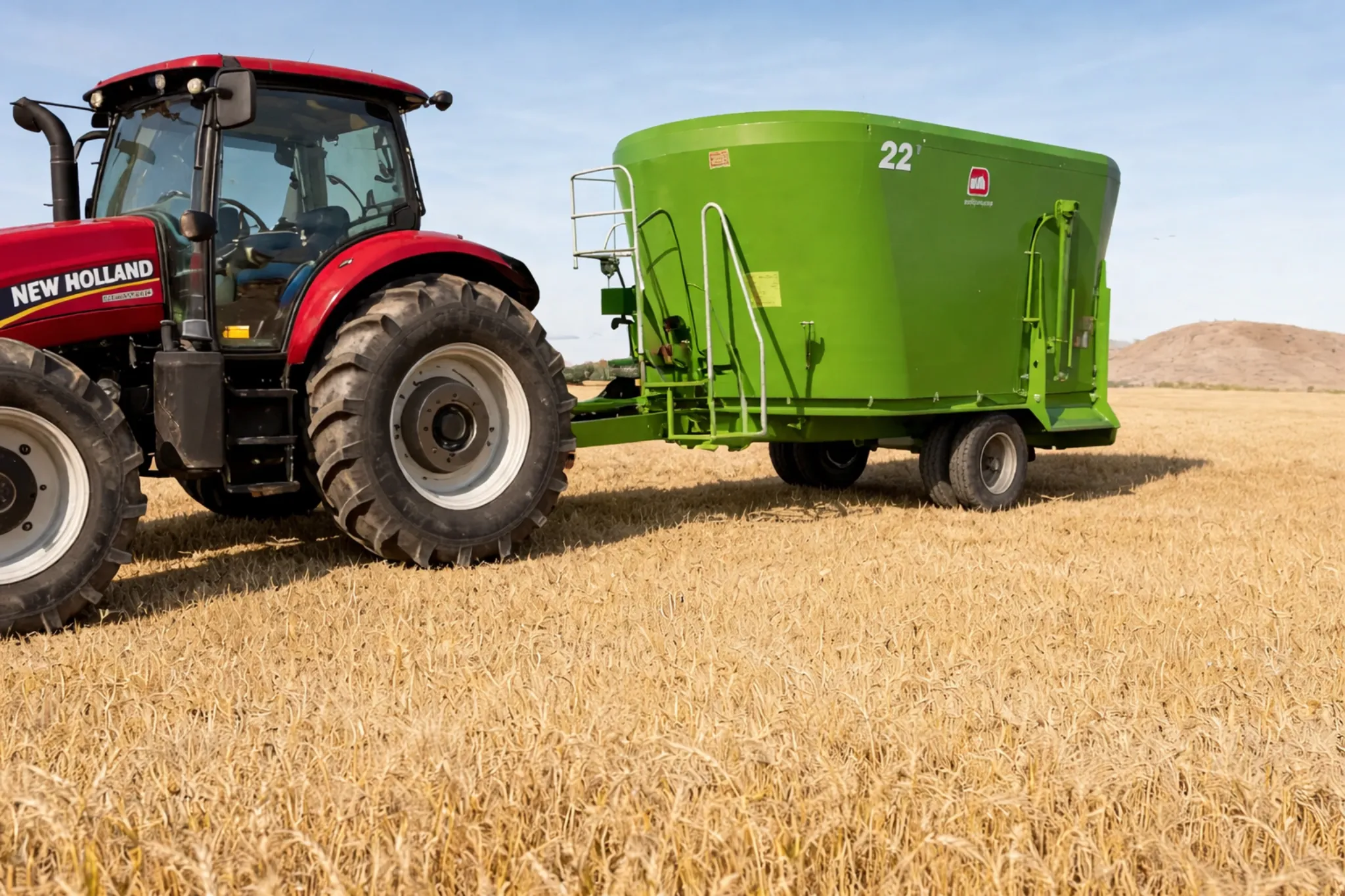
⚙️ Where Agricultural Chains Are Used on This Machine
The main power transmission chain driving the working components. Requires heavy-duty specification matched to the peak torque of the application.
Moves material through the machine. Must resist abrasion from crop material and environmental contamination while maintaining dimensional accuracy.
Sub-drives for auxiliary systems. Light to medium duty but must be dimensionally compatible with the primary drive timing where applicable.
What Destroys Chains in Australian TMR Environments
Well-fermented silage has a pH of 3.8–4.5 — highly acidic relative to most agricultural environments. The floor and conveyor chains in the TMR mixer are bathed in silage juice during every mixing cycle. Bare carbon steel corrodes rapidly in this environment; phosphate-coated or stainless steel chains are appropriate specifications depending on silage inclusion rate.
A fully loaded TMR mixer may contain 15–20 tonnes of mixed ration pressing laterally against the floor discharge chain. The resultant side-loading force on the chain side plates and rollers is far beyond what a standard chain experiences in conventional agricultural drives. Chains must have sufficient side plate strength to resist the bending load without cracking.
TMR mixers in feedlot and dairy operations may run 3–6 mixing cycles per day, 365 days per year. This continuous-duty operating profile accumulates far more hours per year than most seasonal agricultural machinery. The chain must withstand this duty without requiring more frequent service than the operating schedule can accommodate.
Chain Specifications for TMR feed mixers
| Position | Chain Specification | Material | Min. Tensile (kN) | Special Treatment |
|---|---|---|---|---|
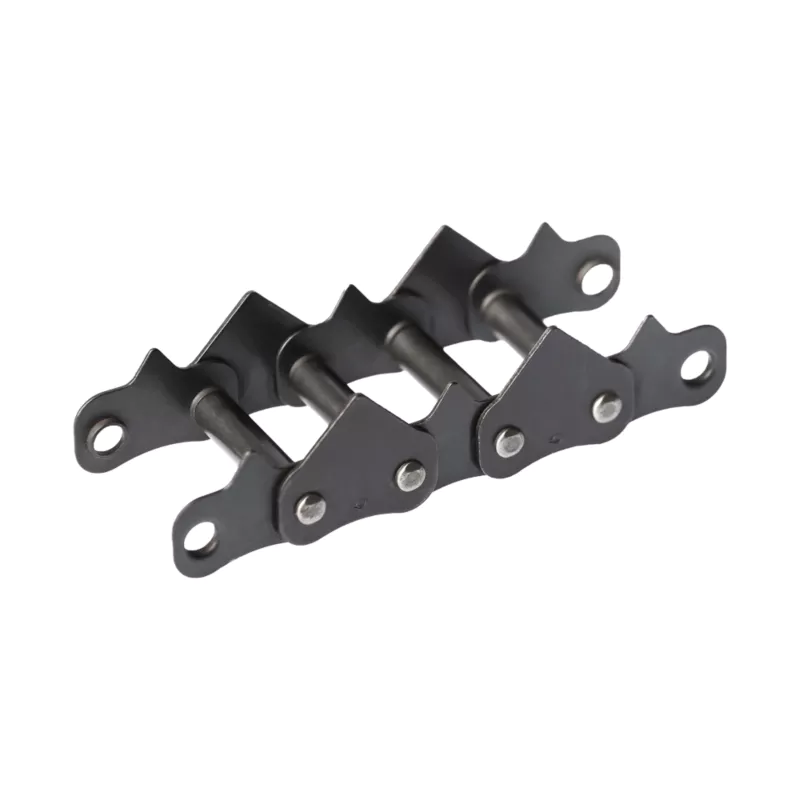
| Floor discharge chain (apron) | Heavy-duty welded-steel flat-top or attachment chain | Case-hardened carbon steel or 304 SS | 90–140 kN | Phosphate coating or SS for high-acid silage |
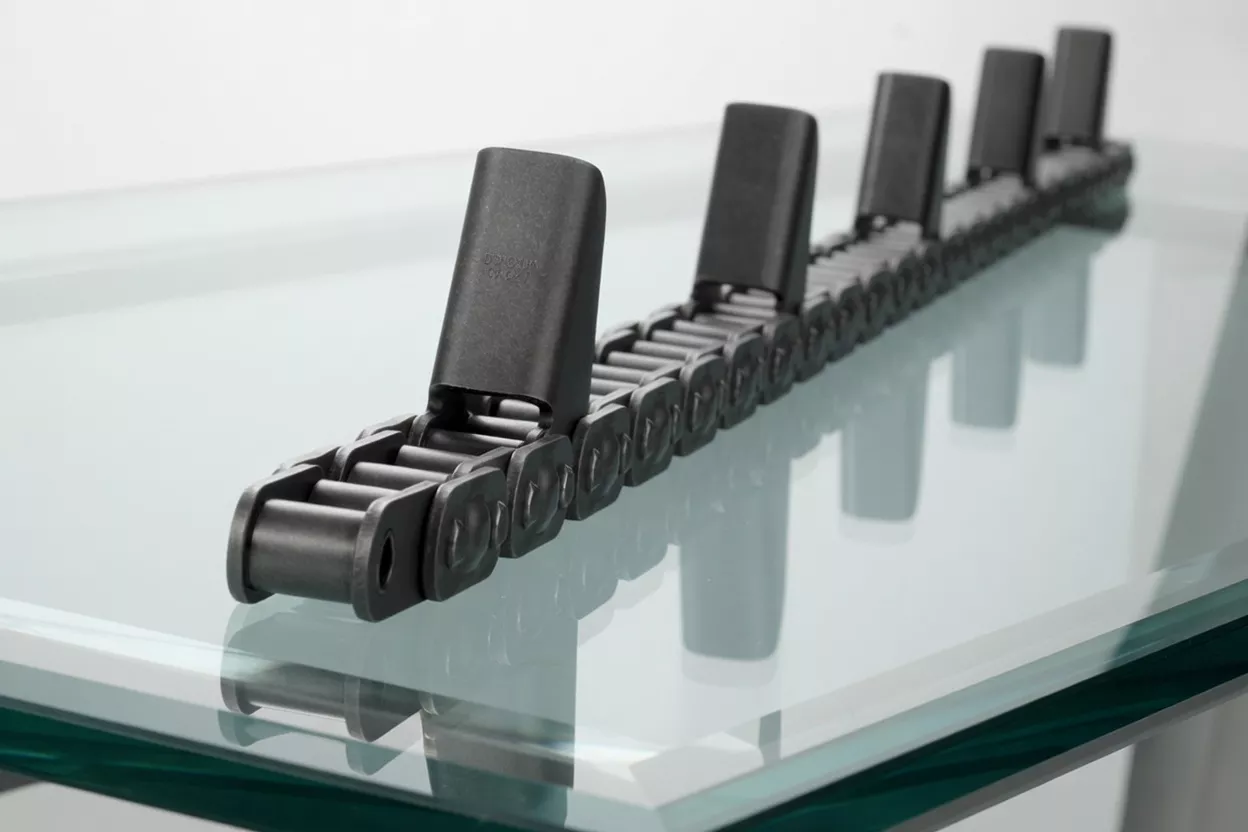
| Lateral conveyor chain | CA-type or heavy roller chain with attachments | Carbon steel with phosphate | 50–80 kN | K2 attachments for paddle mounting |
| Auger drive chain | ANSI 80 or ANSI 100 double-strand | Carbon steel | 90 kN min | Sealed rollers for silage juice environment |
| Discharge gate drive | ANSI 60 single-strand | Carbon steel | 22 kN min | Standard specification, replace seasonally |
Selecting the Right Chain
Mixers with more than 40% silage inclusion run a highly acidic environment continuously. For these operations, stainless steel (304) for floor chain and phosphate-treated carbon steel for conveyor chain is the appropriate material selection. Bare carbon steel floor chains in high-silage mixers typically fail within 12 months through corrosion-accelerated wear.
A 20-tonne full-load mixer with 3 cycles per day puts significantly higher cumulative side-loading on the floor chain than a 10-tonne mixer running once daily. Confirm floor chain plate strength is rated above the maximum lateral load per link for your mixer configuration.
Chain service life in TMR mixers correlates more strongly with silage pH and inclusion rate than with operating hours. Mixers processing high-acid maize silage at 50% inclusion may need floor chain replacement twice as frequently as the same machine running cereal silage at 30% inclusion.
Sealed rollers retain lubricant against silage juice washing and exclude acidic silage particles from entering the bushing bore. In the TMR mixer environment, sealed rollers extend service life by 30–50% compared to standard open rollers.
Maintenance Practices
TMR mixer chain maintenance is governed by the acid exposure and physical loading of each mixing cycle rather than standard hourly intervals.
Wash down the floor chain and conveyor chains with fresh water to remove silage acid accumulation. Inspect chain for visible corrosion, cracked side plates, or locked rollers. Apply EP lubricant to all accessible chain joints.
Measure floor chain elongation and check floor discharge function. Replace at 2.0% elongation. Inspect conveyor chains for bent side plates caused by ration bridging events.
Full chain removal and inspection. Replace any chain showing visible corrosion penetration through the surface into the base metal. Assess whether stainless steel upgrade is warranted given current silage inclusion rates.
❓ Frequently Asked Questions
Explore Related Drive Components
T-series, wide-angle CV and overrun-clutch protected drivelines that deliver tractor power into the chain drives of every implement.
Explore Drivelines →
⚙️ Agricultural Sprockets
Complete sprocket range including S-type, CA-type and ANSI roller chain sprockets to pair with every chain in this catalogue.
Explore Sprockets →
Request OEM-pattern or replacement chain
Supply us with a part number, worn sample, or machine serial number. Our engineers will match it to the correct chain specification.