Cadeias agrícolas para colheita de azeitonas
Olive harvesters — both self-propelled straddler-type machines and tractor-mounted side shakers — expose their chain drives to a fatigue loading regime that is fundamentally different from most agricultural machinery. The primary working mechanism (shaker arms or beating-rod systems) operates at frequencies of 6–15 Hz continuously for hours at a stretch. Every chain drive in the harvester vibrates at these frequencies in sympathy with the shaker mechanism, creating a resonant fatigue environment that is more similar to industrial vibration testing than to conventional agricultural chain duty.
In Australia’s rapidly growing olive industry — primarily in South Australia’s mid-north, Western Australia, and the Murray Riverina — olive harvest windows are narrow and machine availability during the olive maturity period is critical.

The Australian Operating Challenge
The combination of 6–15 Hz shaker frequency and 8–12 hours of daily operation during olive harvest means each chain joint articulates hundreds of thousands of times per day — far more than any other agricultural application per operating hour. This high articulation frequency causes fretting wear at the pin-bushing contact surface (micromotion abrasion) and initiates fatigue cracks at the highest-stress points in the chain — typically the connecting link inner plates and the chain inner link plate shoulders.
The shaker mechanism drives olive fruit, leaves, and small twigs through the harvester. Fine olive pomace and leaf particles settle into chain joints. In machines where the shaker drive chain is exposed to the fruit stream, these particles act as a mild abrasive. Sealed rollers and regular blowdown are the maintenance defence.
Australian olive growing regions — particularly South Australia’s mid-north limestone soils — have high calcium carbonate content. Fine calcium carbonate particles carried into chain joints form a slightly abrasive deposit that acts in combination with the fretting wear mechanism to accelerate pin surface wear under vibration.
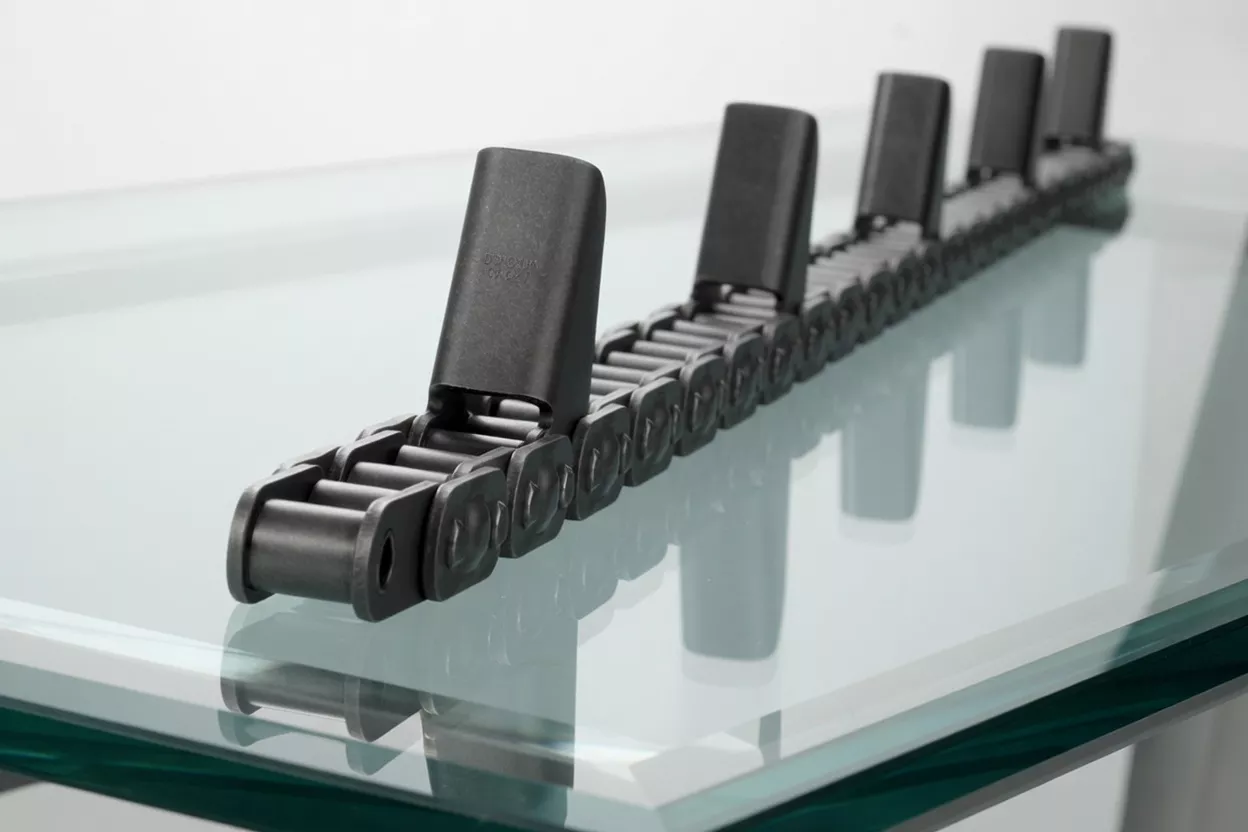
Chain Specification Reference
| Harvester Position | Chain Standard | Key Property | Fatigue Rating | Replacement Threshold |
|---|---|---|---|---|
| Shaker arm main drive | ANSI 50 or ANSI 60 — self-lubricating | Fretting wear resistance under vibration | High fatigue rating required | 1.5% elongation or audible noise |
| Collection belt drive | ANSI 50 single-strand | Sealed rollers, food-adjacent | Standard | 2.0% elongation |
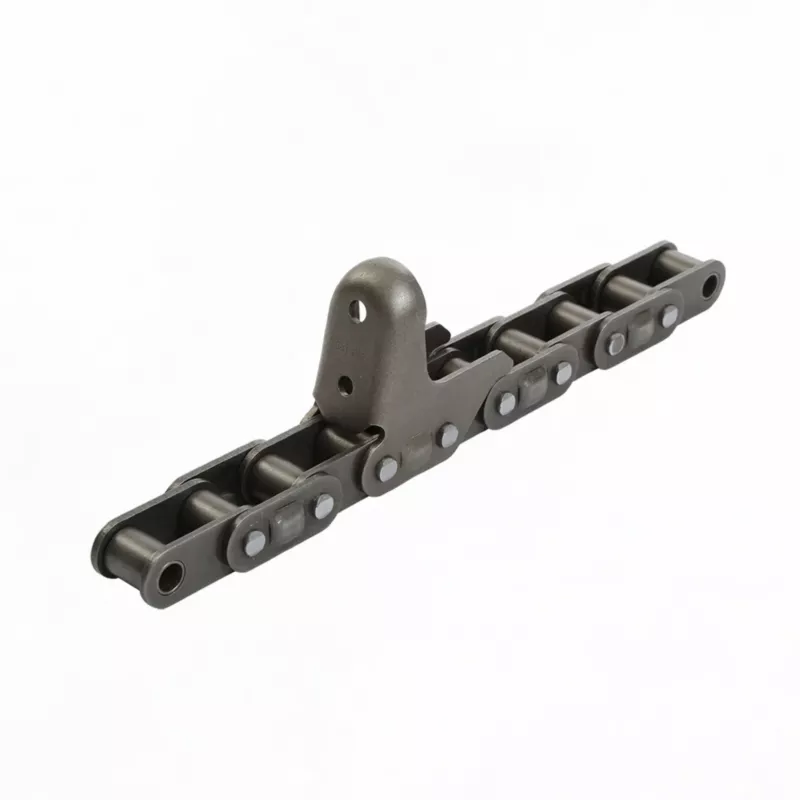
| Fruit bucket elevator | CA550 with K2 attachments | Sealed, food-safe lubricant adjacent | Standard | 1.5% elongation |
| Blower and fan drive | ANSI 60 double-strand | Standard high-speed duty | Standard | 1.5% elongation |
❓ Frequently Asked Questions
Explore Related Drive Components
T-series, wide-angle CV and overrun-clutch protected drivelines that deliver tractor power into the chain drives of every implement.
Explore Drivelines →
⚙️ Agricultural Sprockets
Complete sprocket range including S-type, CA-type and ANSI roller chain sprockets to pair with every chain in this catalogue.
Explore Sprockets →
Request OEM-pattern or replacement chain
Supply us with a part number, worn sample, or machine serial number. Our engineers will match it to the correct chain specification.