Agricultural Chains for Balers: High-Torque Drive Solutions for Australian Hay Operations
Hay baling in Australia is one of the most mechanically demanding PTO-driven operations in broadacre farming. Large square balers processing thick-stemmed lucerne, dry wheat straw, or ryegrass-dominant pastures impose torque and shock loads on their chain drives that exceed what most agricultural implements experience. The plunger crank, the bale formation chamber, the pickup, and the tying system all run from the same PTO input, and each sub-drive must maintain its timed relationship with the others through the full range of crop conditions — from light hay to dense, stemmy billets that jam the chamber.
This guide addresses the chain drive engineering requirements of round balers, large square balers, and fixed-chamber balers operating in Australian hay and cropping systems.
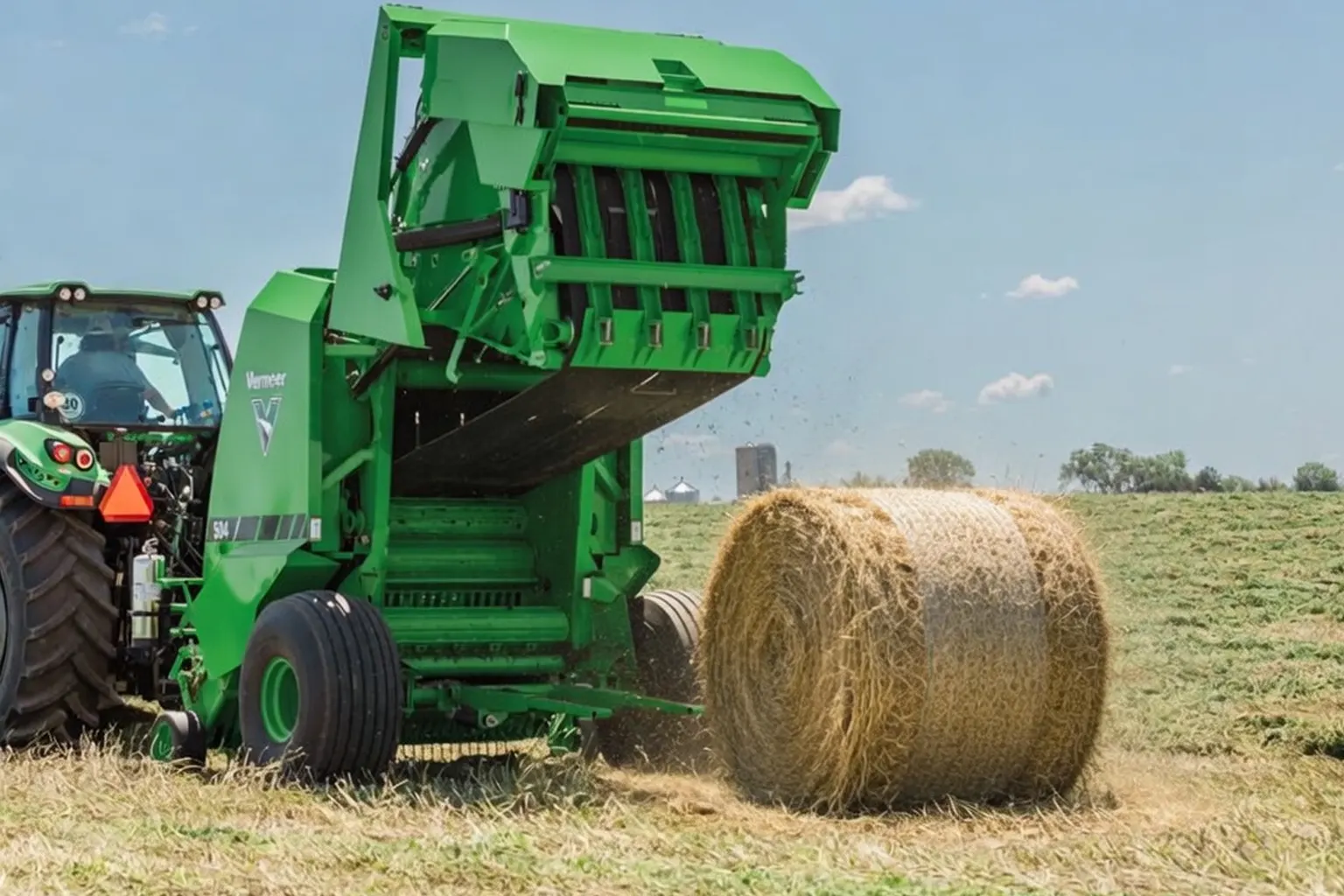
⚙️ Chain Drive Positions in Modern Balers
The heaviest chain position on the machine — transmits the full PTO torque to the plunger crank that compresses material into the bale chamber. This chain sees enormous torque spikes every time the plunger encounters a dense slug of hay. ANSI 100 SP or ANSI 120 double-strand heavy-duty chain is the engineering minimum for this position.
Drives the pickup rotor that lifts hay from the windrow and the augurs that feed it into the bale chamber. These chains run at higher speed than the plunger drive but at lower torque. ANSI 60 or ANSI 80 single-strand is the typical specification, with heavy-duty variants where the pickup must handle stemmy or bunched hay.
The knotter on a square baler is a precision timing mechanism. The chain that drives it must maintain phase accuracy to ensure the knot is tied at precisely the correct moment in the plunger cycle. This is a low-load but high-precision position — any chain slack introduces timing error that causes knot failures.
Round baler belt tension chains and the bale ejection drive use chain to coordinate bale wrap and ejection. These are lower-load positions but must be dimensionally stable to maintain the geometric accuracy of the bale wrap sequence.
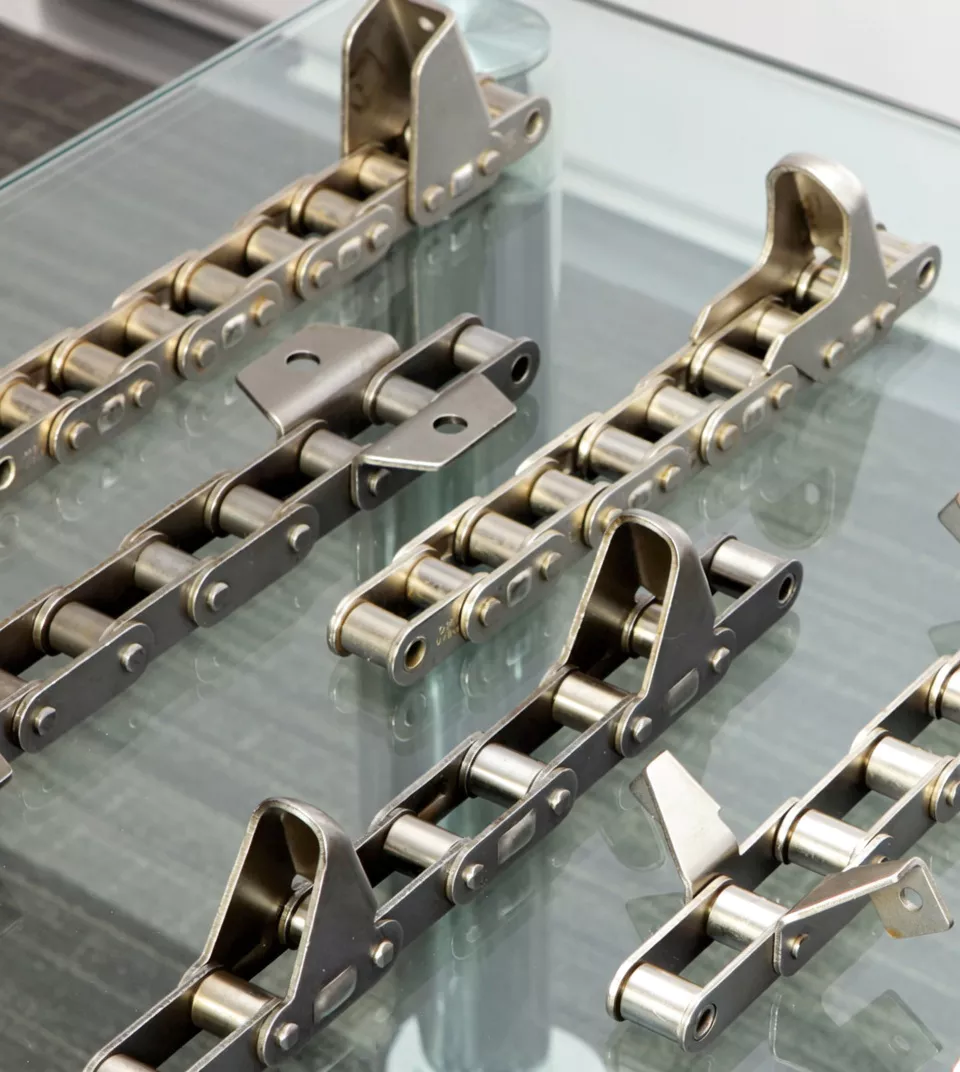
Australian Hay Conditions and Baler Chain Demands
Australian hay operations create specific chain failure modes that differ from Northern Hemisphere baling conditions.
Australian summer hay — particularly lucerne cut in December and January — is extremely dry at the time of baling and forms high-density slugs in the bale chamber when windrowed unevenly. The impact load when a slug enters the plunger chamber can be 3–5 times the continuous plunger chain load. Standard ANSI 100 chain side plates crack at the connecting link holes under these repeated shock loads; SP-series reinforced side plates with shot-peening are the required specification.
Dry Australian hay generates fine leaf-particle dust that penetrates chain joints and acts as an abrasive compound. Plunger drive chains in typical Australian hay conditions need more frequent lubrication than the manufacturer’s standard interval, and dry-film lubricant or heavy EP oil (rather than light mineral oil) is recommended to maintain film integrity against the abrasive dust environment.
Hay baling in paddocks with variable windrow density involves many start-stop cycles as the tractor slows or the pickup encounters gaps in the windrow. These deceleration-acceleration cycles impose fatigue loads on the plunger drive chain connecting links — the point where fatigue cracking most commonly initiates. Replace connecting link cotters every season regardless of apparent condition.
Chain Specification Reference for Baler Applications
| Baler Position | Recommended Chain | Strand | Min. Tensile (kN) | Critical Requirement |
|---|---|---|---|---|
| Plunger crank drive (large square) | ANSI 120 SP reinforced | Double-strand | 160 kN | Shot-peened side plates, through-hardened pins |
| Plunger crank drive (mid-size) | ANSI 100 SP | Double-strand | 120 kN | Reinforced side plates, HRC 55+ pins |
| Pickup / auger drive | ANSI 80 double-strand | Double | 90 kN | Sealed rollers for hay-dust environment |
| Knotter drive | ANSI 50 or ANSI 60 | Single | 22–38 kN | Precision pitch tolerance for timing accuracy |
| Round baler belt tension | ANSI 60 single-strand | Single | 22 kN | Dimensional stability under cyclic tension |
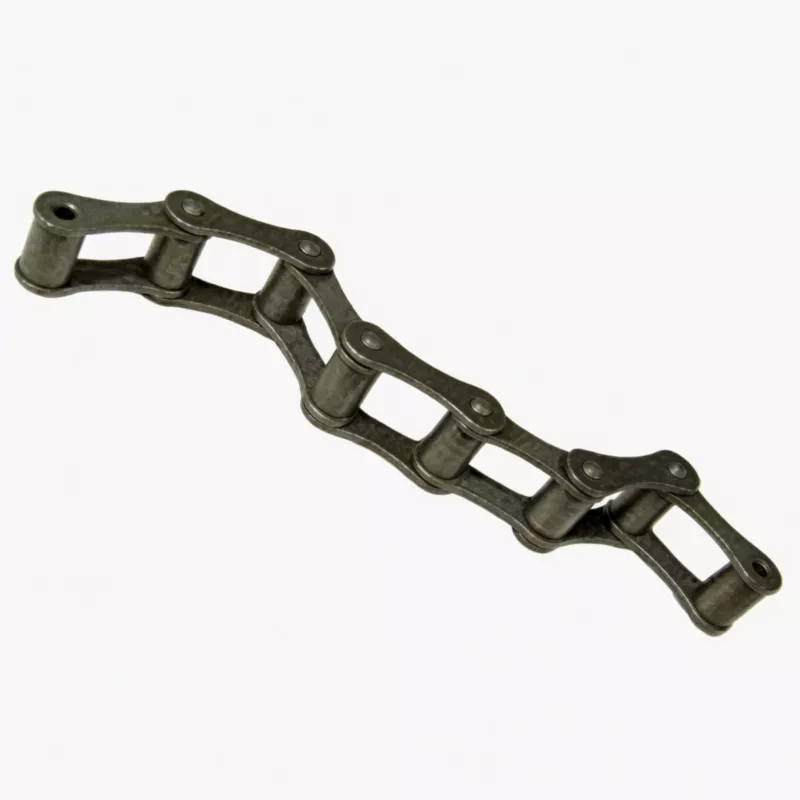
Selecting the Right Baler Chain
The plunger drive chain on a large square baler is the highest-load chain on any PTO-driven implement. SP-series reinforced chain is not an optional upgrade for Australian hay conditions — it is the minimum appropriate specification given the shock load profile during dense-slug baling.
Replace the knotter drive chain at 1.0% elongation — the same precision standard as a timing chain — regardless of whether the main drive chains need replacement. A misspaced knotter cycle causes knot failures that are difficult to diagnose and result in bales that come apart during handling.
Connecting links are the initiation point for fatigue cracking in shock-loaded chains. On large square baler plunger drives, replace the connecting link at every pre-season inspection even when the chain is within elongation limits. A connecting link failure on a plunger drive chain causes the most severe baler failure mode.
High-EP (extreme pressure) gear oil applied to the plunger drive chain at each 50-hour service maintains film thickness better under the high contact pressures generated by dense hay slug impact than standard mineral oil. Apply using a brush or drip system directly to the chain as it runs, or at rest with a brush penetrating all link joints.
Maintenance Schedule for Baler Chains
Inspect connecting links on all chain positions. Check plunger chain tension — sag should be within the OEM specification, typically 10–15 mm at mid-span. Apply lubricant to all chains.
Measure plunger drive and pickup chain elongation. Replace plunger chain at 1.5%, pickup at 2.0%, knotter at 1.0%. Inspect all sprockets for tooth hook wear and replace any showing visible cracking.
Remove all chains. Clean and inspect rollers and side plates for fatigue cracks, particularly at connecting link holes and at the innerplates. Store with a rust-prevention coat. Document elongation measurements to plan pre-season replacements.
❓ Frequently Asked Questions
Explore Related Drive Components
Matched sprockets for every chain type we supply — plate wheel, taper-bore and hardened-tooth profiles manufactured to the same ISO standards.
Explore Sprockets →
️ Agricultural Gearboxes
Right-angle bevel and parallel-shaft gearboxes for PTO-driven implements — the upstream drive partner to every chain transmission.
Explore Gearboxes →
Specify the right chain for your machine
Tell us your application, operating environment, and machine model. We will recommend the exact chain and supply it with full material certification.