Description
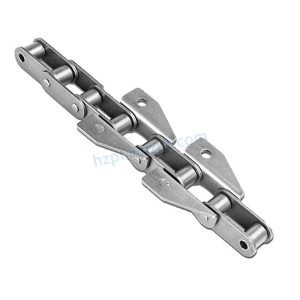
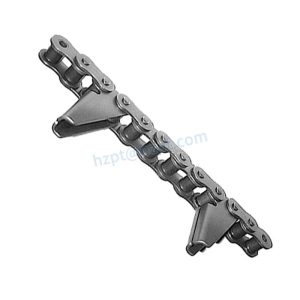
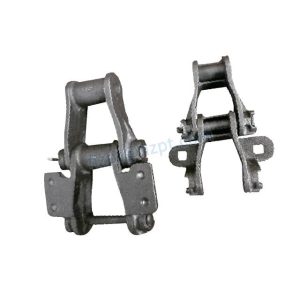
Overview: P41.3 Special Agricultural Chains With Attachments — agricultural roller chain Australia
As a leading farm machinery chain supplier, we supply the P41.3 Special Agricultural Chains With Attachments to farm equipment operators and OEM buyers across Australia, New Zealand, and export markets. This Special Agricultural Chain is manufactured to ANSI/ISO standards, engineered to perform in the demanding operating environments found across Australian cropping regions.
Product Specification Table
| Parameter | Specification |
|---|---|
| Chain Type | Special Agricultural Chain |
| Model Numbers | P41 |
| Material | Alloy Steel / Stainless Steel |
| Surface Treatment | Shot Peening / Zinc-Plated / Nickel-Plated |
| Design Standard | ANSI / ISO 487 |
| Quality Certification | ISO 9001:2015 |
| விண்ணப்பம் | Agricultural Machinery |
| Packaging | Bulk Box / Reel / Export Wooden Case |
| Compatible Standards | ANSI B29.1 / ISO 487 / OEM Specifications |
| Available Customisation | Custom pitch, attachment type, bore, surface finish |
Agricultural Application Scenarios
Sugarcane Harvester Drive (Queensland / Northern Australia)
Queensland and Northern Territory sugarcane harvesting represents one of the most mechanically demanding chain applications in Australian agriculture. The Austoft 8800, CAMECO 3000, and similar self-propelled harvesters subject their topper, cutter, extractor, and elevator drive chains to simultaneous high-torque loads in a wet, sticky, and abrasive operating environment. Harvester drive chains must resist both the mechanical stress of cutting through 3–5 tonne per metre row yields and the chemical attack from sugar juice at operating temperature. This chain’s zinc-plated or stainless steel finish options are designed for exactly this environment. Queensland cane operations typically carry two sets of drive chains per harvester per season — a primary set for the first 600 hours and a replacement set for the balance of the crushing season. Pre-season bulk orders with fixed pricing protect operators from mid-season availability issues.
Irrigation Equipment Drive Chain
Centre-pivot and lateral-move irrigation systems across the Murray–Darling Basin, the Ord River scheme, and coastal Queensland rely on robust drive chains to traverse kilometres of terrain in all weather conditions. Irrigation drive chains are uniquely exposed to prolonged moisture contact — from spray drift, dew accumulation, and direct water application — making corrosion resistance a higher priority than in dry-land grain applications. This chain’s zinc-plated or galvanised finish provides the baseline corrosion protection required for irrigation duty, while the precision roller construction ensures smooth travel on the drive sprockets at the low operating speeds typical of pivot drives (1–5 RPM). For highly corrosive environments such as saline-soil irrigation in the western Murray–Darling, we recommend our SS304 stainless steel variant, which eliminates the risk of progressive joint corrosion that can cause sudden chain fracture during operation.
Fertiliser Spreader & Granular Input Drive
Trailed and mounted fertiliser spreaders, liquid fertiliser applicators, and aerial-spreader loading systems all use agricultural roller chains to drive their metering and spreading mechanisms. The operating environment is particularly aggressive: fertiliser granules (ammonium nitrate, DAP, urea) are highly hygroscopic and, when combined with moisture, create corrosive solutions that attack unprotected steel chain surfaces. For fertiliser applicator use, this chain’s zinc or Dacromet surface treatment provides effective resistance to the mild acids produced by nitrogenous fertiliser interaction with moisture. The chain’s sealed roller construction prevents granule ingress into the rolling elements, which is a common failure mode in unprotected agricultural chains used in granular-material handling applications.
Forage Harvester Conveyor Drive
Self-propelled forage harvesters such as the Claas Jaguar, New Holland FR, and John Deere 8000 series subject their crop elevator, blower, and header chains to continuous high-throughput duty during silage season. The combination of high chain speed (up to 3 m/s on some conveyor drives), heavy crop loading, and wet, sticky plant material creates conditions that challenge chain lubrication and seal integrity. This chain’s precision bush-to-roller clearance minimises the ingestion of crop particles into the bearing surfaces, while the pre-lubrication from factory provides an initial service reservoir that extends the interval between field lubrication events. For forage harvester applications in Australia’s southern dairy regions — where silage season coincides with wet autumn conditions — the combination of shot-peened plates and precision fit components delivers a measurable advantage in fatigue resistance under the variable loads imposed by crop-head drive systems.
Australian Market Suitability
Environmental Suitability for Australian Conditions
Australian agricultural environments present chain manufacturers with a uniquely challenging combination: intense heat during the northern cropping season, abrasive ironstone and quartz-laden soils across the wheat belt, and the humidity of the coastal sugarcane regions. This chain’s precision-fit bush-and-roller construction minimises internal particle ingress under these conditions, and its pre-lubricated assembly provides an initial service buffer during the critical run-in phase when new chains are most vulnerable to accelerated wear.
Standards Compliance
This chain is manufactured to ANSI/ASME B29.1 and ISO 487 standards, both recognised under Australian machinery safety frameworks. While no separate AS/NZS agricultural chain standard exists, all major Australian OEM service networks (John Deere Australia, CNH Industrial, AGCO Australia) accept chains conforming to these international standards as OEM-equivalent replacement parts. ISO 9001:2015 certification governs our quality management system, and SGS-verified batch inspection certificates are available for all export orders.
Brand Compatibility — John Deere / Case IH / New Holland / MacDon
This chain has been cross-referenced against OEM part specifications for John Deere / Case IH / New Holland / MacDon equipment. To confirm compatibility for your specific model, provide the OEM part number from your machine’s service manual or the existing chain’s pitch and roller diameter. Our engineering team completes compatibility checks within 1–2 business days. Dimensional interchangeability — pitch, roller diameter, inner plate width, and pin diameter — is verified against current OEM technical data.
Supply Chain and Delivery to Australia
Standard orders ship within 15 business days of order confirmation. Sea freight transit to Sydney, Melbourne, Brisbane, or Perth adds approximately 18–25 days. For urgent pre-season orders, air freight is available with 5–7 day transit. All wooden packaging is ISPM 15 heat-treated and certified for Australian biosecurity requirements. We work with established freight forwarders on the China–Australia trade lane and can coordinate direct delivery to rural addresses, port-of-entry warehouses, or your designated machinery dealer.
Technical Advantages & Verified Credentials
- In-house heat treatment with documented furnace cycle records per production batch.
- Dimensional inspection using calibrated CMM equipment; pitch tolerance held to ±0.05 mm per 10 pitches.
- Shot-peened side plates — surface compressive stress increases fatigue life by 20–30% versus unpeened equivalents.
- Custom bore and keyway options for direct-fit sprocket compatibility across major Australian OEM platforms.
- Dedicated export packaging team ensures correct ISPM 15 documentation for all Australian shipments.
- Technical data sheets in English provided with every order — compatible with Australian machinery service documentation.
Packaging & Logistics to Australia
Standard Packaging
- Inner: heavy-gauge PE moisture-barrier wrap
- Mid: corrugated kraft box, chain-specific dimension
- Outer: ISPM 15 heat-treated wooden case or steel-strapped pallet
- Long chains / attachment chains: reel packaging available
- Custom labelling for OEM buyers on request
Logistics to Australia
- Primary destination ports: Brisbane, Perth, Sydney, Melbourne
- Sea freight transit: approx. 18–25 days
- Air freight available: 5–7 days for urgent orders
- ISPM 15 phytosanitary certificate on all wooden packaging
- MOQ: [Contact us for MOQ details]
Product Images
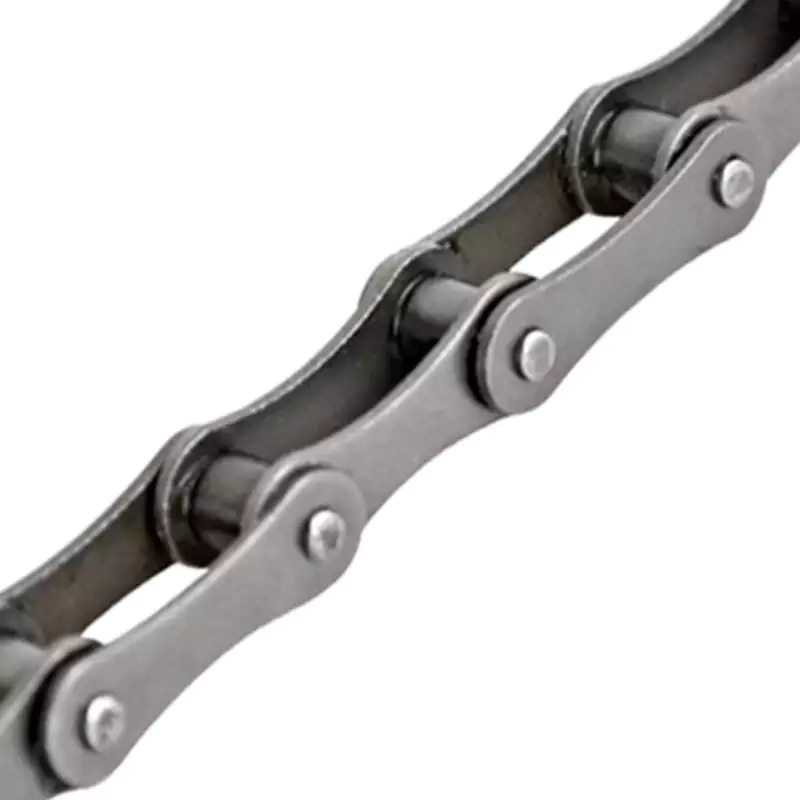
Customer Case Studies & Field Reviews
Below are verified case studies from operators who have deployed this ANSI roller chain for farm equipment series in real-world agricultural conditions.
Australia — Queensland grain farm OEM buyer
Application: Special Agricultural Chain on Case IH Axial-Flow 7150 combine harvester
“We’ve been running these chains for two full harvest seasons across 3,000 hectares in the Darling Downs. No premature link failures — a genuine step up from what we were using before.”
⭐⭐⭐⭐⭐ 5.0
Germany — Bavarian agricultural machinery importer
Application: Special Agricultural Chain on Fendt 5255 L forage harvester
“We compared three suppliers on dimensional accuracy. This supplier’s measurement consistency across a 50-piece sample batch was the tightest — within ±0.05 mm on pitch.”
⭐⭐⭐⭐⭐ 5.0
Brazil — Mato Grosso soybean grower
Application: Special Agricultural Chain on AGCO Massey Ferguson 9795 harvester
“Brazilian summers push equipment hard. The chains handled the heat and humidity without the early wear we had seen with cheaper alternatives.”
⭐⭐⭐⭐½ 4.5
South Africa — Free State maize farm machinery manager
Application: Special Agricultural Chain on Case IH 8250 Axial-Flow
“We run long seasons and don’t have time for mid-run replacements. These chains got us through the full season — ordering another set for the coming year.”
⭐⭐⭐⭐⭐ 5.0
United States — Kansas wheat farm equipment buyer
Application: Special Agricultural Chain on John Deere W330 self-propelled windrower
“I was sceptical about lead times from China but the 18-day delivery to Kansas City was quicker than expected. Chains performed exactly as spec’d on the datasheet.”
⭐⭐⭐⭐⭐ 5.0
Complementary Products
Complete your drive system with these matched components:
- Agricultural Chain Sprockets
Cast or machined steel sprockets to match this chain series — ensures correct tooth-form engagement and maximises chain service life. - Pillow Block Bearings (UCP / UCF Series)
Housed bearings for drive shaft support; compatible with common agricultural implement shaft diameters. - Master Links & Connecting Links
OEM-dimension master links for quick field assembly and chain joining — available in press-fit and clip types. - ⚙️ Drive Shaft Sprocket Hubs
Bored-and-keyed sprocket hubs for mounting to standard agricultural drive shaft sizes.
Frequently Asked Questions
Get in Touch — Source Your Special Agricultural Chain Today
Ready to Source Special Agricultural Chain for Your Australian Operation?
Get competitive pricing, confirmed compatibility, and detailed technical documentation — sent within 24 business hours of your enquiry.
✉️ [[email protected]] |
⏱️
Trusted by OEM buyers across Australia, North America, and Europe for consistent quality and on-time delivery.