Agricultural Sprockets Australia | Roller Chain Sprockets, OEM Drive Wheels | Ever-power

Drive Wheels Catalogue

Agricultural Sprockets

Roller-chain sprockets, plate wheels, taper-bore drives and hardened-tooth profiles — manufactured to ANSI, BS and DIN standards and engineered for the abrasive, dust-laden conditions of Australian field work.

Built For Australian Paddocks

Sprockets that survive the dust, heat and shock loads of real fieldwork

An agricultural sprocket has one job — transmit torque cleanly between a roller chain and a shaft, season after season, in conditions that punish lesser drives. Our catalogue covers the full standard range plus a deep library of OEM-pattern wheels: simplex through triplex, plate and taper-bore, double-pitch conveyor sprockets, hardened-tooth profiles for high-shock implements, and stainless options for fertiliser and corrosive environments.

Every wheel ships with traceable material certificates, dimensional inspection data, and surface-hardness verification. Specifications are built around actual Australian use — combine harvesters running 14-hour days through the Wimmera, hay balers in 40-degree Riverina heat, sugarcane harvesters in tropical North Queensland.

20+Years Drive Manufacturing
ISO 9001Quality System Certified
60+Export Markets Worldwide
40%Catalogue Made To OEM Drawings
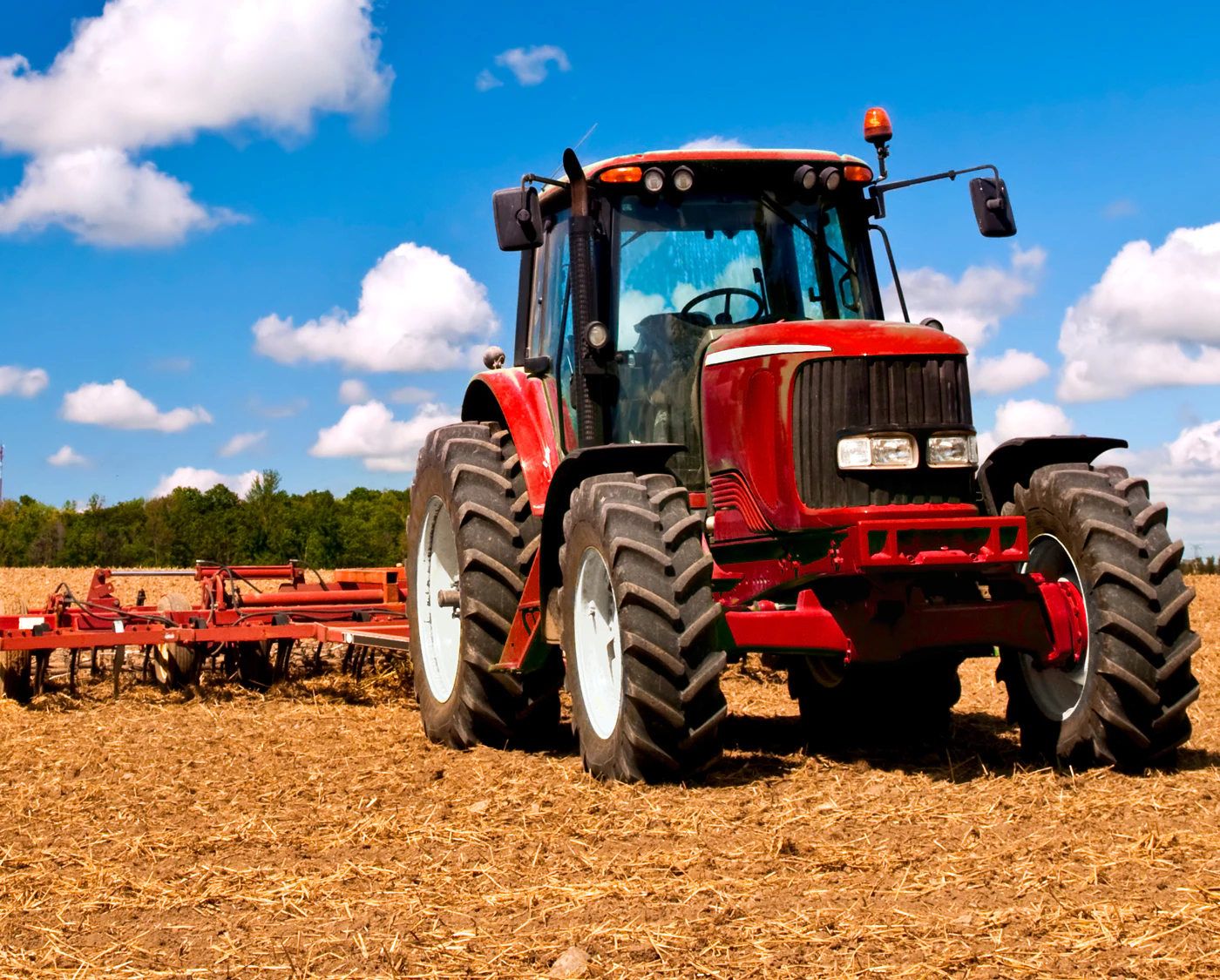
Agricultural sprockets range — roller chain sprockets, plate wheels and taper bore drives for Australian farming
Sprocket Types

The complete range — one supplier, factory direct

Six core families cover virtually every agricultural drive scenario. If you have a serial number, an OEM drawing or a worn sample, our engineering team can match it.

Most Common Simplex agricultural sprocket — single-strand roller chain wheel for tractor drives

Simplex (Single-Strand) Sprockets

The workhorse profile for the majority of agricultural transmissions — combine drives, baler pickups, mower decks, planter row units. Single roller chain engagement keeps mass low and serviceability high.

  • ANSI 35 / 40 / 50 / 60 / 80 / 100 chain pitches
  • BS 06B / 08B / 10B / 12B / 16B options
  • Tooth counts from 9T through 95T as standard
  • 1045 carbon steel or 40Cr alloy options
Heavy Duty Duplex and triplex agricultural sprockets — multi-strand chain wheels for high torque drives

Duplex & Triplex Sprockets

Two- and three-strand wheels share load across multiple chains, doubling or tripling effective torque without enlarging diameter. Standard fitment for combine threshing drives, large-square baler ram drives, and forage harvester feed rolls.

  • ANSI Double / Triple in 40-2 to 100-3 sizes
  • BS Double / Triple equivalents available
  • Stress-relieved hubs to prevent web cracking
  • Phosphate-coated finish to resist salt corrosion
OEM Pattern OEM pattern agricultural plate wheel sprocket for combine harvester drive

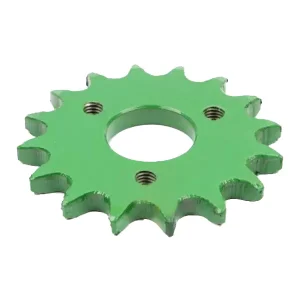
Plate Wheel Sprockets

Lightweight flat-plate construction for low-shock conveyor and elevator drives — grain-handling augers, header chain returns, baler bale-tube conveyors. Lower mass means lower bearing loads and longer service life on long shaft runs.

  • Laser-cut or stamped from 1045 plate
  • Bored-to-size or pilot bore versions
  • Single or double-strand patterns
  • Direct-replacement OEM part numbers
Quick Change Taper bore agricultural sprocket with taper bushing for quick shaft change

Taper-Bore (Taper Lock) Sprockets

Bushed sprockets that lock onto the shaft with a single tapered bushing — no key cutting, no grub-screw drift, easy field service. Especially valuable on irrigation pump drives and grain conveyor headshafts where downtime equals losses.

  • Fits standard taper-lock bushings (1108 to 5050)
  • Pre-bored bushings to imperial or metric shafts
  • Re-usable on shaft replacement
  • Excellent concentricity once installed
Long Pitch Double pitch agricultural conveyor sprocket for grain elevator drive

Double-Pitch & Conveyor Sprockets

Two-times-standard pitch (ANSI 2040, 2050, 2060) and oversize-roller variants designed for slow conveyor speeds and large attachments. Standard fitment for grain conveyors, baler pickup conveyors and tomato harvester elevators.

  • Standard or oversize roller (C-series) variants
  • Hardened tooth profile for abrasive grain duty
  • Single-strand patterns up to ANSI 2120
  • Replacement-pattern matches to OEM drawings
Specialty Hardened tooth and stainless agricultural sprockets for harsh conditions

Hardened-Tooth & Stainless Sprockets

For shock-loaded or corrosive duty: induction-hardened tooth profiles (HRC 50-58) for high-impact drives like rotary cutters and stalk shredders, plus 304 / 316 stainless wheels for fertiliser, slurry and effluent applications.

  • Induction hardening on tooth flanks only
  • 304 / 316 stainless for chemical environments
  • Optional hub stress-relief and balancing
  • Matched to extreme-duty roller chain selections
In-Stock & Made-To-Order

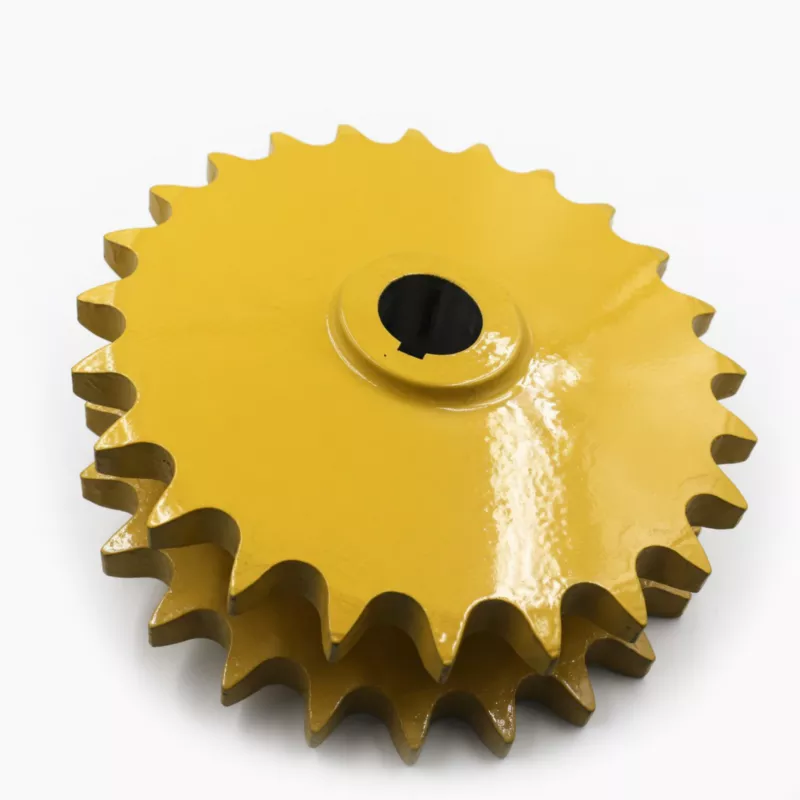
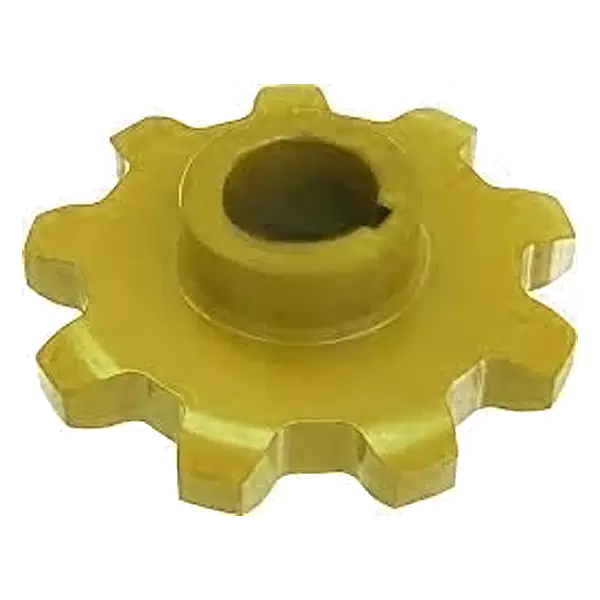
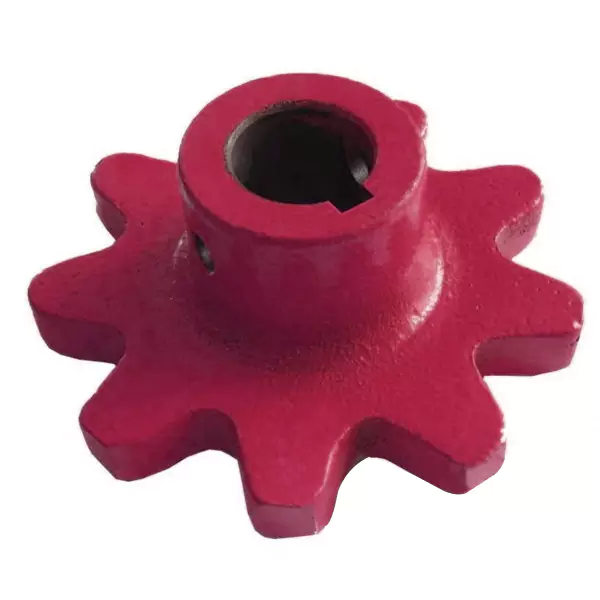
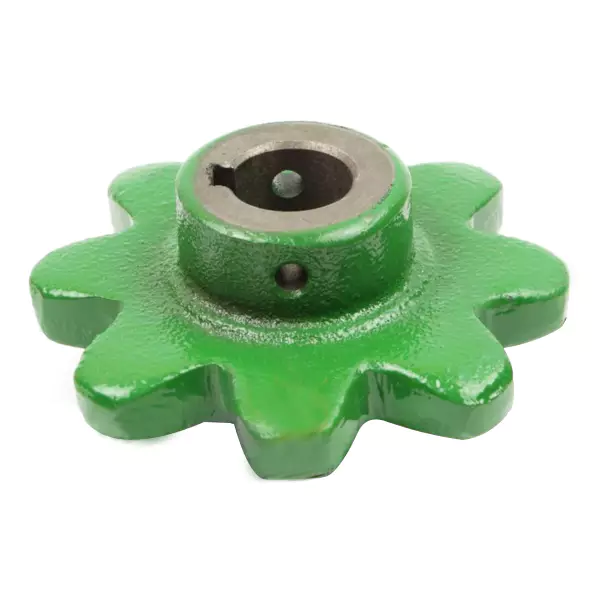
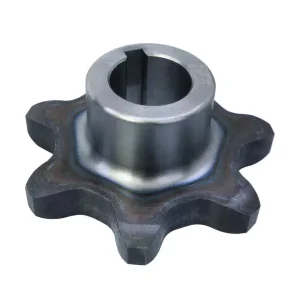
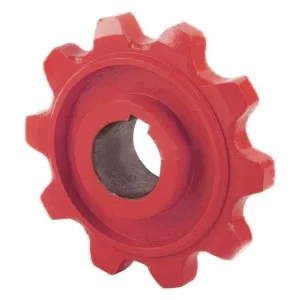
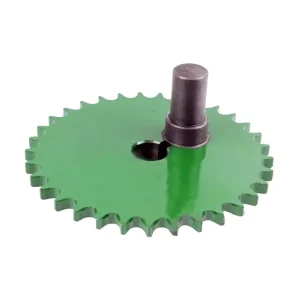
Browse our agricultural sprocket catalogue

Click any product below for full specification, pricing and an enquiry button. Need a wheel that isn't listed here? Send us your drawing or sample part — most OEM patterns can be reproduced from a photo plus a serial number.

Showing 13–16 of 16 results

Looking for the matching driveline? Browse our complete PTO shafts and drivelines range — sprocket-and-shaft kits supplied as matched pairs on request.

Standards & Specifications

Every wheel built to traceable engineering standards

Cross-reference the dimensional and material standards we manufacture to. All sprockets ship with matching certificates of conformity.

Standard / Series Chain Pitches Material Options Hardness Range Best Suited For
ANSI / ASAB29.1 35, 40, 50, 60, 80, 100, 120, 140, 160 1045 medium carbon, 40Cr alloy, 304 SS HB 200-240 (raw); HRC 50-58 hardened tooth North American OEM-pattern equipment, combine drives, baler shafts
BS / ISODIN 8187 06B, 08B, 10B, 12B, 16B, 20B, 24B 1045, 40Cr, C45E, 16MnCr5 HB 200-240 (raw); case-hardened option HRC 55-60 European tractor implements, Italian and German OEMs
Double PitchANSI 2000 2040, 2050, 2060, 2080, 2100, 2120 1045 with through-hardened tooth profile HRC 45-50 typical Conveyor drives, grain elevators, baler pickups
StainlessAISI 304/316 40, 50, 60, 80 (single & double strand) 304 (general), 316 (high-chloride / fertiliser) HB 180-220 (work-hardened on running) Fertiliser spreaders, slurry tankers, dairy effluent
Taper BushedTB Series 40, 50, 60, 80 (in 1108 to 5050 bushings) 1045 hub with taper bore to ISO 4892 HB 220 (induction hardening optional) Irrigation drives, mainline conveyors, easy-service shafts
Plate WheelCustom Any pitch — laser-cut to OEM drawings 1045 hot-rolled plate, optional Q235 grade HB 180-220 (raw); flame-hardened tooth optional Header drives, low-shock conveyors, return rolls
OEM pattern agricultural sprocket production — hobbed teeth and induction hardening
Materials & Manufacturing

Why our sprockets last longer in field service

The difference between a sprocket that survives a single harvest and one that runs three is usually upstream — in the steel grade, the heat treatment, and the way the teeth are cut. Here's what we control:

  • Verified raw material1045 medium-carbon and 40Cr alloy bar stock, every batch tested for chemistry and hardness before machining starts.
  • Hobbed tooth profilesCut on dedicated sprocket hobbing machines for true involute geometry — not stamped or flame-cut for the running surfaces.
  • Induction hardening on tooth flanksHRC 50-58 surface with tough core, available as standard on shock-loaded duty wheels.
  • Stress-relief on multi-strand hubsPrevents the web cracking that kills cheap duplex and triplex sprockets after a hundred hours.
  • Phosphate corrosion finishStandard on carbon steel wheels — resists the salt and fertiliser dust common in Australian field environments.
  • Dimensional inspectionPitch diameter, root diameter, hub concentricity and bore tolerance on every wheel — not on samples.
Where Our Sprockets Run

Application areas across Australian agriculture

Our sprocket range supplies these eight equipment sectors as direct-replacement parts and as new-build OEM components.

🌾

Combine Harvesters

Threshing drives, header drives, clean-grain elevator returns and unloading auger sprockets.

🚜

Tractor Implements

PTO-driven implement sprockets — rotary tillers, mowers, slashers, post-hole diggers.

🌱

Seeders & Planters

Row-unit drive sprockets, seed-meter sprockets and bin-fill auger drives.

💧

Irrigation Systems

Centre-pivot drive sprockets, hose-reel irrigator main shafts and pump-jack drives.

📦

Balers & Forage

Pickup drive sprockets, ram crank drives, plunger drives and forage feed-roll wheels.

🌽

Silage & Feeders

Forage harvester chopper drives, silage defacer apron drives, feed mixer auger sprockets.

🪨

Tillage Equipment

Power harrow rotor drives, rotary cultivator gang drives, deep ripper conveyor wheels.

🌿

Mowers & Conditioners

Disc mower bed drives, conditioner roll drives, hay rake conveyor sprockets.

Specifying Made Simple

Four steps to the right sprocket every time

Whether you're replacing a worn wheel or specifying a new drive, work through these in order. If anything is unclear, send us your details and our drive engineers will recommend a part number.

1

Identify the chain

Read the chain identification stamped on the side plate (e.g. ANSI 60-1, BS 12B-2). If unknown, measure pitch with a vernier — pitch is the centre distance between two adjacent rollers.

2

Count the teeth

Count teeth on the existing wheel, or calculate from the gear ratio you need — driving wheel teeth divided by driven wheel teeth gives speed reduction. Avoid prime-number tooth counts paired with prime chain links.

3

Confirm the bore & hub

Measure shaft diameter, keyway width and depth, and required hub style — pilot bore, finished bore with key, taper-locked, or split-hub for tight installations. Photograph the worn wheel from both sides.

4

Pick the duty class

Standard 1045 is fine for most low-shock duty. For rotary cutters, balers, silage choppers and any high-impact drive, specify induction-hardened tooth profile (HRC 50-58) — tooth wear drops by a factor of three.

OEM & Custom Sprockets

Replicate any sprocket from a drawing, a sample or a photo

Around 40 percent of the wheels we ship are made to OEM patterns — replacement parts for discontinued machinery, new builds for Australian implement manufacturers, and one-off custom drives for engineering shops. Our OEM service includes:

  • Reverse-engineering from worn samples
  • Drawing translation between ANSI / BS / DIN systems
  • Pattern-matching against major OEM part numbers
  • Material upgrades for harsh-duty replacement
  • Stainless and food-grade variants of standard wheels
  • Matched chain-and-sprocket kit supply
Request OEM Sprocket Quote →
Why Buy From Us

The Australian advantage of factory-direct supply

You can read more about our manufacturing capability and quality systems on the about Ever-power Australia page.

20+ YearsSpecialist Drive Manufacturing
ISO 9001Audited Quality System
60+ MarketsWorldwide Export Coverage
40% OEMMade-To-Drawing Capacity
Common Questions

Sprocket FAQs from Australian buyers

What's the difference between ANSI and BS sprockets, and can I mix them?
ANSI (American) and BS (British) standards use different pitch dimensions and roller diameters even when the chain numbers look similar. ANSI 50 chain is not compatible with BS 10B sprockets. Always match chain and sprocket to the same standard. If you're unsure, send us a photo of the chain side-plate stamp — the marking identifies the standard.
Can your sprockets replace wheels from major OEM brands?
Yes — we manufacture to a large library of OEM patterns and can reverse-engineer wheels not already in our database. Provide the OEM part number, a photo of the worn wheel, or the equipment serial number and we will confirm interchangeability. Direct dimensional matching is standard; material upgrades to hardened tooth or stainless are available on request.
When should I specify induction-hardened tooth flanks?
Any drive with shock loading, abrasive contamination, or a duty cycle above 6 hours per day. Rotary cutters, slashers, balers, forage harvesters, silage choppers and conveyor drives in dusty grain handling all benefit. Hardening the tooth flanks to HRC 50-58 typically extends wheel life by 2 to 3 times in field service. Standard 1045 is fine for low-shock, intermittent-duty drives.
Can you make sprockets to my own drawing?
Absolutely — about 40 percent of our output is to customer drawings. We accept DWG, DXF, PDF and STEP files. If you only have a worn sample part, we can reverse-engineer it. The drawing should specify pitch and tooth count (or pitch diameter), bore size and key way, hub configuration, material grade and any heat treatment requirement. Our engineers translate freely between ANSI, BS and DIN systems.
What warranty applies to your agricultural sprockets?
All sprockets carry a 12-month manufacturing defect warranty from date of dispatch, covering material flaws, dimensional non-conformance and heat-treatment defects. Wear from normal field use is not covered. Where induction-hardened tooth profile is specified and the wheel fails by tooth wear inside the warranty period, replacement is provided at no charge against return of the worn wheel for inspection.
Do you provide ISO certificates and material test reports?
Yes — every shipment ships with a certificate of conformity referencing our ISO 9001 quality system. Material test reports (chemistry plus hardness verification) are available on request for any order. For OEM customers we can also provide dimensional inspection reports against your drawing tolerances, with serialised wheel traceability.
Do you supply matched chain-and-sprocket kits?
Yes — many customers find it simpler to order driveline as a matched set. Specify the chain length, number of sprockets, tooth counts and bore configurations, and we ship a kit with components matched to the same standard and quality grade. Kits are particularly popular with Australian implement OEMs and harvester rebuild specialists.
What about stainless steel for fertiliser and effluent applications?
We stock 304 stainless for general corrosive duty (fertiliser spreaders, irrigation pump drives) and 316 stainless for high-chloride and dairy effluent service. Stainless wheels are typically supplied with a matching stainless chain. Tooth hardness is naturally lower than carbon steel — for shock-loaded corrosive duty, we recommend a duplex or triplex stainless wheel to share the load.
Ready To Specify?

Get a sprocket quote tailored to your machinery

Send us your application — chain standard, tooth count, bore size, duty class — and our engineering team replies with a verified specification, recommended material grade, and a transparent quote. Or browse our complete catalogue and request samples on specific wheels.