Heavy-Duty Induction-Hardened Sprockets for Baler Drive Systems — Engineered for Australian Hay Season
Hay baling in Australia represents one of the most mechanically demanding applications in all of PTO-driven agriculture. The large square baler — the dominant machine in Australian broadacre hay production — generates torque spikes at the plunger crank drive that can be three to five times the continuous rated load every time the plunger compresses a dense slug of lucerne, wheat straw, or ryegrass hay. The sprockets that transmit this shock load must do so reliably for the entire Australian hay season — which in the irrigated hay regions of the Murray Valley and the Riverina may extend to two or three cuts per year.
Standard carbon steel sprockets with low hardness break teeth under baler plunger shock loads. We manufacture baler sprockets with induction-hardened tooth flanks, reinforced hub geometry, and tooth profiles engineered for shock-load resistance rather than just continuous-run efficiency. This is the technical foundation that separates a baler sprocket capable of surviving an Australian hay season from one that fails at the third dense slug.
The plunger crank drive on a large square baler generates an instantaneous torque spike every time the plunger engages a slug of dense hay. This spike can load the drive sprocket teeth at 3–5× the continuous rated torque — a dynamic load that exceeds the yield strength of standard annealed or case-hardened carbon steel teeth. The failure mode is not gradual wear but sudden brittle fracture of one or more teeth, usually at the root fillet — which is exactly the point of maximum bending stress concentration during the peak load event. Induction-hardened teeth with a compressive residual stress in the root fillet resist this fracture mechanism by raising the effective fatigue limit at the critical stress concentration.
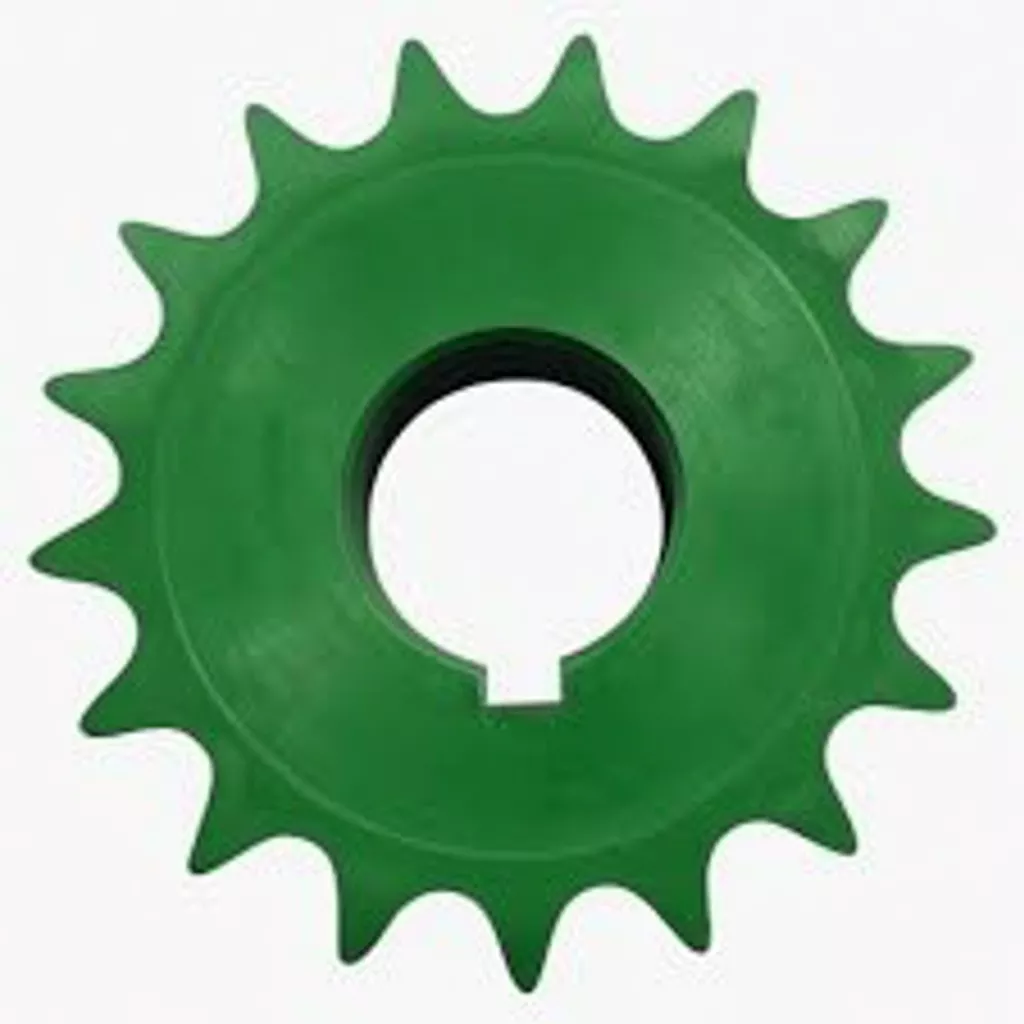
⚙️ Chain Drive Positions on Modern Balers and Their Sprocket Requirements
Different drive positions on a baler have fundamentally different load and precision requirements. Matching the sprocket specification to the position — rather than using a single generic specification across the machine — is the core of correct baler sprocket engineering.
The highest-load position on any baler. Transmits peak plunger torque through the primary chain drive. Must resist repeated shock loads of 3–5× continuous rating without tooth fracture. Induction hardening to HRC 52–58 on tooth flanks with shot-peened root fillets is the engineering requirement. Hub must be sufficient cross-section to transmit peak torque without torsional failure at the keyway.
Drives the pickup rotor that lifts hay from the windrow and the augers that feed it into the bale chamber. These run at higher speed than the plunger drive but at lower torque. ANSI 60 or ANSI 80 sprockets with case-hardened specification. The pickup drive encounters shock loads from bunched hay and soil clods — sprockets must resist the associated impact loading.
The knotter drive chain is a precision timing drive. The sprocket must maintain accurate pitch and tooth form to ensure the knotter fires at exactly the right moment in the plunger cycle. Dimensional accuracy (tooth-to-tooth spacing variation) is the primary specification requirement — not just the load capacity. A mis-timed knotter causes knot failures and bale integrity issues.
Round baler belt tension arms and bale ejection systems use chain-and-sprocket drives to coordinate the bale formation sequence. These are lighter-duty positions, but dimensional stability is critical — the bale wrap sensor triggers on chain position. Sprockets in these positions must maintain dimensional accuracy over the full operating temperature range of the machine.
What Makes Australian Hay Season Hard on Baler Sprockets
Australian summer hay — lucerne cut in December and January, dry-stem cereal straw, and Rhodes grass — is among the densest, driest hay baled anywhere in the world. The low moisture content means the hay compresses to very high density before the plunger reaches maximum compression, creating the largest possible slug loads on the plunger drive chain and sprockets. European service life data for baler sprockets — based on higher-moisture hay — cannot be applied directly to Australian summer conditions.
Australian hay is baled at ambient temperatures of 32–42°C. At these temperatures, drive component temperatures inside enclosed chain housings can reach 60–75°C. Lubricant film thickness at the sprocket-roller contact is significantly reduced at these temperatures, increasing surface contact stress on tooth flanks. Sprockets that rely on lubricant film for their effective load capacity perform significantly worse in hot Australian conditions than induction-hardened sprockets where tooth hardness provides the primary wear resistance.
Irrigated hay production in the Murray Valley and Murrumbidgee Irrigation Area can involve three to four cuts per year on the same machine. A machine completing 600–800 baling hours per year accumulates fatigue damage in plunger drive sprockets far faster than a machine completing a single dry-land hay cut. Multiple-cut operations should budget for annual plunger drive sprocket inspection and conditional replacement rather than calendar-based intervals.
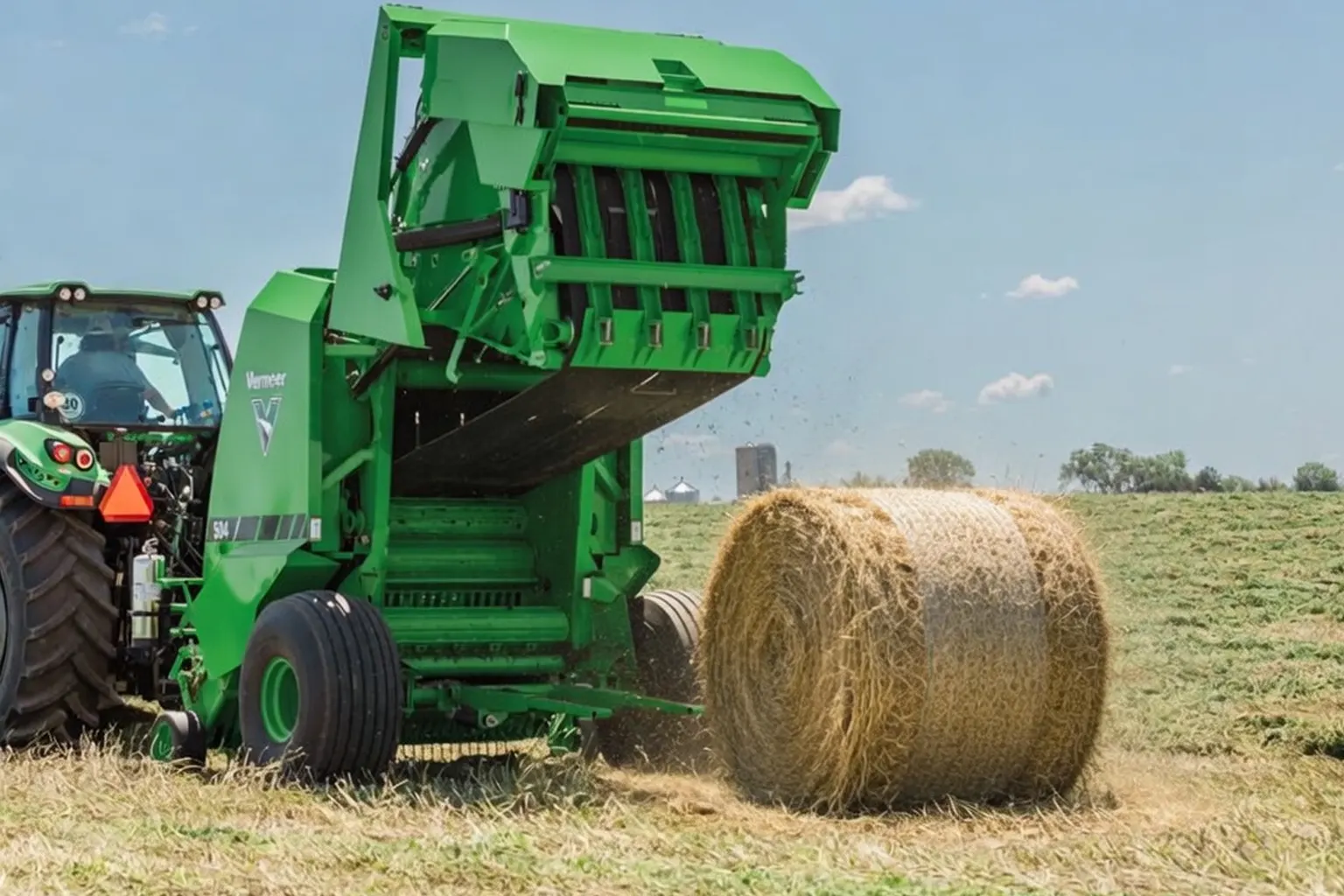
Baler Sprocket Specifications and Selection Reference
| Baler Position | Standard łańcucha | Typical Teeth | Material Grade | Hardness Treatment | Key Design Feature |
|---|---|---|---|---|---|
| Plunger crank drive (large square) | ANSI 120 or ANSI 100 double-strand | 12–21T | SAE 4140 alloy steel | Induction hardened tooth flank + root HRC 52–58 | Shot-peened root fillet, wide hub |
| Plunger crank drive (mid-size square) | ANSI 100 or ANSI 80 double-strand | 12–24T | SAE 1045 / 4140 | Induction hardened HRC 50–56 | Reinforced hub cross-section |
| Pickup / auger drive | ANSI 60 or ANSI 80 single-strand | 12–36T | SAE 1045 carbon steel | Case hardened HRC 45–52 | Standard profile, sealed roller compatible |
| Knotter timing drive | ANSI 50 or ANSI 60 single-strand | 12–30T | SAE 1045 carbon steel | Case hardened HRC 45–52 | Precision pitch tolerance ±0.3% |
| Round baler belt tension | ANSI 60 single-strand | 14–24T | SAE 1045 carbon steel | Case hardened HRC 45–52 | Dimensional stability over temperature |
| Twine box / net wrap drive | ANSI 40 lub ANSI 50 | 12–24T | SAE 1045 carbon steel | Case hardened HRC 45–52 | Standard light-duty specification |
Selecting the Right Baler Sprocket: Key Decision Points
The plunger crank drive sprocket is the single component most likely to determine whether your baler completes the season without a breakdown. For large square balers, ANSI 120 double-strand with SAE 4140 alloy steel and induction hardening is the correct specification. Do not substitute ANSI 100 standard-grade for this position to save cost — the difference is the margin between a tooth that bends under peak load and one that breaks.
Measure the tooth-to-tooth pitch variation on the knotter drive sprockets at the pre-season service. If this variation exceeds 0.5% of pitch, replace the sprocket regardless of whether the teeth show visible wear. Timing drift in the knotter drive is the most common cause of intermittent knot failures in large square balers, and it is often attributed to the chain before the sprocket is inspected.
Baler plunger drive sprockets transmit peak torque through the hub keyway. An undersized key or worn keyway allows micro-rotation of the sprocket on the shaft under shock loading, causing progressive keyway damage that eventually leads to sprocket slippage at peak load. Confirm bore diameter and keyway dimensions from the OEM specification before ordering.
For operations completing three or more hay cuts per year, inspect the plunger drive sprockets at each cut interval — not at the end of the season. Look for visible tooth flank wear (loss of tooth height), root fillet cracking (use a magnifying glass on clean, degreased teeth), and keyway fretting. Replace any sprocket showing root fillet micro-cracking regardless of measured tooth wear.
Why We Are the Right Baler Sprocket Supplier for Australian Hay Operations
Our annual production of agricultural sprockets exceeds 2 million pieces across 40+ export markets. For baler applications specifically, we offer capabilities that most competitors cannot match:
- SAE 4140 Alloy Steel for Plunger Sprockets: We use SAE 4140 chromium-molybdenum alloy steel for high-shock baler applications — not the lower-grade SAE 1045 carbon steel that most budget suppliers use. The 4140 alloy provides 30–40% higher impact toughness at the same hardness level, giving critical additional margin against tooth fracture under peak plunger loads.
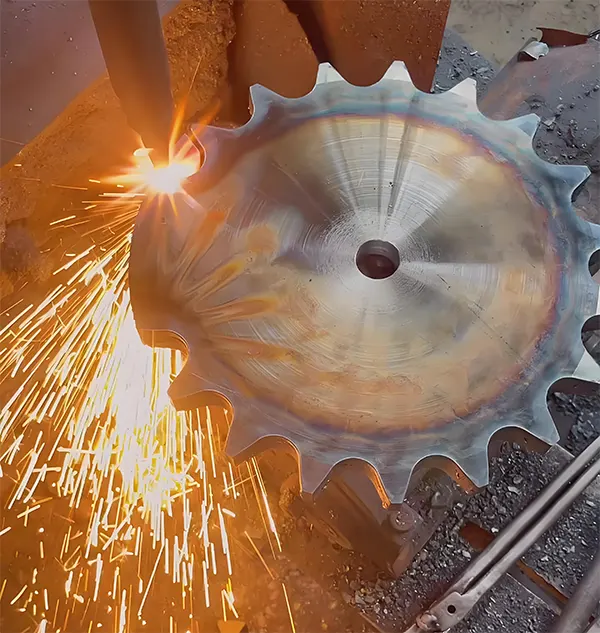
- ⚡ Induction Hardening with Root Fillet Coverage: Our induction hardening process covers both the tooth flank and the root fillet — the point of maximum bending stress concentration. Many manufacturers harden only the tooth flank surface, leaving the root fillet at base hardness. Root fillet hardening significantly raises the fatigue limit against tooth fracture under cyclically-loaded baler shock conditions.
- 30–50% Below OEM Price Points: Our direct manufacturing model eliminates distributor margins and OEM licensing fees. A full set of plunger drive, pickup, and knotter sprockets for a large square baler from our range is 30–50% below the equivalent John Deere, Case IH, or New Holland parts catalogue price, with equivalent or superior material specification.
- Custom Manufacturing from Sample: Baler manufacturers often use non-standard tooth counts or bore configurations that are not in standard catalogues. We manufacture from worn sprocket samples — providing an exact tooth count, tooth profile, bore, and hub geometry match — with a minimum order of 5 pieces and a 3–5 week lead time.
Customer Cases — Baler Operators Who Trust Our Sprockets
A hay contractor running four John Deere large square balers across the Riverina had been experiencing plunger drive sprocket tooth fractures at mid-season — always in the dense lucerne hay period of January. After upgrading to our SAE 4140 induction-hardened plunger sprockets, they completed a full three-cut season without a single sprocket failure. “The alloy steel makes an obvious difference when you look at the tooth flanks after a full season — the wear rate is dramatically lower than what we saw with the OEM replacements we were using. We have not had a plunger sprocket failure since switching.” ⭐⭐⭐⭐⭐
A Murray Valley operation running Claas Quadrant large square balers for lucerne hay and barley straw switched to our full sprocket range after recurring knotter failures traced to knotter drive sprocket tooth wear. “The knotter sprockets from your range have held their tooth profile perfectly through two full hay seasons. No knotter failures since we replaced them. The cost saving versus Claas OEM prices was 44% on the knotter sprocket set alone.” ⭐⭐⭐⭐⭐
An Iowa contractor running eight New Holland BR7000 round balers sources pickup and belt tension sprockets from our range. “We order a season’s supply at the start of each year. The consistency between batches is important to us — when we fit replacements, we know they are going to match the worn ones exactly. Your documentation also satisfies our ISO-certified quality system requirements.” ⭐⭐⭐⭐⭐
A French contractor running eight Krone BiG Pack balers across Normandy and Brittany sources our full plunger sprocket range. “Plunger sprocket tooth failures were a constant issue with budget aftermarket parts. Since switching to your SAE 4140 induction-hardened range, we have had zero tooth fractures in two full seasons — including a very heavy, late-cut ryegrass season that typically destroyed one or two teeth per machine.” ⭐⭐⭐⭐⭐
An Alberta forage operation running AGCO Challenger large square balers sources plunger and pickup sprockets from us. “The tooth root hardness documentation you supply — showing the hardness depth profile, not just the surface reading — is something we have not seen from other suppliers. It confirms to our engineers that the specification is correct for our shock loading conditions.” ⭐⭐⭐⭐⭐
Complete Your Baler Drive System
S-type, CA-type, and ANSI roller chains matched to every sprocket in our range — same standards, same quality grade, same manufacturer.
Odkryj łańcuchy →
⚡ Wały odbioru mocy i układy napędowe
Wide-angle CV and T-series drivelines connecting tractor PTO to every implement chain drive we serve.
Poznaj układy napędowe →
⚙️ Przekładnie rolnicze
Right-angle and parallel-shaft gearboxes forming the upstream reduction stage for PTO-driven chain-and-sprocket implement drives.
Odkryj skrzynie biegów →
❓ Najczęściej zadawane pytania
Tell Us Your Sprocket Specification
Our engineering team responds within 24 hours. Send us an OEM part number, a worn sprocket sample, or your machine’s make and model — we will confirm the correct specification, provide full material documentation, and deliver at 30–50% below OEM price.
✈️ Express air freight to Australia available for urgent seasonal requirements.