High-Torque Sprockets for Chaser Bin Auger and Floor Drive Systems
The grain chaser bin is the machine that keeps Australian broadacre combines running continuously — receiving grain on the go and releasing the harvester from the time cost of paddock-edge unloading. At full capacity, a large chaser bin holds 30 tonnes of grain, and when the PTO engages for discharge into the waiting truck, the floor chain or auger drive must start that full static load moving from a complete standstill. This is the highest instantaneous torque demand on any sprocket in the chaser bin drive system, and it occurs at exactly the moment when machine reliability matters most — during a busy harvest day with a truck waiting and a harvester returning across the paddock.
We manufacture chaser bin sprockets specifically rated for this combination of full-load cold-start torque, the abrasive grain dust environment of the bin interior, and the remote field location that demands easy, tool-efficient installation when replacement is needed mid-harvest. Taper-lock bore configurations, hot-dip galvanised corrosion protection, and SAE 4140 alloy steel for the highest-duty positions are the engineering basis of our chaser bin sprocket range.
⚙️ Understanding the Cold-Start Torque Problem
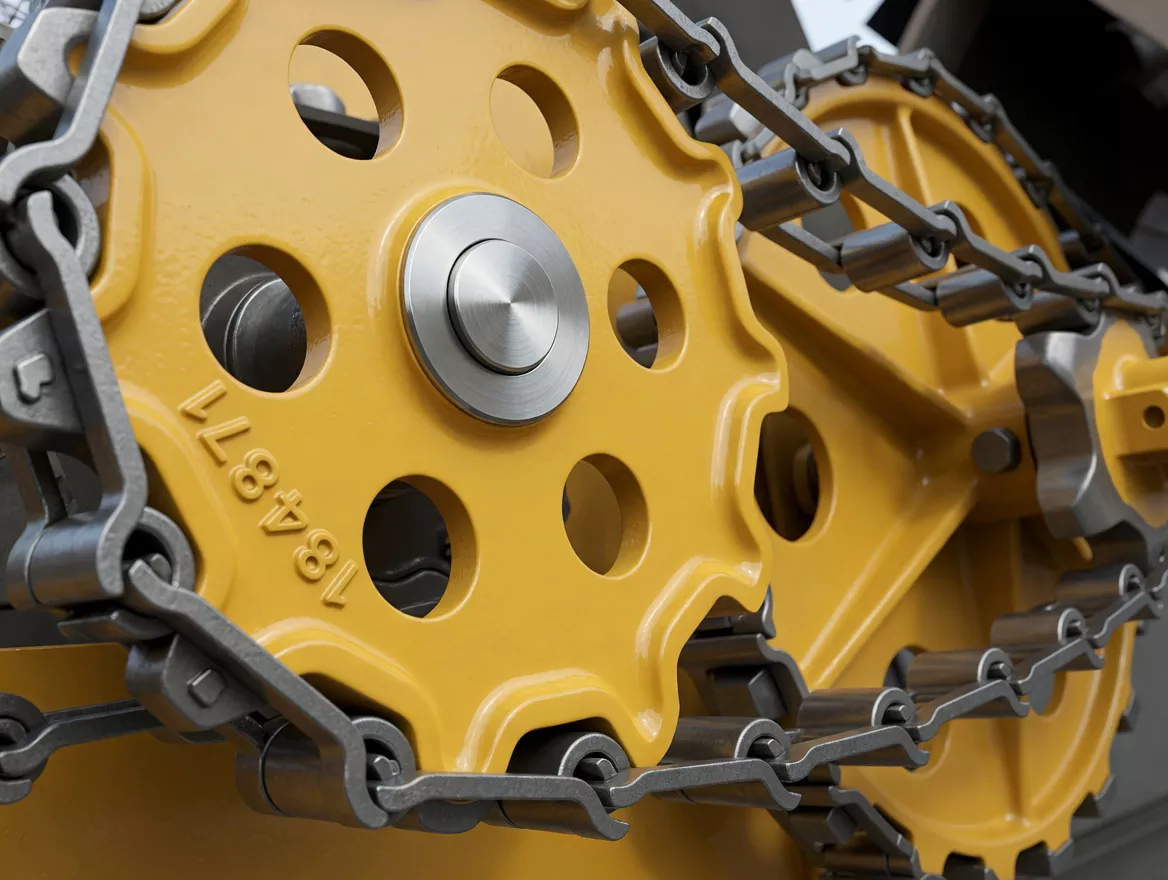
When a chaser bin floor chain or auger drive is at rest with a full grain load above it, the static friction force that must be overcome to start the grain moving is significantly higher than the force required to keep it moving at steady state. This ratio — typically 4–6× on a fully loaded chaser bin — is the startup torque multiplier. A floor chain drive sprocket sized for the continuous running torque alone will be loaded to 4–6× its intended operating load on every cold start. In Australian conditions where the chaser bin may be filled and discharged 8–12 times per harvest day, the cumulative fatigue loading from these startup events is the primary determinant of sprocket service life.
Chaser Bin Drive Positions and Their Sprocket Challenges
The highest-load sprocket position in the system. Transmits the full PTO input torque — multiplied by the drive ratio — to the floor chain that moves grain toward the discharge auger. Must resist the cold-start torque multiplier of 4–6× continuous load without tooth fracture or hub keyway damage. SAE 4140 alloy steel with induction hardening and a wide, well-supported hub are the minimum specification for large-capacity chaser bin floor drives.
Drive the large-diameter augers that convey grain from the bin floor to the discharge chute. These sprockets see the full load of dense grain material in the auger flighting, including stones and foreign material that enter the bin at harvest. Tooth impact resistance and hub strength are the key specifications — these positions see fewer start events than the floor chain but higher individual shock loads when hard objects enter the auger.
Transmit the tractor PTO torque from the input shaft to the main drive jackshaft. These positions run at PTO speed (540 or 1,000 RPM) and must handle the full input torque including the torque spike from cold-start engagement. Double-strand ANSI 100 or ANSI 120 specification with taper-lock bore for secure shaft engagement at high torque.
Maintain correct chain tension on the floor and auger drives. While these positions do not transmit load directly, they must support the chain tension forces during the cold-start spike — which can temporarily double the chain tension on the tight side. Correctly-rated idler sprockets with adequate hub bearing support prevent the idler shaft deflection that causes chain misalignment under startup load.
The Remote Location Problem — Why Easy Installation Matters
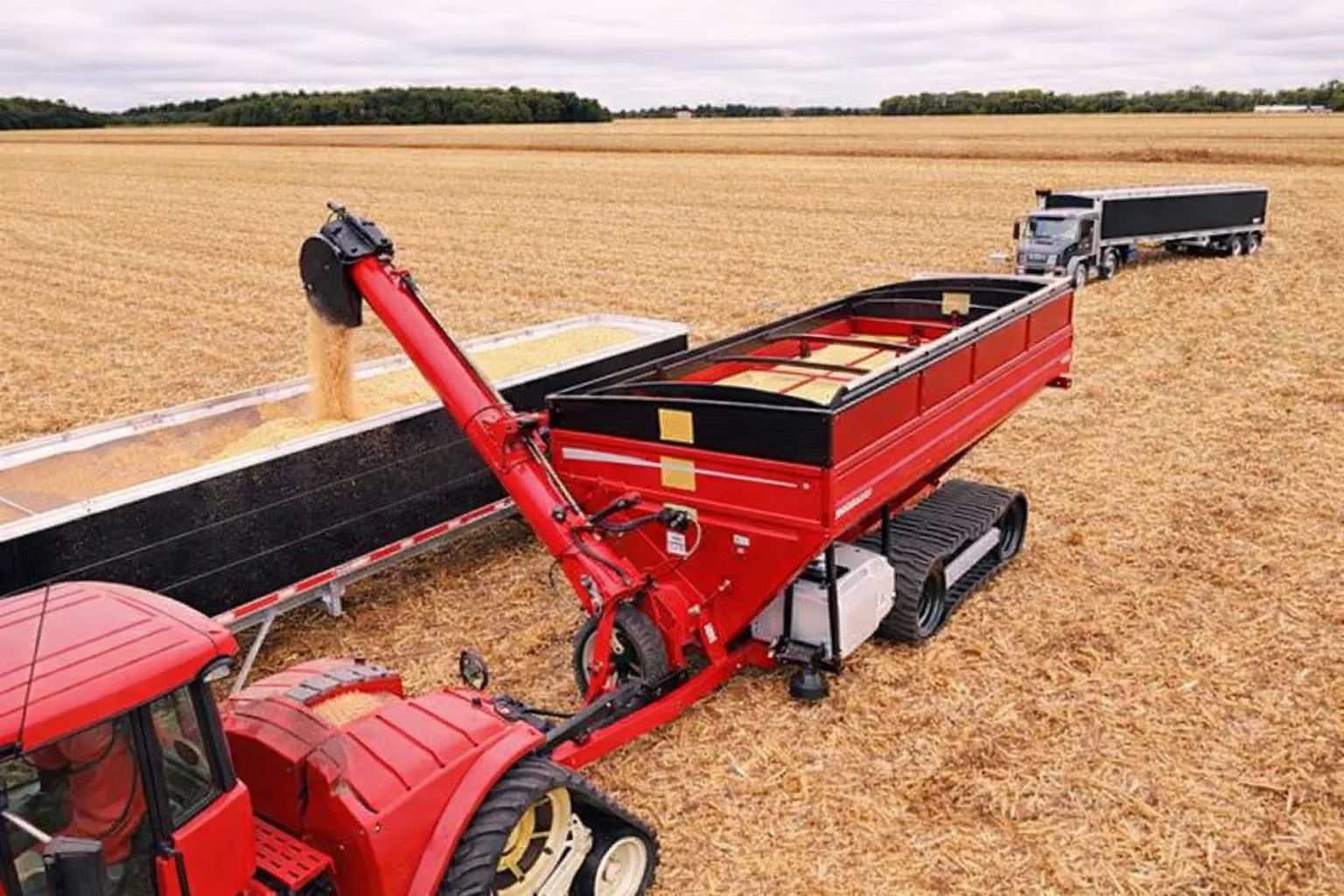
Chaser bins operate in locations that are by definition remote from workshops. A machine parked in a paddock 40 kilometres from the nearest town, with a broken floor chain drive sprocket and a harvester returning with a full header load, is a harvest-day crisis. The design of the sprocket — and specifically its bore configuration — directly affects how long it takes to complete an in-field replacement.
Taper-lock hub sprockets are installed and removed using only a standard spanner — no press, no puller, no workshop equipment. The taper-lock bush grips the shaft through the mechanical advantage of the tapered interface, providing a secure, concentric fit that transmits full rated torque without requiring interference-fit installation. For in-field replacement in Australian grain country, taper-lock is not just convenient — it is the difference between a 20-minute repair and a 3-hour shaft removal.
We supply floor chain drive sprocket and taper-lock bush kits pre-assembled and correctly sized for the most common Australian chaser bin models. A replacement kit includes the sprocket, the matching taper-lock bush, and the correct grade fasteners — everything needed for the in-field swap. No part-number cross-referencing, no waiting for a bush from a separate supplier.
All our taper-lock sprocket assemblies are installed with a standard hex key set and an open-end spanner. For pre-harvest inspection and post-harvest removal, the same tools suffice. We design the hub geometry specifically for access in the confined spaces typical of chaser bin chain drives — short hub projection, accessible bolt circle.
Chaser Bin Sprocket Specifications
| Pozycja | Standard łańcucha | Configuration | Material | Hardness | Bore Type | Key Feature |
|---|---|---|---|---|---|---|
| Floor chain drive (large, 25–35t) | ANSI 120 or ANSI 140 | Double-strand | SAE 4140 alloy | Induction hardened HRC 52–58 | Taper-lock 3535 or 4040 | Wide hub for cold-start torque |
| Floor chain drive (medium, 15–25t) | ANSI 100 SP | Double-strand | SAE 4140 or 1045 heavy | Induction hardened HRC 50–56 | Taper-lock 3030 or 3535 | Shock-load rated |
| Cross auger drive | ANSI 80 double-strand | Double-strand | SAE 1045 carbon steel | Case hardened HRC 45–52 | Taper-lock 2517 or 3020 | Sealed roller compatible |
| Longitudinal auger drive | ANSI 80 or ANSI 100 | Double-strand | SAE 1045 carbon steel | Case hardened HRC 48–54 | Taper-lock or finished bore | Regular lubrication access important |
| PTO input jackshaft | ANSI 100 or ANSI 120 | Double-strand | SAE 4140 alloy | Induction hardened HRC 50–56 | Taper-lock 3535 or 4040 | Full PTO torque at cold start |
| Tensioner/idler | ANSI 80 or ANSI 100 | Single-strand | SAE 1045 carbon steel | Case hardened HRC 45–52 | Finished bore with bearing housing | Bearing-supported hub preferred |
️ Corrosion Protection for Long-Term Outdoor Storage
Chaser bins are parked outdoors between harvest seasons — often for 10 months of the year. Drive sprockets exposed to Australian outdoor conditions during this period face UV oxidation of lubricants, salt-spray corrosion in coastal grain regions, and general atmospheric rust. We offer three corrosion protection tiers for chaser bin sprockets:
| Treatment | Process | Salt Spray Resistance | Best For | Notatki |
|---|---|---|---|---|
| Standard phosphate coat | Iron phosphate conversion | 150–200 hours | Inland grain regions, low humidity | Apply grease before seasonal storage |
| Hot-dip galvanised | Zinc immersion 85 g/m² | 500–700 hours | Coastal grain regions, humid storage | Best value for outdoor-stored chaser bins |
| Zinc-nickel electroplating | Electrodeposited Zn-Ni alloy | 800–1,000 hours | High-humidity or saline environments | Superior corrosion resistance, premium option |
Our Manufacturing Advantages for Chaser Bin Operators
We have designed our chaser bin sprocket range around the specific operating profile of Australian grain season — the cold-start torque problem, the remote-location replacement challenge, and the long outdoor storage interval. Our manufacturing capabilities that directly address these requirements:
- SAE 4140 Alloy Steel as Standard for Floor Drives: We use SAE 4140 chromium-molybdenum alloy steel — not the more common SAE 1045 carbon steel — for all floor chain drive and PTO input sprockets. At the same hardness level, 4140 provides 30–40% higher impact toughness, giving the critical additional margin against hub keyway damage during the cold-start torque spike.
- Pre-Matched Taper-Lock and Sprocket Kits: Every taper-lock chaser bin sprocket is supplied as a matched assembly — sprocket body, taper-lock bush of the correct size and bore, and fasteners. No separate bush ordering, no risk of bush/sprocket mismatch.
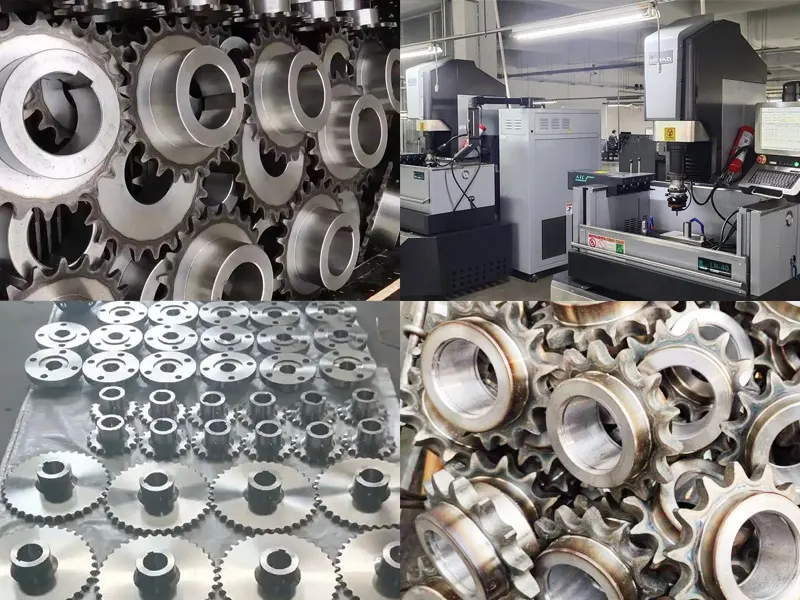
- Annual Production Capacity 2 Million+ Sprockets: Our production scale means consistent supply for fleet operators and dealerships stocking for multiple machine brands and sizes. We do not run out of stock during harvest season.
- 30–50% Below OEM Pricing: Our direct manufacturing model eliminates distributor margins. For a dealership stocking replacement sprockets for Australian chaser bin brands, our pricing delivers a competitive advantage versus OEM parts with equivalent specification and full quality documentation.
Przypadki klientów
A 9,000-hectare Riverina wheat and canola operation was replacing floor chain drive sprockets mid-harvest due to hub keyway damage under cold-start loads from a 32-tonne chaser bin. After switching to our SAE 4140 taper-lock floor drive sprockets, they completed two full harvest seasons without a drive failure. “The taper-lock installation literally saved us during harvest last year — we had a sprocket fail at 11 pm and had it replaced in 25 minutes in the paddock by headlight. The old press-fit design would have cost us the rest of the night.” ⭐⭐⭐⭐⭐
A machinery dealer stocking parts for the WA Wheatbelt replaced their OEM chaser bin sprocket range with our hot-dip galvanised taper-lock kits. “The pre-matched bush and sprocket kits simplify our parts counter enormously — one SKU per application instead of a sprocket part and a bush part. Our customers love the taper-lock installation, and the hot-dip galv handles the Wheatbelt coastal salt-air storage conditions perfectly.” ⭐⭐⭐⭐⭐
A Saskatchewan contractor running six large chaser bins sources all floor and auger drive sprockets from us. “You are the only supplier we have found who stocks ANSI 140 double-strand sprockets for the largest chaser bin floor drives in taper-lock configuration. The cold-start torque problem with these big bins is real, and your 4140 alloy specification handles it correctly.” ⭐⭐⭐⭐⭐
A large Krasnodar grain cooperative running 12 large chaser bins sources floor and auger drive sprockets with hot-dip galvanised finish for their long outdoor storage periods. “The hot-dip galvanised sprockets come out of storage at the start of each harvest season in the same condition they went in — no tooth rust, no surface pitting, no seized keyways. This is the minimum acceptable standard for equipment stored outdoors through a Russian winter.” ⭐⭐⭐⭐⭐
A Kharkiv region grain operation running multiple Krone and Horsch chaser bins sources our full range. “The SAE 4140 alloy material test certificates you supply are accepted by our procurement quality system without further testing. Your documentation standard is the same as what we require from European industrial suppliers — which is not common from manufacturers at this price point.” ⭐⭐⭐⭐⭐
Complete Your Grain Handling Drive System
S-type, CA-type, and ANSI roller chains — manufactured to the same standards as our sprockets, supplied as matched sets.
Odkryj łańcuchy →
⚡ Wały odbioru mocy i układy napędowe
T-series and wide-angle CV drivelines that deliver tractor PTO power to the chain-and-sprocket drives of every implement we serve.
Poznaj układy napędowe →
⚙️ Przekładnie rolnicze
Right-angle bevel and parallel-shaft gearboxes forming the upstream reduction stages that feed implement chain drives.
Odkryj skrzynie biegów →
❓ Najczęściej zadawane pytania
⚙️ Order Your Chaser Bin Sprocket Kit Before Harvest Season
Tell us your chaser bin make, model, and current chain size and we will confirm the complete sprocket kit — matched taper-lock bushes included. 30–50% below OEM pricing with full SAE material certification. ✈️ Express delivery to any location in Australia.