Extreme-Duty Sprockets for Mulchers and Shrub Pullers — Engineered for Australian Hardwood Impact
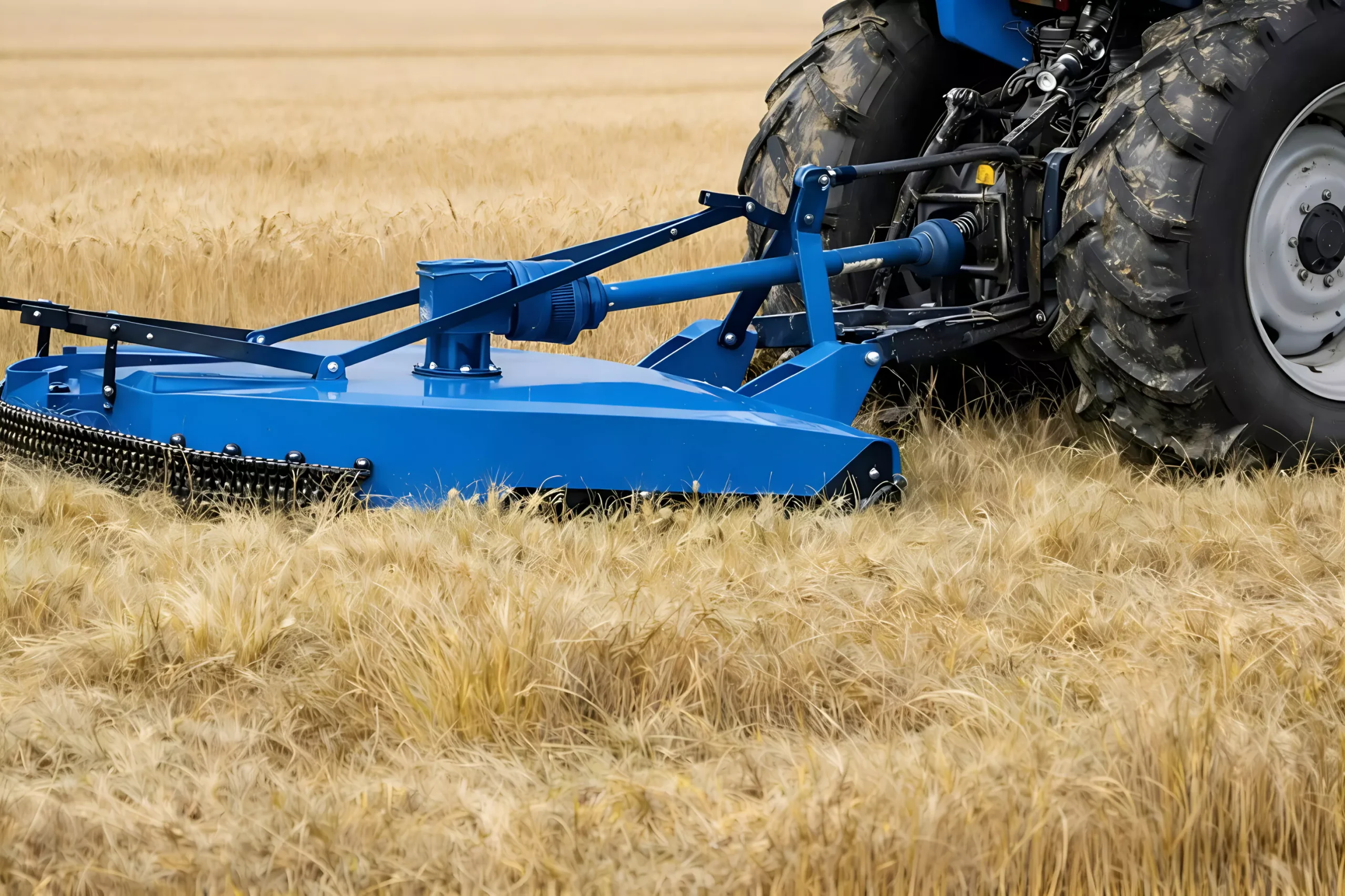
Land clearing and vegetation management in the Australian interior subjects mulcher and shrub puller drive systems to the most severe instantaneous shock loading encountered in any agricultural chain-and-sprocket application. When a hydraulic mulcher’s high-speed rotor engages a 150 mm diameter ironbark or river red gum trunk, the torque spike transmitted through the rotor drive chain and sprocket is not a gradual load increase — it is an instantaneous energy transfer that can exceed the rated shock capacity of standard alloy sprockets in a single engagement event.
Australia’s native hardwood species are the densest and toughest in the world. Ironbark (Eucalyptus tricarpa) has a dry density of 1,100 kg/m³ — harder than most European and North American softwood and hardwood species that mulcher manufacturers design their standard sprocket specifications around. The mismatch between European design assumptions and Australian hardwood reality is the engineering reason why broken teeth and deformed keyways are a constant problem for mulcher operators in the Australian inland.
We manufacture mulcher and shrub puller sprockets to specifications that specifically address the Australian hardwood impact problem — SAE 4340 nickel-chromium-molybdenum alloy steel for the highest-shock positions, induction hardening with deep root fillet coverage, and oversized hub cross-sections that resist keyway deformation under the torsional shock of hardwood engagement.
The Australian Hardwood Impact Problem — Why Standard Specifications Fail
A mulcher rotor spinning at 1,800 RPM with a tip speed of 80 m/s carries significant rotational kinetic energy. When this rotor engages a dense eucalyptus trunk, it decelerates rapidly — transferring the difference in kinetic energy through the rotor shaft into the drive chain and sprocket as a torsional shock pulse. The magnitude of this pulse depends on both the rotor speed and the density of the material being mulched. Ironbark and red gum, at densities of 1,000–1,100 kg/m³, create deceleration events roughly 40–60% more severe than the pine and softwood species that most European mulcher manufacturers use as their shock load design basis. A sprocket rated for European mulching conditions may be loaded to 140–160% of its shock capacity when engaging Australian hardwood stumps.
Unlike abrasive wear, which removes tooth material gradually over many hours, shock-induced tooth fracture in mulcher rotor drive sprockets occurs in a single overload event. The fracture initiates at the root fillet — the stress concentration at the base of the tooth where the bending moment from the roller force is highest. Standard carbon steel (SAE 1045) teeth with case hardening to HRC 48–52 have insufficient toughness at the root to absorb the energy of an Australian hardwood engagement event without crack propagation. SAE 4340 alloy steel with induction hardening and shot-peened root fillets provides 45–60% more impact toughness at the same tooth surface hardness.
When the rotor drive sprocket tooth survives the shock event intact, the transmitted torque spike may still exceed the yield strength of the hub-shaft keyway interface. The keyway broach in a standard carbon steel hub deforms plastically under repeated high-torque shock loading, creating a progressively loose fit that allows micro-rotation of the sprocket on the shaft under each subsequent engagement event. Over time, this micro-rotation enlarges the keyway through fretting wear until the sprocket is effectively spinning on the shaft. SAE 4340 alloy steel hubs resist keyway deformation through higher yield strength at the hub wall cross-section.
Land clearing operations generate quantities of wood chip, soil, and fine bark dust that permeate all drive system components. The fine silica particles in Australian clay-loam soils carried on root systems into the mulcher are as abrasive as industrial grinding compound on sprocket tooth flanks. Mulcher rotor drive sprockets must therefore resist both shock-induced fracture and ongoing abrasive wear — a dual requirement that demands both high toughness and high surface hardness.
⚙️ Drive Positions in Mulchers and Shrub Pullers
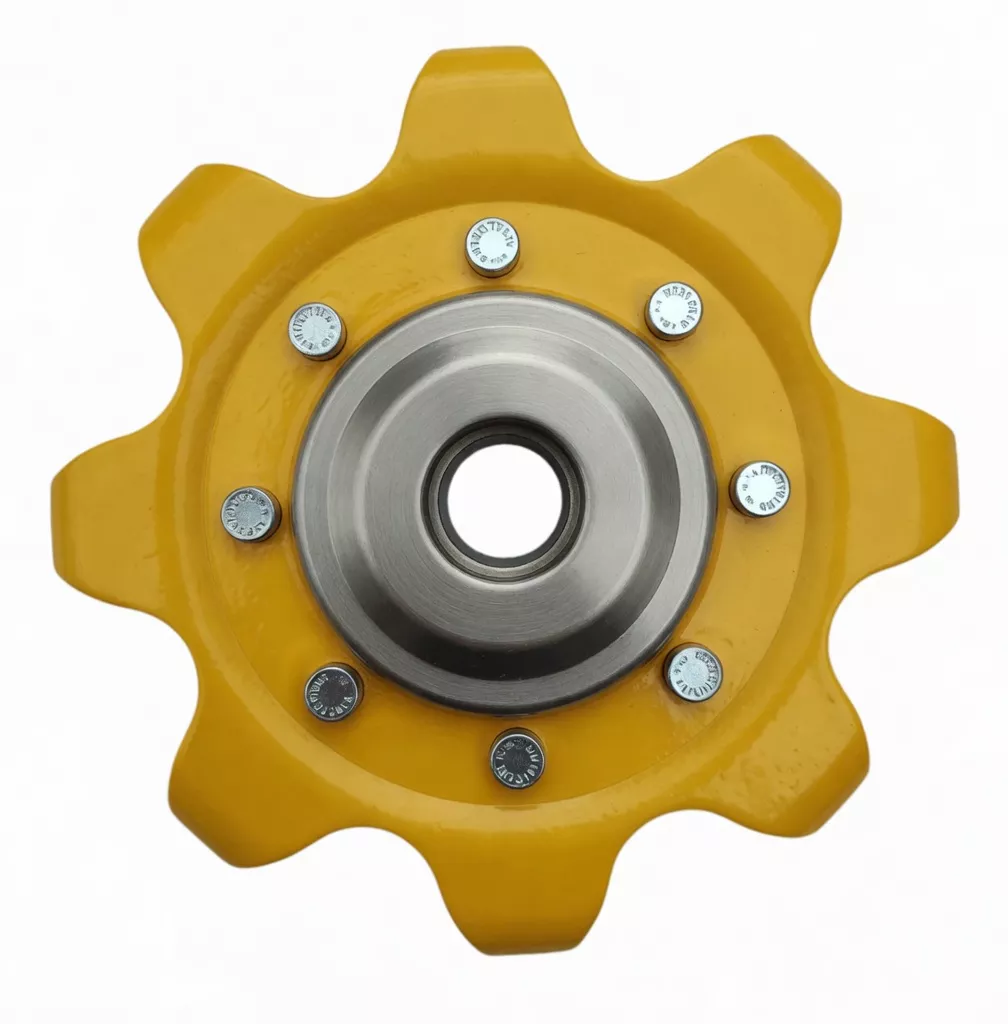
The primary power transmission sprocket between the PTO/hydraulic motor drive shaft and the rotor. This is the highest-shock position on the machine — every hardwood engagement event transmits through this sprocket. SAE 4340 alloy steel, induction hardened to HRC 54–58 on tooth flanks and root fillets, with a heavy hub cross-section rated for the peak torsional shock load. Double or triple-strand ANSI 120 or ANSI 140 is the typical chain configuration.
The sprocket mounted directly on the rotor shaft, receiving the chain tension from the input sprocket. This position experiences the same shock load as the input sprocket but also the gyroscopic loads from the high-speed rotor mass. Hub engagement length and keyway design are critical — a standard-depth key in a short hub is the most common point of keyway deformation failure.
Drive the counter-rotating feed rollers that draw material into the mulching chamber on tub-type mulchers and shrub pullers. These positions see lower rotor-engagement shock loads but sustained high torque from drawing dense vegetation through the intake. ANSI 100 SP double-strand with SAE 4140 alloy specification is appropriate.
Drive the chip discharge conveyor on tub-type mulchers. Lower duty than the rotor drive positions — ANSI 80 standard specification with case hardening is adequate, though sealed rollers are recommended in the chip-dust environment.
Mulcher and Shrub Puller Sprocket Specifications
| Konum | Zincir Standardı | Çelik Kalitesi | Hardness Treatment | Hub Design | Root Fillet Treatment | Australian Hardwood Rating |
|---|---|---|---|---|---|---|
| Rotor drive input (large mulcher) | ANSI 140 or ANSI 160 double-strand | SAE 4340 Ni-Cr-Mo alloy | Induction hardened HRC 54–58 | Heavy hub, extended key engagement | Shot-peened root fillet — compressive residual stress | ✅ Rated for ironbark / red gum |
| Rotor drive input (medium mulcher) | ANSI 120 SP double-strand | SAE 4340 or 4140 alloy | İndüksiyonla sertleştirilmiş HRC 52–56 | Wide hub, full-depth keyway | Shot-peened root fillet | ✅ Rated for standard eucalyptus |
| Rotor shaft output sprocket | ANSI 120 or ANSI 140 | SAE 4340 alloy | Induction hardened HRC 54–58 | Extended hub engagement length | Shot-peened root and flank | ✅ High gyroscopic load rated |
| Feed roller drive | ANSI 100 SP çift telli | SAE 4140 alaşımı | İndüksiyonla sertleştirilmiş HRC 50–56 | Standard hub with taper-lock option | Standard case-hardened | ✅ Sustained torque rated |
| Discharge conveyor | ANSI 80 single or double-strand | SAE 1045 karbon çeliği | Yüzey sertleştirilmiş HRC 45–52 | Standard hub | Standard | ✅ Low shock — standard spec |
SAE 4340 vs SAE 4140 vs SAE 1045 — Why Material Grade Matters for Australian Mulchers
| Çelik Kalitesi | Charpy Impact Toughness (J) | Yield Strength (MPa) | Best Application | Why It Matters for Mulchers |
|---|---|---|---|---|
| SAE 1045 Carbon Steel | 27–40 J at 20°C | 530–580 MPa | Standard agricultural machinery | Insufficient toughness for ironbark impact — teeth fracture |
| SAE 4140 Cr-Mo Alloy | 54–80 J at 20°C | 655–760 MPa | Heavy agricultural, baler plunger | Good for medium mulchers — borderline for large hardwood |
| SAE 4340 Ni-Cr-Mo Alloy | 95–120 J at 20°C | 745–860 MPa | Extreme impact — mulcher rotor, log processor | Correct specification for Australian hardwood — 3× the impact toughness of SAE 1045 |
Shot peening the root fillet of a mulcher rotor drive sprocket tooth introduces a compressive residual stress of 400–600 MPa at the surface of the root fillet — the exact location where the bending stress from engagement shock is highest. This compressive pre-stress must be overcome by the tensile bending stress of the engagement event before a fatigue crack can initiate. In practice, shot-peened root fillets raise the fatigue limit of the tooth by 30–50% in repeated shock loading conditions. For mulcher rotor drives, shot-peened root fillets are not a premium option — they are the engineering minimum for reliable service in Australian hardwood conditions.
Selecting the Right Mulcher Sprocket
Ironbark and grey box (densities above 1,000 kg/m³) require SAE 4340 alloy steel with shot-peened root fillets for rotor drive sprockets. River red gum, spotted gum, and blue gum (800–950 kg/m³) can be addressed with SAE 4140 alloy. Softwood regrowth and scrub clearing (less than 700 kg/m³) allows SAE 1045 heavy-duty specification. Using higher-grade steel for lower-impact work costs nothing in performance — but using lower-grade steel for ironbark conditions results in the broken teeth and failed keyways that prompted this specification review.
For rotor drive sprockets, the key engagement length should be at least 1.5× the hub bore diameter to distribute the shock torque over sufficient key surface area. If the existing sprocket has a short hub with engagement length less than 1× the bore diameter, upgrade to our extended-hub configuration — this is the most common geometry improvement that prevents keyway deformation in large-mulcher applications.
Australian large-mulcher rotor drives should use double-strand ANSI 140 or triple-strand ANSI 120 chain — not single-strand, regardless of the rated power. The strand multiplication provides redundancy: if one strand is shock-damaged in a single overload event, the remaining strands prevent immediate catastrophic failure. Single-strand rotor drives on large mulchers in hardwood conditions are a known high-failure-risk configuration.
A mulcher rotor drive chain that has absorbed the shock of a tooth fracture event has experienced loads significantly above its rated capacity. The individual chain links may appear undamaged, but fatigue damage has accumulated in the connecting link side plates and pin-bushing interfaces. Replace both chain and sprockets together after any tooth fracture event — not just the fractured sprocket.
Müşteri Vakaları
A Central NSW land clearing contractor operating large disc mulchers on ironbark and grey box scrub country had been experiencing rotor drive sprocket tooth fractures every 60–80 operating hours — roughly every three weeks of full-time clearing. After upgrading to our SAE 4340 shot-peened rotor drive sprockets, the first set ran for 240 hours without a single tooth fracture. “The difference in service life is remarkable. We were factoring broken sprocket teeth into our job pricing as a fixed cost. Since switching to your 4340 alloy range, that cost line has essentially disappeared.” ⭐⭐⭐⭐⭐
A Queensland pastoral company running mulchers for brigalow regrowth control across 60,000 hectares of grazing land was experiencing keyway deformation failures on rotor shaft output sprockets every 150–200 hours. Our extended-hub SAE 4340 rotor shaft sprockets eliminated the keyway failure mode entirely across a 14-month operating period. “The extended hub engagement length is what made the difference. The previous sprocket had a standard hub and the keyway was always the weak point. Your extended hub distributes the torque over 60% more key surface area — the keyway simply stops being the limiting factor.” ⭐⭐⭐⭐⭐
A Limpopo bush clearing operation working mopane and baobab scrub — similarly dense to Australian eucalyptus — sources our SAE 4340 rotor drive sprockets. “Mopane wood is comparable in density to your ironbark. We had the same broken-tooth problem with standard sprockets and the same result after switching to your 4340 alloy specification — service life tripled and keyway failures stopped completely.” ⭐⭐⭐⭐⭐
A Georgia forestry mulching contractor clearing loblolly pine and hardwood brush sources our ANSI 120 double-strand SAE 4340 rotor drive sprockets. “The shot-peened root fillet documentation you provide — showing the compressive residual stress depth profile — is something our maintenance engineer specifically requested. It confirms that the fatigue resistance mechanism is actually present in the manufactured part, not just claimed in the specification sheet.” ⭐⭐⭐⭐⭐
A Mato Grosso sugarcane land preparation operation clearing cerrado hardwood before planting sources our mulcher rotor sprocket range. “Cerrado hardwood creates the same shock loading problem as eucalyptus. Your SAE 4340 specification is the correct engineering answer regardless of hemisphere — we confirmed this with our own impact toughness testing on received samples before committing to the full order.” ⭐⭐⭐⭐⭐
Complete Your Mulcher Drive System
S-type, CA-type, and ANSI roller chains manufactured to the same pitch standards as our sprockets — supplied as verified matched sets.
Zincirleri Keşfedin →
⚡ PTO Şaftları ve Tahrik Hatları
T-series and wide-angle CV drivelines connecting tractor PTO power to every implement chain-and-sprocket drive we serve.
Drivelines'ı Keşfedin →
⚙️ Tarım Dişli Kutuları
Right-angle bevel and parallel-shaft gearboxes forming the upstream drive stage for PTO-powered chain systems.
Şanzımanları Keşfedin →
❓ Sıkça Sorulan Sorular