PTO Shaft for Air-Blast Sprayer & Mistblower — High-Power Fan Drive for Orchard & Vineyard Canopy Penetration
The air-blast sprayer PTO shaft — also known as a mistblower driveshaft, orchard sprayer cardan shaft, axial fan sprayer PTO driveline, or air-assisted boom drive shaft — is the single most power-intensive PTO application in orchard and vineyard machinery. Air-blast sprayers and mistblowers use a large axial or centrifugal fan (impeller diameter 600–900 mm) running at 2,000–3,500 RPM to generate the high-velocity air mass required to penetrate dense tree or vine canopies, carry spray droplets deep into the interior of the canopy, and achieve the coverage uniformity that surface-only liquid sprayers cannot provide.
Driving a fan of this size at these speeds through a 1:4 to 1:6 ratio gearbox demands sustained shaft power of 40–90 kW — placing air-blast sprayers in the Series 5/6 shaft category, significantly heavier than typical horticultural PTO applications. Additionally, the fan’s high rotational inertia creates severe startup torque demands, and the spray environment combines the chemical aggressiveness of pesticide formulations with the humidity generated by mist spray itself. Our air-blast sprayer PTO shaft is purpose-built to handle all three challenges simultaneously.

Browse our orchard sprayer PTO shaft range or contact our horticultural machinery team for mistblower driveline consultation.
Technical Specifications — PTO Shaft for Air-Blast Sprayer / Mistblower
| Parameter | Standard Value / Configuration | Customisable Range |
|---|---|---|
| Series | Series 5 / Series 6 | Series 4–7 |
| PTO Speed | 540 RPM | 540 / 1000 RPM |
| Continuous Power Rating | 40–90 kW | 25–140 kW |
| Continuous Torque | 1,400 N·m | 500–2,800 N·m |
| Fan Startup Peak Torque | 2,800 N·m (2× rated) | Up to 4× rated |
| Compressed Length | 660–880 mm | 480–1,600 mm |
| Extended Length | 1,020–1,400 mm | 720–2,200 mm |
| Tube Profile | Star (Series 5) / Hexagonal (Series 6) | Star / Hex |
| CV Joint Type | Standard CV ±35° (both ends) | ±30° to ±45° |
| Input Spline (Tractor) | 1-3/4″ × 20 spline | 1-3/8″×6, 1-3/4″×6, 1-3/4″×20 |
| Output Spline (Fan Gearbox) | 1-3/4″ × 6 spline / SAE-C flange optional | Various |
| Overload Protection | High-inertia multi-disc friction clutch | Friction / Cam |
| Slip Torque | 1,100–1,800 N·m | 500–3,000 N·m |
| Guard Type | Full-cone PE, chemical-resistant | Full cone PE |
| Sealed Cross-Kits | IP55 as standard | IP55 / IP67 |
| Guard Cleaning Port | Integrated wash-out port (optional) | Standard / Wash-out port |
| Grease Interval | Every 8 hrs (sealed: 25 hrs) | 8–25 hrs |
| Surface Finish | Zinc phosphate + 2-part epoxy | Epoxy / PU / Galv |
| Yoke Material | Forged 40Cr, heat-treated 30–36 HRC | 40Cr / 42CrMo4 |
| Operating Temp Range | -15 °C to +65 °C | -30 °C to +80 °C |
How the Air-Blast Sprayer PTO Shaft Works — High-Power Fan Drive Mechanics
In a tower-type or cross-flow air-blast sprayer, the PTO shaft delivers 540 RPM to the fan gearbox — typically a 4:1 to 6:1 step-up bevel gearbox — which drives the large axial fan at 2,000–3,500 RPM. The fan generates an air mass flow of 50,000–150,000 m³/h at nozzle exit velocities of 30–80 m/s. This airstream entrains spray liquid from nozzles positioned around the fan discharge duct and carries the resulting aerosol — droplets of 50–200 µm diameter — deep into the tree or vine canopy.
Simultaneously, the PTO shaft may also power a hydraulic pump (for boom positioning, headland turning aids, and tower height adjustment on modern tower sprayers), adding 5–15 kW to the continuous load. The combined fan + pump load, sustained for 6–8 hours/day across a spray programme of 10–14 applications per season, makes the air-blast sprayer the highest-duty-cycle PTO application in Australian horticulture. Our Series 5/6 shaft with high-inertia multi-disc friction clutch is rated for this sustained-high-power, high-duty-cycle profile.
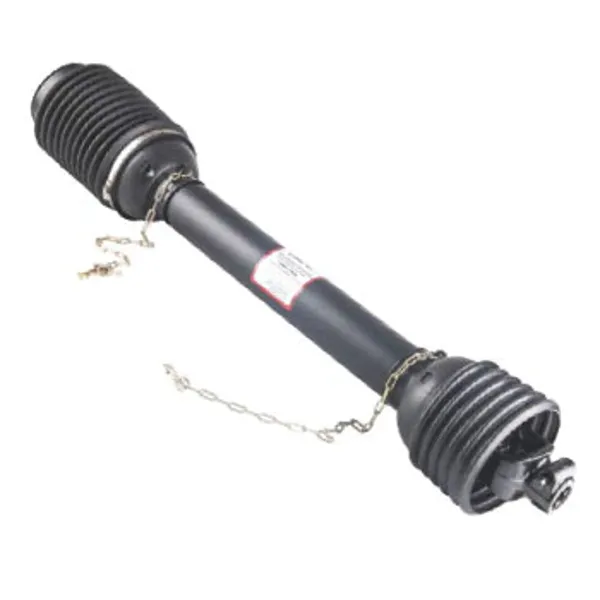
Core Advantages of Our PTO Shaft for Air-Blast Sprayer / Mistblower
90 kW Continuous Fan Drive Rated
Series 6 rated to 90 kW continuous — matching the fan drive demands of the largest Australian orchard tower sprayers while maintaining a safety margin for combined fan + hydraulic pump loads.
High-Inertia Multi-Disc Friction Clutch
12-plate clutch stack tested to 100,000 fan startup cycles without slip torque drift — engineered for the multiple daily PTO engagements of intensive spray programmes.
Mist-Environment IP55 Sealing Standard
IP55 sealed cross-kits are standard (not optional) on our air-blast sprayer shafts — the mist spray environment generates water droplet concentrations that overwhelm standard open cross-joint seals within one spray season.
⭐ Star/Hex Profile for Sustained High Power
At 90 kW continuous, star and hexagonal tube profiles are required — triangular profiles exhibit fatigue micro-cracking at the lobe roots within 200–300 hours at this power level.
Wash-Out Port Guard Option
Optional integrated wash-out port in guard cone allows complete internal flushing with clean water — removes accumulated spray residue from inside the guard without guard removal; essential for chemical hygiene in certified spray programmes.
Spray Efficacy Traceability
Consistent shaft speed = consistent fan RPM = consistent air volume and velocity = consistent droplet transport — directly supporting the spray application records required for residue MRL (Maximum Residue Limit) compliance audits.
Brand Compatibility, Spare Parts & Cross-References
Our pto shaft for air-blast sprayer / mistblower is engineered as a direct drop-in replacement for OEM shafts on: Hardi, Mazzotti, Caffini, Agromehanika, Bertoni, Tifone, Nobili, Croplands. Our cross-reference database (12,000+ records) confirms exact fitment before every dispatch.
⚠️ Disclaimer: Referenced for parts-compatibility identification. No commercial relationship with any named manufacturer is claimed.
Spare parts stocked: Cross-kits (open / IP55 / IP67 / Viton-seal / Moly-packed) · Cam spring kits · Friction disc sets · Guard cones · Retaining chains & straps · Yoke collars · Shear bolt sets · Grease nipples
→ Browse all PTO shaft accessories and spare parts
Compliance, Standards & Australian Regional Demand
Standards & Regulations: Standards: ISO 5673-1:2014, EN 907, ISO 16119-3 (orchard/vineyard sprayer design). AS 4024.3601 guarding. APVMA requirements: sprayer calibration and maintenance records support label-rate compliance. Buffer zone requirements (APVMA Permit PER15086 and state equivalents) for orchard spray applications near waterways. AS/NZS 2205.5 (PPE for spray operators): full face-shield, chemical-resistant suit, and air-purifying respirator mandatory when operating air-blast sprayers.
Key Australian Demand Regions: Primary demand regions: Riverland SA (citrus/stone fruit), Goulburn Valley VIC (pear/peach), Clare/Barossa SA (vineyard), Swan Valley WA, Stanthorpe QLD (apples), Orange NSW (apples/cherries), Carnarvon WA (tropicals).
All products are supplied with CE Declaration of Conformity (where applicable), ISO material certs, dimensional inspection reports, and surface treatment test data. GST-inclusive AUD invoicing for all Australian orders.
Quick Selection Guide — PTO Shaft for Air-Blast Sprayer / Mistblower
| Parameter | How to Determine | Selection Guidance |
|---|---|---|
| Sprayer fan power (kW) | From sprayer specification plate | Series 5 (40–65 kW); Series 6 (65–90 kW) |
| Fan + hydraulic pump load | Add both loads if PTO drives both | Always size shaft to combined total load |
| PTO speed required | 540 RPM (standard orchard sprayers) | 1000 RPM only on very large modern units — confirm on gearbox plate |
| Tractor PTO spline | Count splines on tractor PTO stub | 1-3/4″×20 common on 100+ HP orchard tractors |
| Orchard row spacing | 2.5–5.0 m | Narrow row: shaft articulation angle may be higher — check CV joint rating |
| Spray environment | Continuous mist exposure | IP55 sealed cross-kits mandatory; specify wash-out port guard option if required |
Step-by-Step Installation Guide — PTO Shaft for Air-Blast Sprayer / Mistblower
- [Safety and PPE] Full chemical PPE: face shield, chemical-resistant suit, air-purifying respirator (spray residue on sprayer). PTO off, engine off, handbrake.
- [Setup and measure] Hitch sprayer; position at field operating configuration (pump running height); measure PTO-to-gearbox input.
- [Tractor CV yoke] Apply epoxy-compatible anti-seize to tractor PTO splines; install tractor-end CV yoke; engage locking pin.
- [Fan gearbox connection] Install machine-end CV yoke onto fan gearbox input; tighten retaining collar to 30–35 N·m.
- [Turning circle check] Verify shaft articulates freely through full tractor-sprayer turning circle without CV joint binding.
- [Guard setup] Attach full-cone guard; secure both anchor chains. Verify guard wash-out port is closed before operation.
- [Controlled startup] Engage PTO at low throttle; allow fan to spin up over 5 seconds; increase to operating RPM; check fan RPM against specification.
- [Post-spray service] After each spray session: flush guard with clean water through wash-out port; regrease at 8-hour intervals; inspect CV joints for play.

️ Troubleshooting — Common Issues & Solutions
⚠️ Fan not reaching rated RPM — insufficient airspeed at canopy
Root Cause: PTO shaft clutch slipping at high fan load; worn CV joints reducing speed
Fix: Check clutch preload; replace CV cross-kits; verify tractor engine output at PTO
⚠️ CV joint failure within one spray season
Root Cause: Open cross-kits saturated with spray mist; acid attack from fungicide
Fix: Upgrade to IP55 sealed cross-kits (should be standard); grease after every spray session
⚠️ Sprayer boom vibrating in synchrony with PTO rotation
Root Cause: Shaft imbalance transmitting to fan gearbox and boom structure
Fix: Inspect cross-kits for play; check tube profile condition; rebalance shaft if tube is bent
⚠️ Guard melting/deforming near nozzle discharge zone
Root Cause: Spray heat and chemical concentration; guard positioned in spray stream
Fix: Reposition guard clear of nozzle discharge; use chemical-resistant guard material
⚠️ Yoke collar loosening under vibration from high-inertia fan
Root Cause: High-frequency vibration at fan rotation frequency loosening collar
Fix: Apply thread-locking compound (medium strength) to collar threads; retorque after first season hour
Engineer’s Field Notes — Australian Case Studies
Renmark, SA
Citrus orchard — Mazzotti tower sprayer, 8 applications/season, 300 ha
“”The IP55 sealed kits as standard rather than optional was the deciding factor. In an orchard mist environment you cannot afford to regrease every 4 hours. Your shaft runs 25 hours between greasing.””
Cobram, VIC
Peach/nectarine — Tifone 2000L sprayer, intensive spray programme
“”Series 6 shaft handles our combined fan + hydraulic boom motor load without the clutch slipping. Previous Series 5 shaft was marginal on our 90 HP tractor at full fan load.””
Yarra Valley, VIC
Premium wine grape — Nobili cross-flow sprayer, fungicide IPM programme
“”Spray efficacy records for our fungicide resistance management programme require consistent application rate. The stable fan RPM from your balanced shaft is measurably reflected in our canopy scan data.””
Orange, NSW
Apple production — large orchard block, Hardi Zaturn Tower sprayer
“”Hardi dealer quoted 6-week lead time for OEM shaft. Your cross-reference confirmed fit in 24 hours; shaft arrived in 3 days. Fan RPM verified immediately on install.””
Manjimup, WA
Stonefruit — Bertoni air-blast sprayer, narrow 2.5 m row spacing
“”Narrow row means the sprayer articulates sharply at headland turns. Your ±35° CV joints handle our tight geometry without binding. Previous standard cross-joint shaft was wearing out CV trunnions every season.””
❓ Frequently Asked Questions
How much power does an air-blast sprayer PTO shaft need to transmit?
Why do air-blast sprayer CV joints fail faster than other applications?
Does shaft speed variation affect spray coverage quality?
What is the startup protocol for an air-blast sprayer PTO shaft?
How do I know if my air-blast sprayer PTO shaft needs replacement?
Related Products — Agricultural Gearboxes & PTO Accessories
We manufacture the complete drivetrain ecosystem around PTO shafts. Our agricultural gearboxes are precision-matched to our shaft series for minimised vibration and maximum system reliability.
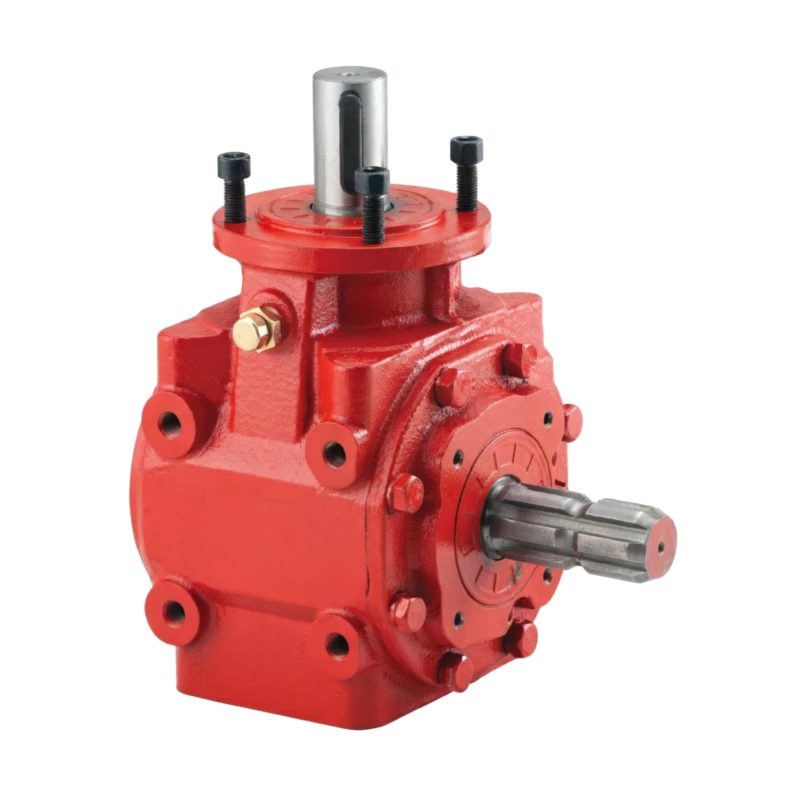
Agricultural PTO Gearbox
Bevel, inline, and custom gearboxes matched to PTO shaft series for minimal vibration.
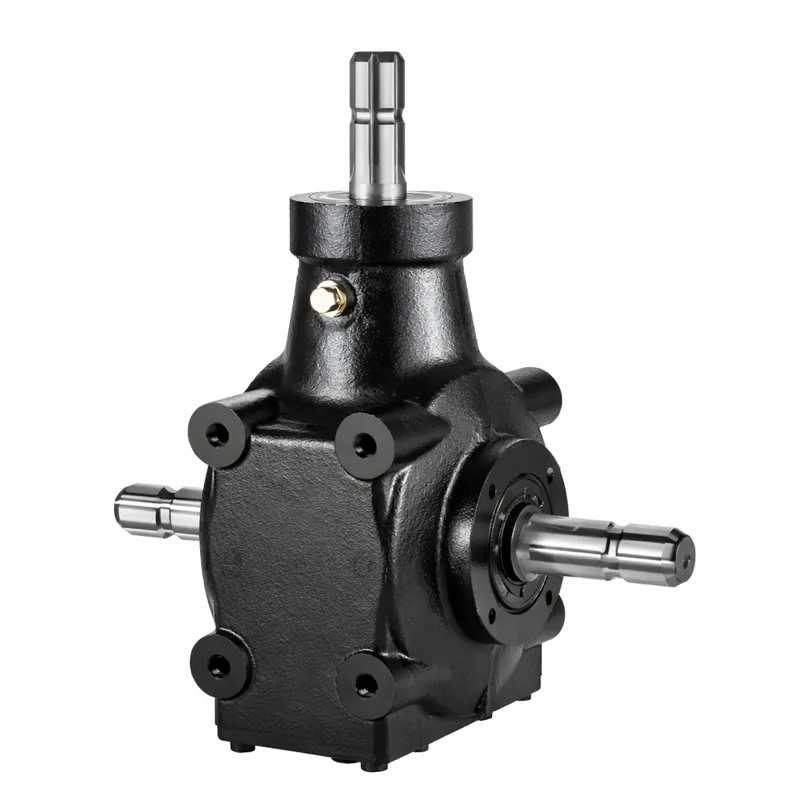
Cross-Kits & Clutch Components
IP55 sealed, Moly-packed, Viton-seal, and standard cross-kits; friction disc sets; cam spring kits.
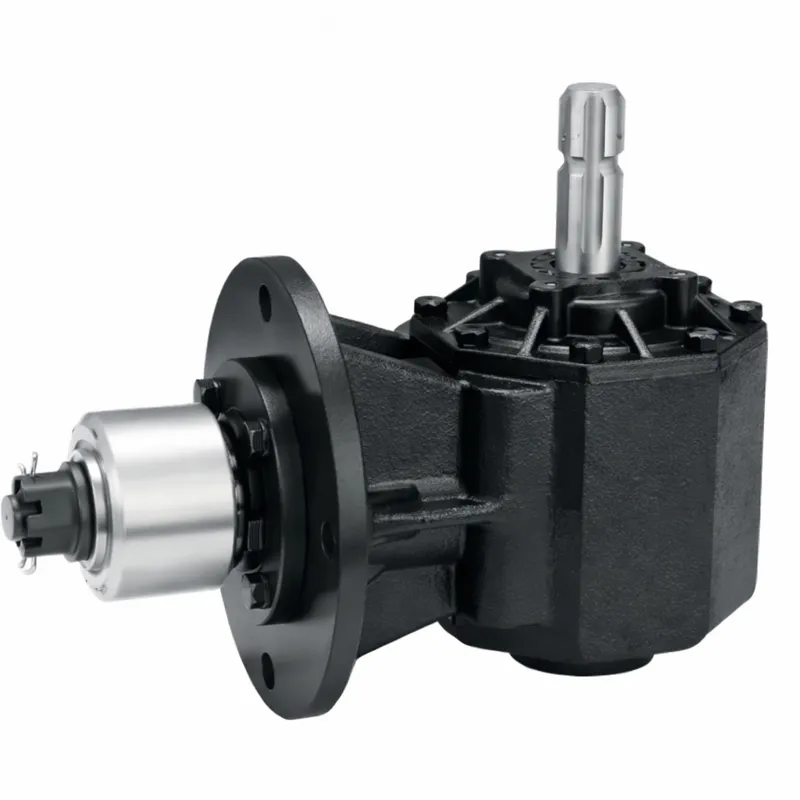
Guards & Safety Components
Chemical-resistant, sulphur-resistant, UV-stabilised, and heavy-wall PE guard cones.
Partner with Us — OEM, Wholesale & Direct Supply
Source a Reliable PTO Shaft for Air-Blast Sprayer / Mistblower — Today
From a single breakdown replacement to an ongoing supply agreement for your dealership or OEM line — we’re ready to deliver:
- ✅ Cross-reference confirmed before dispatch — guaranteed fit
- ✅ Custom specifications: length, spline, clutch setting, seal material, guard type
- ✅ Volume and dealer pricing programmes available
- ✅ Same-day dispatch on stocked items — express Australia-wide freight
- ✅ Full compliance documentation: CE, ISO material certs, inspection reports