Agricultural Chains for Chaser Bins: Heavy-Duty Floor Chain for Australian Grain Cartage Operations
The grain chaser bin — sometimes called a grain cart or field bin — is the machine that keeps modern Australian broadacre harvesters running continuously without stopping to unload. At full capacity, a large chaser bin carries 30 tonnes of grain, and when the PTO engages for discharge, the floor chain must start that full load moving from a dead stop. The startup torque demand at full load is one of the highest instantaneous torque events in agricultural machinery — and the chain that must transmit this torque must do so reliably at the most time-critical point in the harvesting operation.
This guide covers the engineering requirements of chaser bin floor chains, cross auger chains, and PTO drive systems — focusing on the startup torque challenge, the abrasive grain dust environment, and the service practices that extend chain life across Australian grain seasons.
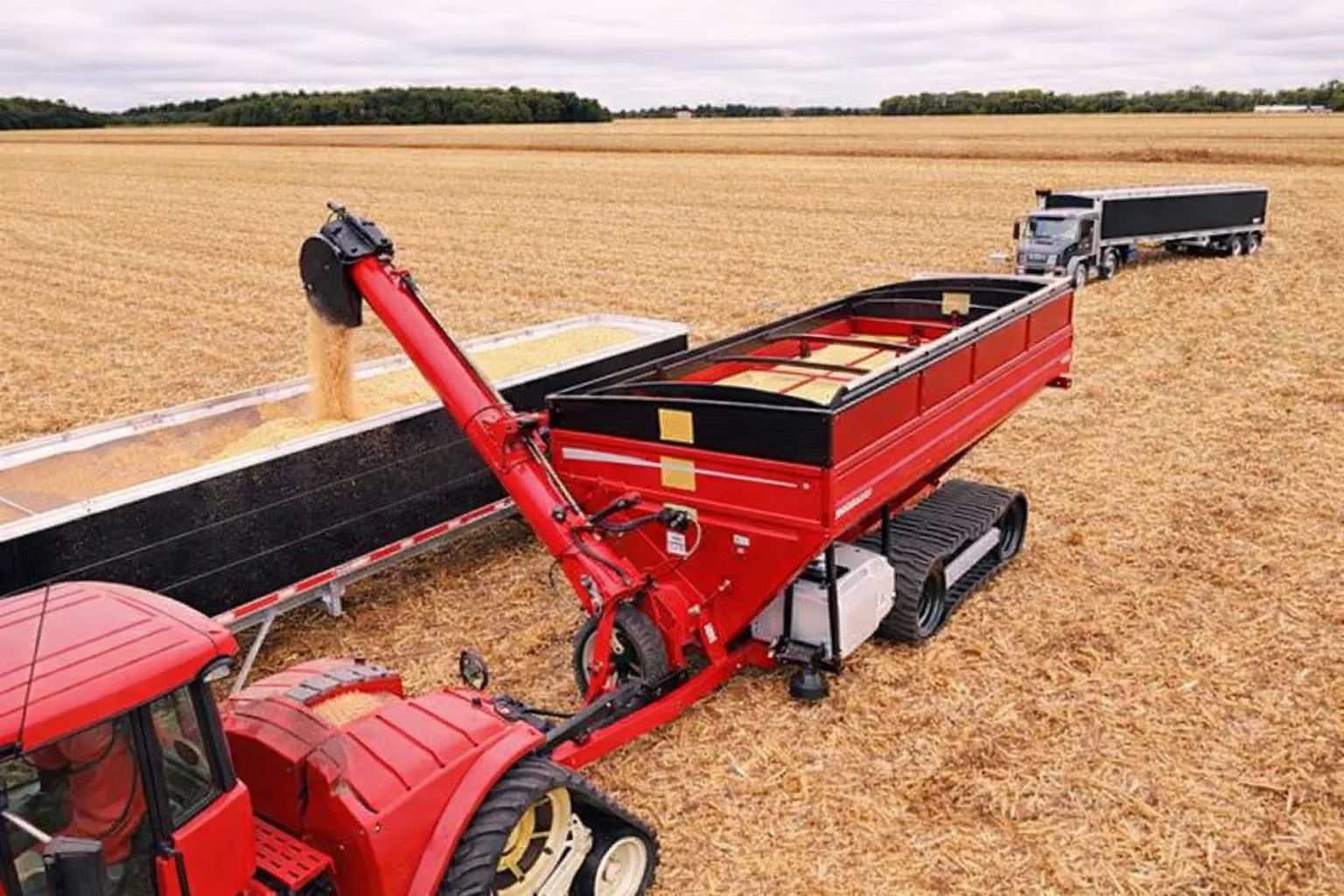
⚙️ Where Agricultural Chains Are Used on This Machine
The main power transmission chain driving the working components. Requires heavy-duty specification matched to the peak torque of the application.
Moves material through the machine. Must resist abrasion from crop material and environmental contamination while maintaining dimensional accuracy.
Sub-drives for auxiliary systems. Light to medium duty but must be dimensionally compatible with the primary drive timing where applicable.
The Australian Chaser Bin Chain Challenge
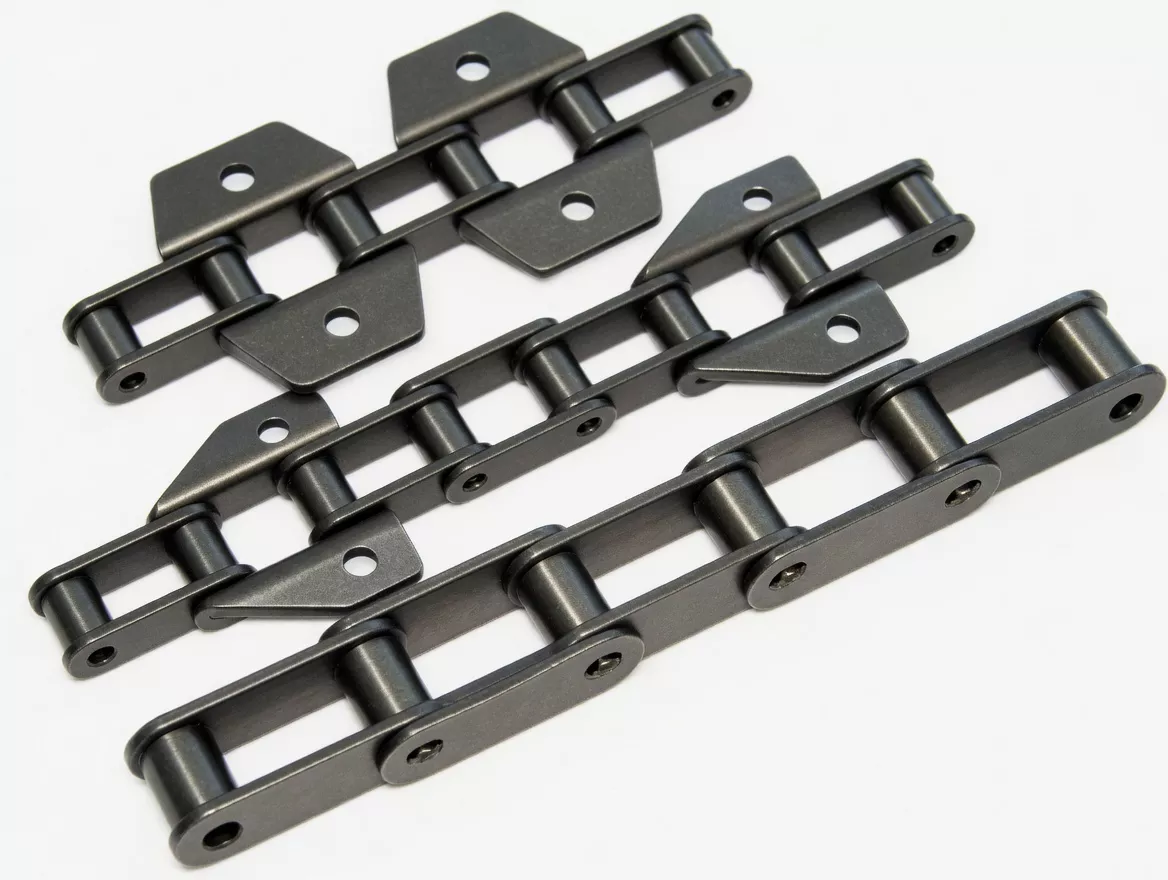
Starting a full-load floor chain from a stationary position requires torque that may be 4–6 times the running load. Carbon steel chains sized for continuous running load are often undersized for startup torque events. SP-series reinforced chain with through-hardened pins is the minimum appropriate specification for floor chains on large-capacity chaser bins.
Cereal grain, canola, and pulse crops all generate fine dust during filling and discharge that settles into floor chain joints and roller surfaces. This fine particle accumulation acts as an abrasive between the roller and sprocket tooth during the high-load startup event. Case-hardened rollers and pins resist this mode significantly better than standard hardness components.
Chaser bin chains see most of their annual load in a 6–10 week harvest window, often in sequences of fill-travel-discharge cycles running all day and into the evening. The cumulative startup torque events during a full Australian broadacre grain season are equivalent to several years of light-duty agricultural chain service.
Chain Specifications for chaser bins
| Position | Chain Standard | Strand | Startup Torque Rating | Key Specification |
|---|---|---|---|---|
| Floor discharge chain (large capacity, 30t+) | ANSI 120 SP or ANSI 140 | Double-strand | High shock — SP-series required | Reinforced side plates, through-hardened pins |
| Floor discharge chain (medium, 15–25t) | ANSI 100 SP | Double-strand | High shock | SP-series, through-hardened pins |
| Cross auger drive chain | ANSI 80 double-strand | Double | Moderate | Sealed rollers for grain dust |
| PTO input to jackshaft | ANSI 100 or ANSI 120 double | Double | Full PTO torque | Heavy-duty, check sprocket alignment |

Selecting the Right Chain
A 30-tonne chaser bin floor chain starting from full load creates startup torque that standard ANSI chain is not designed to handle repeatedly. SP-series reinforced chain is the engineering minimum — the reinforced side plates and through-hardened pins resist the fatigue damage from thousands of startup events across a season.
Measure floor chain elongation at the start of each harvest season. Replace at 2.0% elongation. A floor chain at the elongation limit under the peak startup torque of a full-load cold start is a very high failure-risk situation.
Misalignment on the PTO-to-jackshaft drive chain is a common installation issue that concentrates load on the inside of the link plates and accelerates fatigue at connecting links. Verify sprocket face alignment with a straight edge before the season begins.
Floor chains that have been stationary for months may have dry joints with no lubricant film at startup. Apply heavy EP gear oil to the full length of the floor chain before the first full-load discharge of the season to prevent dry-start abrasion.
Maintenance Practices
Chaser bin chain maintenance is concentrated in the pre-harvest period and post-harvest inspection, with in-season care focused on lubrication and visual inspection.
Measure floor chain elongation. Inspect sprocket teeth for hook wear. Lubricate all chain positions with heavy EP gear oil. Run one full PTO cycle without load before the first harvest operation.
Inspect the floor chain visually every 50 filling cycles. Check for visible broken rollers, bent side plates, or unusual noise during the first 3 seconds of PTO engagement (startup damage manifests early). Lubricate every 100 operating hours.
Remove floor chain and clean thoroughly. Measure elongation and record for next-season planning. Inspect all rollers for flat spots from startup shock. Store chain with light rust-prevention coat.
❓ Frequently Asked Questions
Explore Related Drive Components
Factory-matched sprockets engineered to run with our chain range — simplex, duplex, plate wheel and taper-bore in all standard pitches.
Explore Sprockets →
⚪ Bearings
Sealed pillow-block and flange-unit bearings for every shaft that carries a chain sprocket in your machine.
Explore Bearings →
Send us your application specifications
Our drive engineers confirm the correct chain type, pitch, and duty class for your machine and operating region.