Mô tả
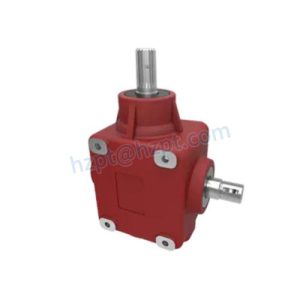
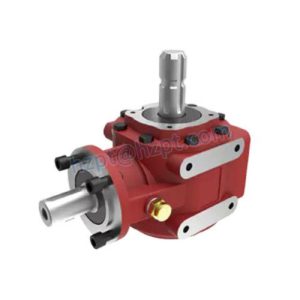
Hộp số máy phát điện nông nghiệp EP14
Generator Gearbox for PTO Generator — model EP14.
Detailed Technical Specifications — EP14
The Agricultural Generator Gearbox EP14 is engineered as a generator gearbox for pto generator applications. Designed to step up PTO speed to drive electric generators, the unit covers 20–120 HP input ratings and is built for continuous steady load.
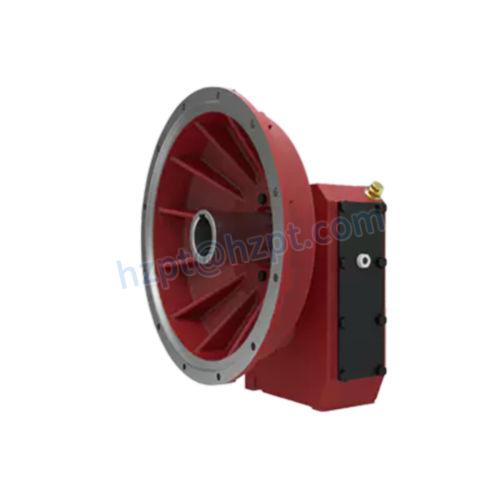
| Series / Model | EP14 |
|---|---|
| Ứng dụng | PTO Generator |
| Gear Ratio | 3:1 |
| Input Speed (RPM) | 540 RPM |
| Input Shaft | 1 3/8″ 21-spline (X) |
| Output Shaft | Splined shaft 1 3/8″ 21T |
| Lubrication Type | Mineral SAE 80W-90 |
| Oil Capacity | 0.4 L |
| Oil Drain | Hex drain plug at base |
| Breather Plug | Anti-spray vented cap |
| Seal Type | Labyrinth + lip seal |
| Ingress Protection | IP54 |
| Operating Temperature | -20 °C to +80 °C |
| Noise Level (no-load) | ≤ 78 dB(A) |
| Vibration Class | ISO 10816 Class A |
| Net Weight | ~ 35 kg |
| Color | OEM color matching available |
| Certification | CE conformity |
| Warranty | 18 months on workmanship |
| Bao bì | Wooden case for export |
Engineering Features of the Generator Gearbox
Each of the cards below describes a specific, measurable attribute of the EP14 unit. Generic claims have been kept out — every number here is tied to a manufacturing process or a verified test result.
Compatibility & Cross-Reference
The EP14 is designed as a drop-in or close-substitute fit for a number of OEM gearbox positions used on tractors and pto generator implements globally. The table below summarizes commonly cross-referenced brands. Final fitment must be verified by physical dimension matching.
| Thương hiệu | Equipment Range | Ghi chú |
|---|---|---|
| Fendt | tractors and harvesting machinery | cross-reference; verify by flange and shaft dimension |
| Deutz-Fahr | tractors and combines | cross-reference; verify by flange and shaft dimension |
| Lemken | tillage tools | cross-reference; verify by flange and shaft dimension |
| New Holland | tractors, balers, mowers | cross-reference; verify by flange and shaft dimension |
| Claas | forage harvesters and balers | cross-reference; verify by flange and shaft dimension |
| Vicon | fertilizer spreaders | cross-reference; verify by flange and shaft dimension |
Available Replacement Parts (sold separately)
- Input pinion sub-assembly
- Output bevel gear
- Tapered roller bearing set
- Output shaft (keyed and splined variants)
- Input shaft (1 3/8″ 6-spline)
- Skeleton oil seal kit
How to Select the Right Generator Gearbox
Use the three-step approach below to match a EP14-class unit to your tractor and implement.
- Đo lường — record your tractor PTO standard (540 / 1000 RPM, spline count), the implement input shaft diameter and length, and the available bolt pattern at the implement nose.
- Cuộc thi đấu — cross-check those measurements against the spec table for the EP14. The flange, shaft, and ratio need to all line up before moving on.
- Verify under load — confirm the rated input power and output torque are sufficient for your peak operating condition (e.g. wet soil, dense crop, cold start).
Selection criteria checklist
| Selection criterion | Decision points |
|---|---|
| Implement type → ratio match | For pto generator, target gear ratio in the 1:3.5 – 1:5.5 (speed-up) range for correct rotor or output speed. |
| Tractor power band | Match input power rating to your tractor: 20–120 HP is the practical envelope for the EP14 family. |
| PTO speed (540 vs 1000 RPM) | 540 RPM is standard on tractors below 100 HP; 1000 RPM is preferred on 100+ HP machines and where higher output speed is required. Confirm tractor PTO output before specifying. |
| Housing material | Cast iron (HT250 / QT500) for heavy continuous duty; aluminum alloy where weight reduction and rapid heat dissipation matter, e.g. small implements moved frequently. |
| Layout | Right-angle (90°) units redirect PTO power to a perpendicular work shaft; in-line units retain shaft alignment. Choose based on implement geometry. |
| Standard vs custom | Standard models cover the bulk of OEM positions. For non-standard ratios, special shaft ends, oversize flanges, or harsh-environment specs, ask for a custom build. |
| Shaft end interface | Verify input PTO standard (6-spline, 21-spline, 20-spline) and output end (keyed, splined, flanged) against your driveline and implement. |
| Working environment | High dust, mud, salt-spray, or extreme cold may require IP66-rated seals, low-temp synthetic oil, or anti-corrosion finish — specify at quoting. |
Typical Applications & Power Transmission Tasks
The EP14 is engineered for pto generator. The scenarios below describe the specific power-transmission tasks the gearbox is designed to handle, with details of mounting position, drive path, and the technical demand on the gear and bearing set.
Mobile PTO Generator (50 Hz)
The gearbox steps tractor PTO speed up to the alternator design speed (typically 1,500 RPM at 50 Hz, 1,800 RPM at 60 Hz). Continuous load means heat management is critical.
Backup Standby Generator
On-farm standby generation during grid outages. The EP14 provides the speed multiplication required to drive the alternator at synchronous speed.
Installation & Commissioning Guide
Correct installation of the generator gearbox is the single biggest factor in achieving the design service life. Follow the steps below, in order. Skipping or compressing any step usually shows up as oil leak, premature bearing failure, or noise within the first season.
- Safety preparation. Shut down the tractor engine, remove the key, disengage the PTO, set the parking brake, and chock the wheels. Wear safety gloves and eye protection. Confirm the implement is on stable supports before any drive-train work.
- Verify the gearbox before fitting. Check that the EP14 model number, input flange dimensions, and input/output shaft specifications match both your tractor PTO and the implement input shaft. Mismatched flange or spline patterns will not be corrected by force-fitting.
- Fill with lubricant. Before first use, fill with the specified lubricant — typically SAE 90 GL-4 — to the centre of the oil-level window. Refer to the spec table for the exact oil capacity for your unit; underfilling causes early bearing wear, overfilling raises oil temperature and stresses seals.
- Mount and torque the bolts. Bolt the gearbox flange to the implement using the OEM bolt set. Tighten in a diagonal pattern in three passes to the final torque (~ 140 N·m for M16 grade 8.8). Even loading prevents flange distortion and seal leak paths.
- Connect the input PTO shaft. Attach the PTO drive shaft yoke to the gearbox input shaft. Confirm the locking pin or push-pull collar fully engages. Re-attach the safety shield with both retaining chains hooked to the tractor and implement, never spinning with the shaft.
- Connect the output shaft. Slide the output shaft into the implement working shaft, align keys or splines, and lock with the supplied retaining nut and washer. Verify shaft end-float is within manufacturer tolerance — usually 0.05 mm to 0.20 mm.
- Check shaft alignment. With the gearbox bolted and shafts connected, slowly rotate by hand. Total run-out (TIR) at the input and output should not exceed 0.10 mm. Any tight spot or audible scrape indicates an alignment issue that must be corrected before powered operation.
- No-load test run. Engage the PTO at low engine RPM (idle to 540 RPM) for five to ten minutes. Listen for unusual noise, watch for oil seepage, and check housing temperature by hand — it should be warm to the touch but not hot enough to be uncomfortable.
- Run-in under partial load. For the first 50 hours of duty, avoid full-rated load. Vary speed and load lightly to seat the gear teeth and bearings. After the run-in period, drain the lubricant — it will contain microscopic break-in particles — and refill with fresh oil of the same grade.
- Establish a maintenance schedule. Inspect oil level every 200 operating hours or weekly during heavy use. Drain and replace the gear oil every 500 hours or once per season, whichever comes first. Wipe the housing exterior after each shift to prevent soil buildup that traps moisture against seals.
Our Generator Gearbox vs. Low-Quality Alternatives
Not every gearbox sold as an “agricultural” unit is engineered for the job. The dimensions below compare the EP14 class build to the typical low-cost imported alternative.
| Dimension | Low-quality unit | Our build | User benefit |
|---|---|---|---|
| Cân bằng động | Not measured | Rotor groups balanced to ISO G6.3 | Eliminates vibration-driven bearing failure. |
| Backlash control | Hand-fit, inconsistent unit-to-unit | Jig-set to ±0.02 mm at assembly | Smooth tooth contact, predictable drive feel. |
| Surface protection | Single coat enamel, peels in salt environments | Zinc-phosphate base + baked epoxy, ≥ 480 h salt spray | Cosmetic and structural protection in coastal and winter use. |
| Thermal headroom | Hot-spot risk near full load | Designed continuous-duty rating with verified temp-rise tests | Safe to run at rated load all day. |
| Run-in testing | None — ship as assembled | 30-minute no-load run-in, acoustic signature recorded per unit | Catches assembly errors before the unit leaves the plant. |
| Service life expectation | One season before noise/leak appears | ≥ 5 seasons under correct maintenance | Lower lifecycle cost per hour of operation. |
| Documentation | Generic instruction sheet | Per-unit inspection card with backlash, torque, run-in noise | Full traceability if a warranty event occurs. |
| After-sales support | Discounter-only, no engineering contact | Direct factory support, 24-hour technical reply | Faster resolution if a field issue appears. |
| Gear material | Plain 45# steel, no heat treatment | 20CrMnMo, carburized & quenched, HRC 58–62 surface | Triples gear life under typical PTO loads. |
Câu hỏi thường gặp
Common questions from buyers evaluating the EP14 for their fleet or implement build. If your situation is not covered, send us the details and we will respond within one working day.
Do you supply a test report or quality certificate with each unit?
How do I handle the gearbox during shipment to prevent transit damage?
How do I choose the right gear ratio for my tractor and implement?
When should I specify a 540 RPM input vs. a 1000 RPM input?
Do you offer OEM and custom-spec gearboxes? What are the minimums?
Customer Feedback from the Field
Selected feedback from operators using the EP14 or related units in commercial pto generator duty across multiple countries. Names are anonymized using city + initials for privacy.
Companion Products & Drivetrain Accessories
A generator gearbox usually sits in the middle of a longer drivetrain. The items below complete the typical agricultural power-transmission package.
Certifications & Quality Standards
- ISO 9001:2015 — Quality management system covering design, manufacturing, and inspection processes.
- ISO 6336 — Reference standard for the load-capacity calculation of cylindrical and bevel gears.
- DIN 3960 / DIN 3961 — Tooth profile and accuracy class definitions used for gear quality grading.
- EN ISO 11684 — Pictorial safety signs and warning marks for agricultural machinery.
- Dấu CE — Conformity with the EU Machinery Directive 2006/42/EC where applicable.
- AS 4024 — Australian machinery safety framework — referenced for OEM units bound for AU farms.
- Material certification — Mill certificates for gear and shaft alloys; hardness, composition, and metallographic data on file per batch.
Outgoing Inspection Workflow
Each batch passes through: incoming raw-material inspection → forging and machining first-article check → heat-treatment hardness sample test → gear-accuracy measurement on Klingelnberg-class testers → assembly torque verification → no-load run-in and acoustic record → final visual and packaging check. Inspection records travel with the carton.
Notes for Australian Buyers
Units shipped into Australia for use on commercial farms should be reviewed against the relevant state WHS (Work Health and Safety) requirements and the generator gearbox fitted with all guards specified by the implement OEM. Common search terms used by Australian buyers include agricultural gearbox Australia, farm gearbox supplier Australia, Queensland tractor parts, NSW farm equipment, and Victoria agricultural machinery — let us know your state and intended implement and we will recommend the matching configuration.
Why Buy from Us — Factory & Brand Strength
Factory background
We have been manufacturing agricultural gearboxes including the generator gearbox family at our facility for over a decade. The plant covers a substantial machining and assembly area with dedicated heat-treatment, gear-cutting, gear-grinding, and final-assembly bays, and a year-round skilled workforce in production and quality.
Production capability
Annual capacity covers tens of thousands of units across the catalogue. Critical equipment includes CNC gear-hobbing centres, CNC gear-grinders, sealed-quench heat-treatment furnaces, three-coordinate measuring machines (CMM), gear-tooth contact testers, and dedicated run-in test stands. Tooling and dies for the most popular models are kept on standby to cut response time on repeat orders.
Export footprint
We currently export to dozens of countries, with primary markets in Australia, North America, Europe, and Southeast Asia. Common search terms used by international buyers include agricultural gearbox manufacturer China, custom farm gearbox supplier, and OEM gearbox factory — and our sales team is set up to handle drawing reviews and technical conversations in English.
OEM / ODM capability
Our standard custom flow is: drawing or sample submission → engineering review and quote → 3D model and prototype tooling sign-off → first-article sample → small pilot batch → serial production. Lead times for new tooling typically run 30–60 days; repeat builds run inside 20–30 days.
MOQ & lead time
Standard catalogue models: MOQ from one carton (5–50 units depending on size). Custom builds: typical MOQ 50 units. Standard lead time 7–15 days for stock items, 30–45 days for custom first runs.
Quality control
Each batch passes through ISO 9001:2015 governed inspection, raw-material composition and hardness testing, in-process gear accuracy verification, final assembly torque sign-off, and a 30-minute no-load run-in test recorded per unit.
After-sales
12-month standard warranty on workmanship; extended warranty for OEM contracts. Technical email response inside 24 hours, and replacement parts dispatched within working days for valid warranty cases.
Custom application?
Non-standard ratio, special shaft end, oversized flange — we build to drawing. Share your spec and we will reply with a build plan.
We do more than supply standard agricultural gearboxes. Bring us your drawings, samples, or even a rough sketch — our engineering team will design and manufacture a precision gearbox solution tailored to your exact application.
⏱️ We respond within 24 hours · ️ 12-month standard warranty · ISO 9001:2015 certified production · Years of agricultural gearbox export experience including direct shipments to Australia.