Agricultural Chains for Sugarcane Harvesters: Abrasion-Resistant Drives for Queensland’s Cane Fields
Sugarcane harvesting in Queensland operates in one of the most abrasive agricultural environments in the world. The combination of sandy coastal soils, river flat silt with embedded gravel, and Queensland’s acid basalt country means that every chain on a cane harvester is in continuous contact with material that acts as cutting compound on rolling surfaces. Add to this the inherent toughness of mature cane stalks, the heavy stalk volumes processed per hour on modern high-output harvesters, and the near-continuous operating cycles demanded by mill intake schedules, and the chain engineering challenge becomes clear.
This guide focuses specifically on the chain requirements of sugarcane harvesters — elevator chains, base cutter drive chains, and extraction system chains — with engineering depth appropriate for machinery managers, shed technicians, and supply chain staff at Australian cane growing operations.
Chain Positions in a Sugarcane Harvester
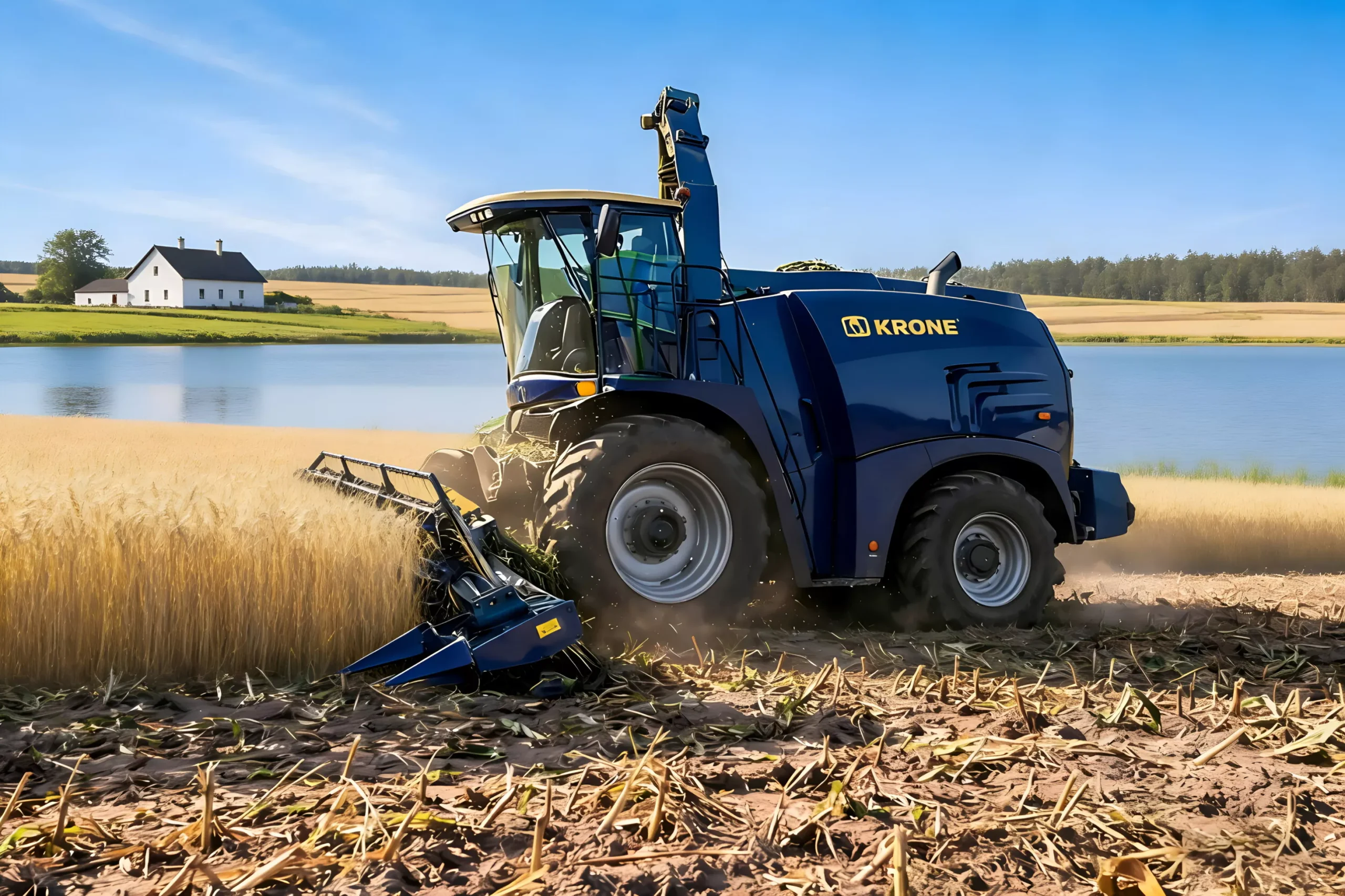
The sugarcane harvester processes whole cane stalks from the ground into billeted pieces and delivers them to a trailers. Four chain drive positions are subject to the harshest conditions.
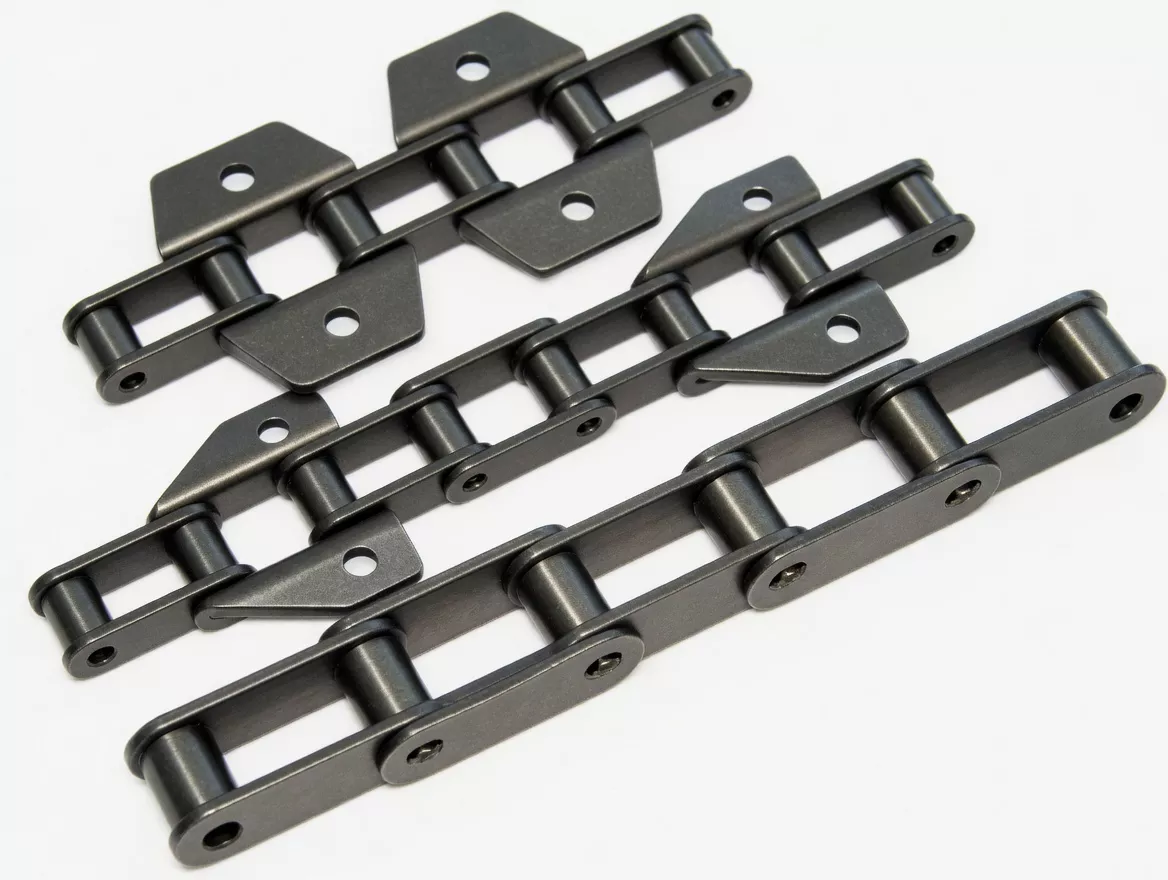
Conveys the billet material from the chopper drums upward through the primary extractor where leaves and trash are separated. This chain runs through dense, abrasive, wet material at continuous rated load. S-type or heavy-duty welded-steel CA-type chain is the standard specification. The elevator chain has the highest replacement frequency on the machine.
Drives the counter-rotating base cutting discs from the primary reduction gearbox. The base cutter sees the full shock load of the cutting discs engaging whole cane stalks at ground level — including soil, rocks, and root material. Heavy-duty ANSI roller chain (ANSI 100 SP or ANSI 120 SP with reinforced side plates) is the correct specification.
The secondary elevator and secondary extractor system moves cleaned material to the chute. These chains run at higher speed and in cleaner material than the primary elevator but still operate in the fine bagasse dust and silica particles pervasive throughout the machine.
Transfers billet material to the delivery chute for trailer loading. Chain specification here is typically lighter than the main elevator and base cutter positions, but must resist the silica-contaminated bagasse dust that saturates the entire harvester interior during operation.
The Queensland Abrasion Challenge
Sugarcane soil in Queensland’s coastal and hinterland growing regions contains abrasive material that is uniquely damaging to chain drive components. Understanding the abrasion mechanism helps explain why correct chain specification produces dramatically better service life.
Fine silica particles from Queensland’s sandy soils are carried into the chain drive by wet cane material and bagasse juice. These particles, 50–200 microns in size, lodge between the pin and bushing bore where they act as a three-body abrasive — effectively grinding the pin outer surface and the bushing bore simultaneously with every chain articulation. Chains with case-hardened pins (surface hardness HRC 55–60) and through-hardened bushings resist this mode far better than standard-hardness components.
Queensland’s basalt-derived soils are acidic (pH 5.5–6.5 in many growing regions), and bagasse juice itself is mildly acidic. This combination attacks chain steel through corrosion-accelerated wear — a mechanism where corrosion removes the hardened surface layer, exposing softer metal to abrasive action. Phosphate-coated or nickel-plated chains resist this mechanism significantly better than bare steel.
Cane harvesting often occurs in wet field conditions — harvesting through light rain is standard practice in high-tonnage operations. Wet conditions flush lubricant from chain joints faster, increase corrosive attack, and soften soil to create a paste that carries more abrasive particles. Chains with sealed rollers retain lubricant better under wet conditions.
Cane harvesting is dictated by mill intake schedules that may require near-continuous machine operation for weeks. Unlike grain harvest where occasional downtime is more tolerable, cane harvesting machine availability directly affects mill supply. Chain failures that idle a harvester during high-pressure periods have disproportionate impact on whole-season throughput.
Chain Specifications for Sugarcane Harvester Positions
| Position | Recommended Chain | Key Specification | Hardness Requirement | Special Features |
|---|---|---|---|---|
| Primary elevator | CA-type or S55/S62 welded steel | Pitch 41–42 mm, K2 attachment | Pin HRC 55–60, bushing HRC 40–48 | Welded-steel rollers for abrasion resistance |
| Base cutter drive | ANSI 100 SP or ANSI 120 SP | Double-strand, reinforced side plates | Through-hardened pins HRC 55–60 | Shot-peened side plates for fatigue resistance |
| Secondary elevator | ANSI 80 or CA550 with attachments | Single or double-strand | Standard case-hardened pins | Phosphate finish for acid soil resistance |
| Cross conveyor | ANSI 60 or CA-series | Single strand | Standard case-hardened | Sealed rollers preferred for wet conditions |

Specifying Cane Harvester Replacement Chains
Primary elevator chains and base cutter drive chains in Queensland conditions require hardened-pin specification as the minimum — standard hardness chains wear out too fast to be economical. Identify whether the position also involves wet-material contact, which calls for sealed roller or phosphate-treated specification.
Base cutter drives with phase-sensitive counter-rotation require exact OEM chain standard. Confirm pitch, inner width, and connecting link type from the OEM parts book before ordering.
Operations in Queensland’s basalt and acid volcanic soil regions should specify phosphate-coated or nickel-plated chain for all elevator and conveyor positions. The corrosion resistance improvement in these soils extends service life by a measurable margin.
Primary elevator sprockets in Queensland operations wear significantly within a single season. Inspecting sprocket tooth wear when replacing elevator chain — and replacing worn sprockets simultaneously — prevents the accelerated wear that occurs when a new chain runs on worn, pitted sprocket teeth.
Maintenance Practices for Queensland Cane Operations
Inspect chain housings for soil packing around rollers. Compacted clay or silt between rollers and sprocket teeth creates a stiff chain that increases load on drive shafts and causes accelerated tooth wear. Flush with water if possible before resuming operation in a new block.
Measure elevator and base cutter drive chain elongation. Replace elevator chains at 2.0% elongation; base cutter drives at 1.5%. In heavy-abrasion basalt soil areas, measurement at 50-hour intervals is recommended during peak season.
Remove and clean all chains. Inspect all rollers for flat spots, crack indications, or visible abrasive grooving. Replace chains showing roller damage even where elongation is within limits — roller damage causes noise and vibration that damages sprocket teeth before elongation becomes measurable.
❓ Frequently Asked Questions
Explore Related Drive Components
Factory-matched sprockets engineered to run with our chain range — simplex, duplex, plate wheel and taper-bore in all standard pitches.
Explore Sprockets →
⚪ Bearings
Sealed pillow-block and flange-unit bearings for every shaft that carries a chain sprocket in your machine.
Explore Bearings →
Request OEM-pattern or replacement chain
Supply us with a part number, worn sample, or machine serial number. Our engineers will match it to the correct chain specification.