자동화된 가축 사료 공급 시스템을 위한 농업 체인
Automated livestock feeding systems — tubular disc-and-cable feeders for poultry and pigs, scraper conveyors for cattle sheds, and automated TMR delivery systems — require chain drives that resist the unique indoor livestock shed environment: high atmospheric ammonia from animal waste, continuous moisture from drinking systems and waste management, and the microbial-rich environment that accelerates hydrogen embrittlement in high-carbon steel chain.
Australia’s intensive livestock sector — poultry processing, piggeries, feedlots, and indoor cattle operations — demands chain reliability that matches the automated feeding schedules the production system depends on. A failed conveyor chain at feeding time triggers a cascade of animal welfare and production issues that has costs beyond the mechanical repair.
호주 운영 과제
Livestock shed atmospheres contain ammonium compounds that, in elevated concentrations, promote hydrogen absorption in high-carbon steel. Hydrogen embrittlement reduces the toughness of case-hardened chain components — particularly connecting links and outer link plates — making them susceptible to sudden brittle fracture under loads that would not cause ductile failure in non-embrittled steel. Chain specification for high-ammonia environments should use medium-carbon (not high-carbon) steel and avoid excessively high hardness levels that increase hydrogen embrittlement susceptibility.
Livestock sheds maintain high humidity throughout the year. Moisture combined with the organic compounds in shed air promotes galvanic and microbial corrosion of steel chain surfaces. Regular lubrication with water-displacing EP lubricant is the primary maintenance defence, but chain specification must also address the baseline corrosion resistance of the steel and surface treatment.
Automated feeding systems typically operate on a cycle of short run — pause — short run, sometimes hundreds of times per day. This stop-start pattern creates fatigue loading at connecting links that differs from continuous-run applications. Self-lubricating (polymer-bushed) chain tolerates the dry-start friction of each restart cycle significantly better than standard oil-lubricated chain, which drains from joints between cycles.
체인 사양 참조
| System Type | Chain Specification | Corrosion Treatment | 매끄럽게 하기 | Replacement Trigger |
|---|---|---|---|---|
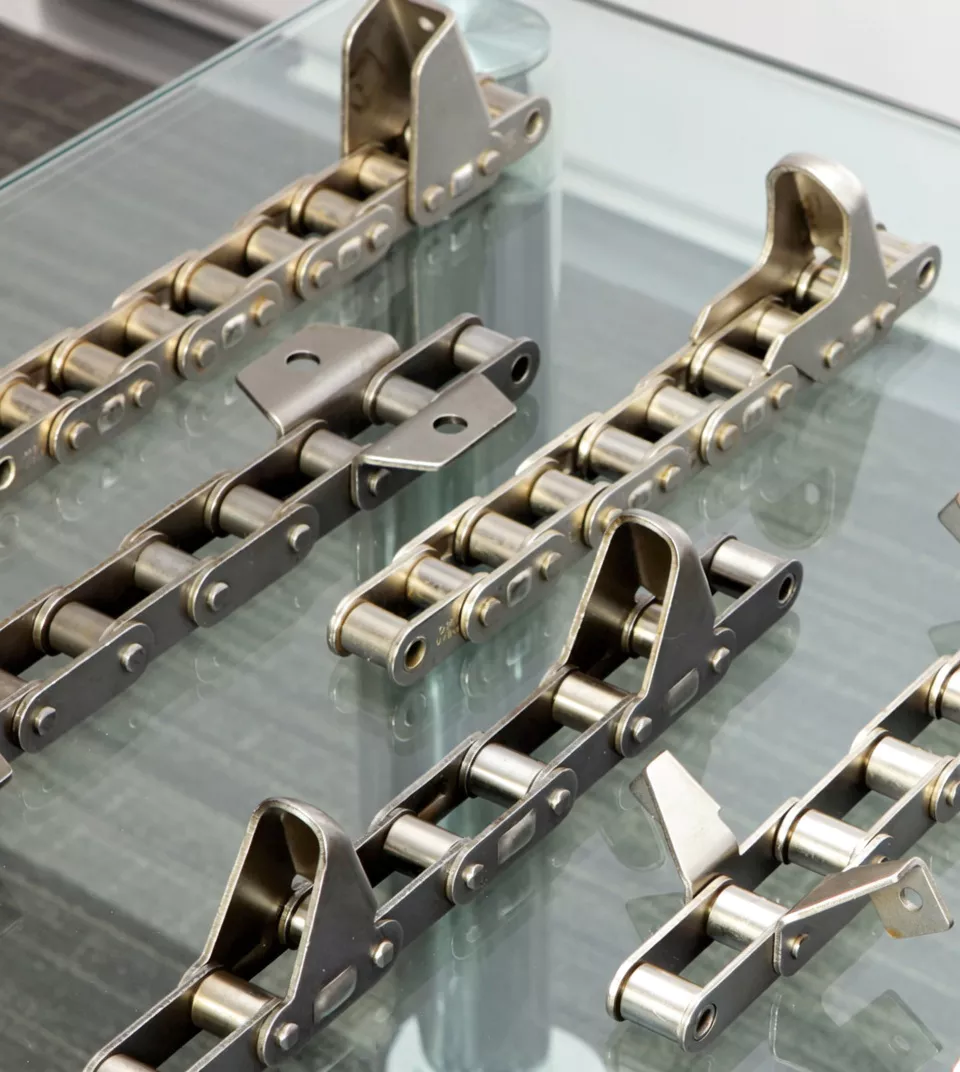
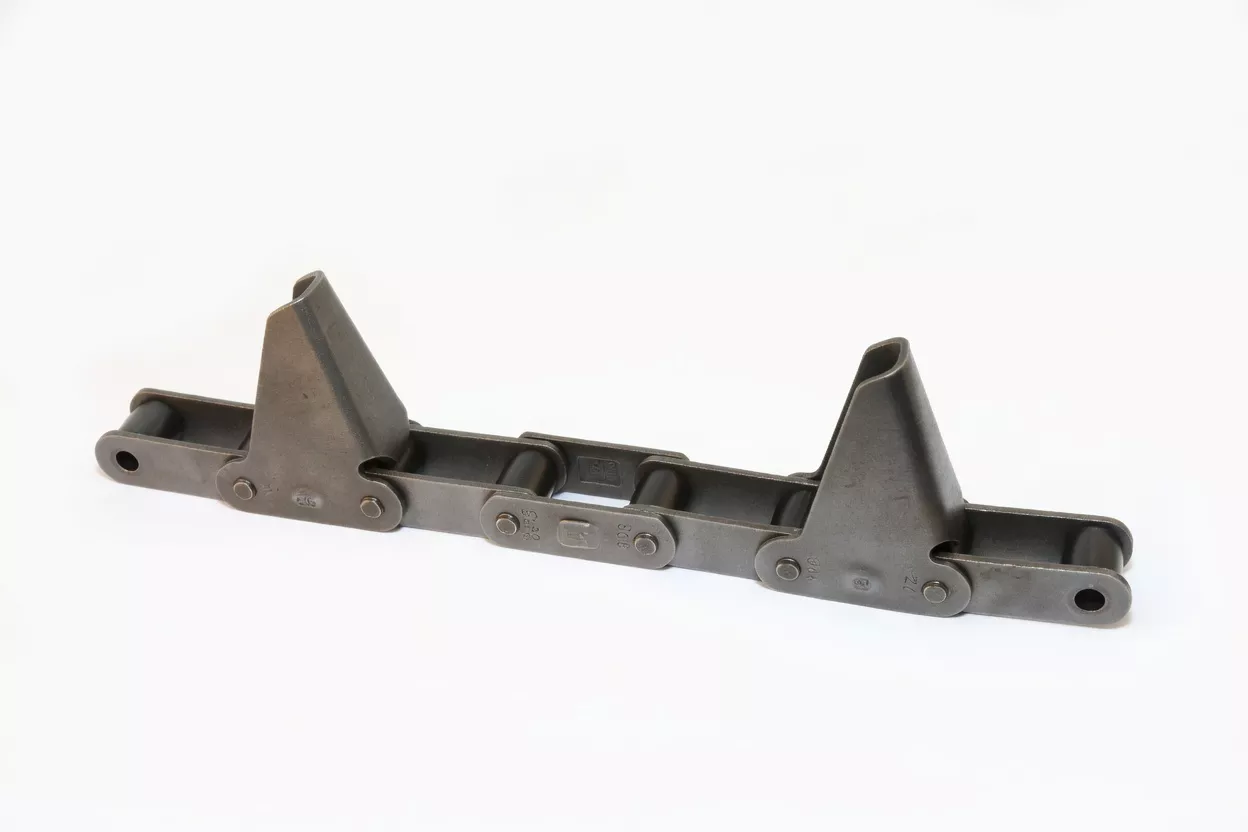
| Tubular disc-and-cable feeder | Forged disc chain (proprietary pitch) or ANSI 25 SS | 304 SS or nylon-coated | Self-lubricating or food-grade | Disc wear or 3% elongation |
| Scraper manure conveyor | Heavy flat-top or attachment chain | Phosphate or SS | EP mineral or synthetic | 2.0% elongation or visible corrosion |
| Feed delivery conveyor | ANSI 40 or ANSI 50 food-grade | 304 SS or NSF coating | NSF H1 식품 등급 | 1.5% 신장 |
| Auger drive chain | ANSI 60 single-strand | Phosphate treated | EP mineral | 2.0% elongation |
❓ 자주 묻는 질문
관련 드라이브 구성 요소 살펴보기
당사가 공급하는 모든 체인 유형(플레이트 휠, 테이퍼 보어 및 경화 처리된 톱니 프로파일)에 맞는 스프로킷을 동일한 ISO 표준에 따라 제조합니다.
스프로킷 살펴보기 →
농업용 기어박스
PTO 구동식 작업기용 직각 베벨 기어박스 및 평행축 기어박스 - 모든 체인 변속기의 상류 구동 파트너.
기어박스 살펴보기 →
OEM 규격 또는 교체용 체인을 요청하십시오.
부품 번호, 마모된 샘플 또는 기계 일련 번호를 알려주시면 저희 엔지니어가 해당 정보를 바탕으로 정확한 체인 사양을 찾아드리겠습니다.