비료 혼합 및 배합 라인을 위한 농업용 체인
Fertiliser blending and bagging lines operate in the most chemically aggressive environment that any agricultural chain encounters. Bulk-blend fertiliser facilities mix granular urea, ammonium nitrate, single superphosphate, potash, and trace element compounds — all of which are either hygroscopic, oxidising, or chemically reactive with standard carbon steel. The chain drives in a bulk-blend facility are exposed to fertiliser dust, granule abrasion, and moisture-activated chemical corrosion that destroys standard agricultural chain in a fraction of the time seen in any other application.
Australia’s fertiliser supply chain — from major port receival facilities to farm-gate bulk-blend operations servicing broadacre cropping — is an essential part of agricultural productivity. A chain failure in a blending line during the pre-planting window delays fertiliser delivery to farms and has cascading consequences for the entire supply chain.
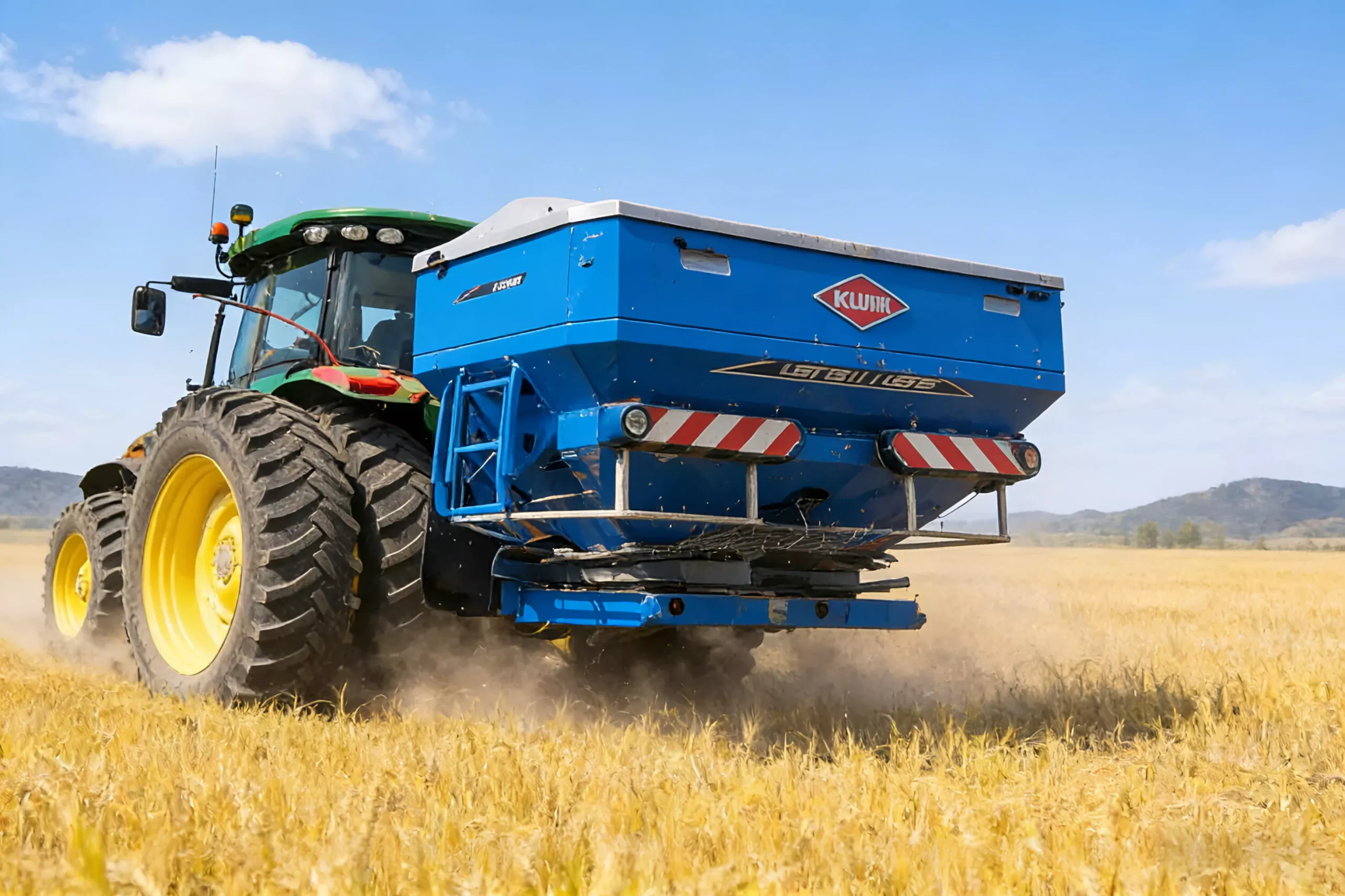
호주 운영 과제
Fertiliser blend facilities expose chain drives to urea (which hydrolyses to ammonia at ambient temperature), ammonium nitrate (a strong oxidising agent), single superphosphate (strongly acidic — pH 2–3 when wet), and potash (mildly alkaline). The combination of these chemistries in airborne dust form, with the moisture from hygroscopic fertiliser granules, creates a corrosion environment that attacks standard carbon steel chain at rates that make annual replacement the best-case scenario for under-specified chain.
Fertiliser granules — particularly hard prilled urea, coated potash, and granular superphosphate — act as a medium-hardness abrasive on chain rollers and sprocket teeth. In screw auger drives and belt conveyor transfer points, chain encounters granules at impact velocities that produce pitting wear on roller surfaces. Through-hardened rollers resist granule impact pitting significantly better than standard hardness rollers.
Potassium chloride (MOP potash) — one of the most common components in Australian bulk fertiliser blends — contributes chloride to the fertiliser dust environment. Chloride ions combined with moisture accelerate corrosion of carbon steel, initiating pitting that progresses to through-hole corrosion of side plates within a single season. 316 stainless steel for chain positions in continuous contact with fertiliser blend is the only specification that provides multi-season service life in high-chloride blend environments.
체인 사양 참조
| 위치 | Chain Standard | Material Grade | Surface Treatment | Service Life |
|---|---|---|---|---|
| Main blending auger drive | ANSI 80 SP double-strand | 316 SS or Zn-Ni coated C-steel | 316 SS or heavy Zn-Ni plate | 1–2 seasons (SS); 0.5–1 season (coated steel) |
| Belt conveyor drive chain | ANSI 60 이중 가닥 | 304 SS or Zn-Ni | SS or Zn-Ni plated | 2–3 seasons (SS); 1 season (coated) |
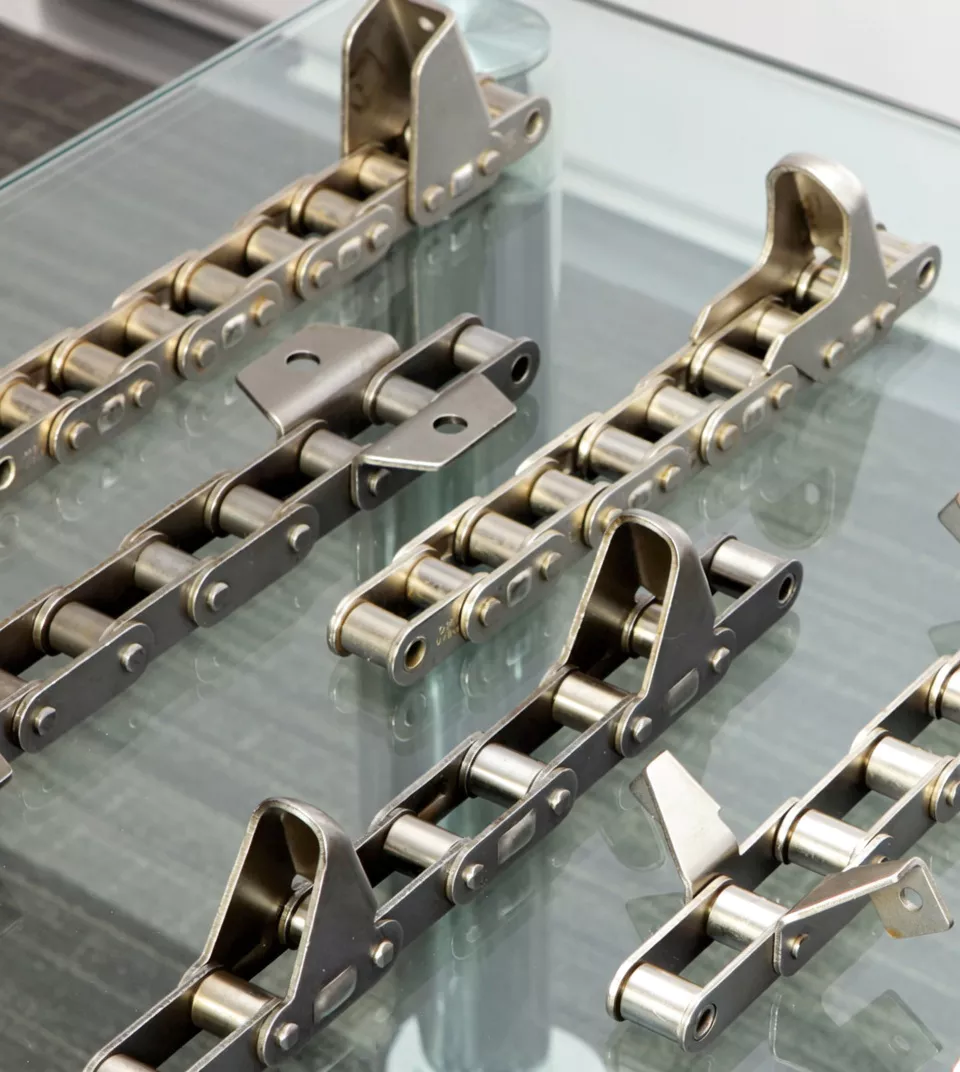
| Elevator and transfer chain | CA550 or CA620 with attachments | 304 SS or phosphate coated | SS preferred | 2 seasons (SS); 1 season (coated) |
| Bagging line drive | ANSI 40 or ANSI 50 | 304 SS or NSF-grade if food-adjacent | SS | 3–5 seasons (SS) |

❓ 자주 묻는 질문
관련 드라이브 구성 요소 살펴보기
당사가 공급하는 모든 체인 유형(플레이트 휠, 테이퍼 보어 및 경화 처리된 톱니 프로파일)에 맞는 스프로킷을 동일한 ISO 표준에 따라 제조합니다.
스프로킷 살펴보기 →
농업용 기어박스
PTO 구동식 작업기용 직각 베벨 기어박스 및 평행축 기어박스 - 모든 체인 변속기의 상류 구동 파트너.
기어박스 살펴보기 →
OEM 규격 또는 교체용 체인을 요청하십시오.
부품 번호, 마모된 샘플 또는 기계 일련 번호를 알려주시면 저희 엔지니어가 해당 정보를 바탕으로 정확한 체인 사양을 찾아드리겠습니다.